MBABANE – Scholarships, proper road maintenance and adequate medication in hospitals face a perilous future if the second E2.5 billion tender is awarded to an international company.
Economists and local contractors are in furious agreement, laying the blame squarely at the feet of Finance Minister Neal Rijkenberg and his counterpart at the Ministry of Public Works and Transport, Chief Ndlaluhlaza Ndwandwe, for what they assert is an engineering of misery for emaSwati.
Their unshakeable argument is that allowing yet another lucrative tender to fall into foreign hands will haemorrhage revenue, robbing the country and the region of critical funds for development.
It is a damning indictment, given that the Southern African Customs Union (SACU) receipts, annual payments shared among member States based on a revenue-sharing formula, form the very backbone of Eswatini’s national budget.
Crucial
These funds, often exceeding 50 per cent of the budget, are the major source of government revenue, crucial for financing essential operations, including infrastructure development, healthcare and public service salaries.
SACU, as a customs union, ensures the free movement of goods among its member States (Botswana, Eswatini, Lesotho, Namibia and South Africa).
Amid the country’s reliance on various loans to bolster its economy, controversy has engulfed the 108-kilometre Siphofaneni-Sithobela-Maloma-Nsoko (MR14) and Maloma-Siphambanweni (MR21) roads project.
Local contractors have been relentlessly vocal about the procurement structure assigned to this project, expressing profound discontent that government has weakly attempted to defend.
An economist from the finance sector issued a grave warning: Eswatini’s economic backbone faces a dire threat as billions of Emalangeni from mega-tenders are siphoned abroad, stifling local growth and imperilling the very tax base that bolsters the national budget.
Poorer
He asserted that the ‘fanfare surrounding large capital projects, touted as development catalysts, masks a significant economic drain that could leave emaSwati poorer, burdened only by debt’.
This scathing assessment directly contradicts Minister Rijkenberg’s defence of the E2.5 billion tender. While the minister champions value for money and efficient delivery, the economist argued that the true cost to the nation when domestic participation is sidelined leaves the taxpayer poorer.
He further condemned the obvious absence of forceful legislation mandating meaningful local participation in large capital projects.
This omission, he warned: “This is no mere oversight; it represents a significant economic haemorrhage, stifling local growth, limiting job creation and perpetuating a cycle of dependency on external actors.”
He explained that billions of Emalangeni intended for development within the country are inevitably remitted abroad as profits and wages for foreign workers.
This, he stressed, directly reduces potential local investment, stunts the growth of indigenous businesses and suppresses overall economic activity.
The economist delivered a chilling summation: “Such capital flight directly erodes the domestic tax base, inevitably impacting Eswatini’s share of SACU revenue, which funds a substantial portion of the national budget. The very economic dynamism that underpins SACU distributions is undermined.”
The notion from Rijkenberg and his Ministry of Public Works and Transport counterpart that partitioning the roads would have been too expensive was dismissed by the economics scholar as a non-starter.
Rijkenberg, in his Finance in Focus programme, defended the single-contract model, claiming it offered better value for taxpayers while also reducing the likelihood of costly delays.
Criticism
Rijkenberg, in his weekly episode of the Finance in Focus programme, responded to the growing criticism and concerns raised by the local contractors.
The minister said the process adhered to by government was justified based on sound economic reasoning and the need to mitigate risks associated with large-scale infrastructure projects.
He said: “The Ministry of Public Works and Transport has done nothing wrong in the way they structured this tender. Their approach was driven by the need to ensure value for money, reduce the risk of contract failure and deliver the road as efficiently as possible.”
Local contractors had questioned why government did not break the project into smaller, more accessible packages to allow for wider participation, to which Rijkenberg said: “While the demand is understandable, the reality of implementing fragmented contracts comes with significant challenges. If we break a large project into several smaller contracts, it means managing multiple agreements, each with its own terms and supervision. That drives up costs and introduces inefficiencies.”
The minister supposed that smaller contractors often lack the capacity to deliver large infrastructure, increasing the risk of failed projects — a risk government cannot afford.
Shedding background to his assertion, he said: “To give an example, the Sicunusa–Nhlangano Road failed for many years. I’m not blaming anyone. Failed projects cost taxpayers money without delivering roads.”
Awarded
It is worth noting that the Sicunusa-Nhlangano (Gege) Road construction project was initially awarded to a joint venture between Kukhanya Construction and Gabriel Couto, but they did not complete it.
Inyatsi Construction was later awarded the tender and it delivered on the mandate in 2021, on the road which connects Nhlangano and Mankayane towns and includes border posts at Mahamba, Gege and Sicunusa.
Meanwhile, Rijkenberg said government took proactive steps to ensure local involvement in the AfDB-funded project.
He said: “We made sure that one-third of the work is guaranteed for local contractors. That is written into the proposal,” he said. “This does not mean locals are excluded from bidding for the main contract — they certainly can. But we also provided guaranteed participation through subcontracting.”
He clarified that when tenders require guarantees; this does not necessarily mean cash upfront. He reiterated his previous submission made to this publication, where he said contractors can use insurance to secure a guarantee, which can then be accepted by the bank. This, he said, is a practical way to support local firms without compromising standards.
Furthermore, Rijkenberg defended the single-contract model adopted by the Ministry of Public Works and Transport. He supposed that it offers better value for taxpayers, while also reducing the likelihood of costly delays.
Expensive
He said: “Bigger contracts often mean lower unit costs because of the heavy equipment, skilled personnel and economies of scale involved. Breaking contracts up can make the overall project more expensive.”
He cited the Mpakeni Dam project, where a Chinese firm’s price was almost half that of another contractor, arguing: “We are always weighing what is better for the country — should we pursue local empowerment 100 per cent, or do we ensure that the infrastructure is delivered affordably and on time?”
However, the economist fired back, stating that the reliance on foreign companies directly leads to a higher number of expatriates, severely curtailing job creation for skilled locals and preventing crucial skills transfer.
He pointed out that the E200 million increase in expenditure if the projects were partitioned – as revealed by Chief Ndlaluhlaza a week ago – is lesser than what the country shall lose in SACU receipts.
He hammered home the point that the crucial multiplier effect – the ripple of economic activity generated by initial spending – is significantly weakened when the primary beneficiaries are external to Eswatini.
The economist argued that money circulates most effectively in the country when a local contractor secures the job, enabling small contractors to thrive, unlike when international firms dominate.
The value chain, he explained, demonstrates how government generates tax revenue from every purchase and expenditure by beneficiaries, in addition to pay-as-you-earn (PAYE) collected from employees.
Significant
The economist said: “The economic losses – reduced multiplier effect, limited job creation, weak local capacity building, diminished tax revenue, reliance on imported inputs, balance of payments implications and missed diversification opportunities – are too significant to ignore.”
It is worth noting that Chief Ndlaluhlaza said partitioning the E2.5 billion-funded road could not be done as there was one financier for it.
He said the 108-kilometre public road would have had an expenditure increased by E200 million as it would have had to duplicate the feasibility study.
The minister said this is against the backdrop of local contractors calling upon government to restart the procurement tender, as it stands, they feel ousted from partaking in development within their own country.
In fact, they minced no words as they asserted that the current state of the procurement process is set to benefit international firms, who have the US Dollar advantage over the local currency.
Furious contractors reject Minister Rijkenberg’s defence
MBABANE – Local contractors have vehemently dismissed the narrative that the Ministry of Finance is innocent in the controversial E2.5 billion Siphofaneni–Sithobela–Maloma–Nsoko (MR14) and Maloma–Siphambanweni (MR21) roads project.
Their reproach follows Minister for Finance Neal Rijkenberg’s defence of the Ministry of Public Works and Transport’s handling of the African Development Bank (AfDB)-financed tender.
The core of their outrage stems from the loan’s stipulations: Any contractor wishing to bid for the tender must initially provide E45.5 million as bid security. Should the contract be awarded, this is followed by a 10 per cent performance security, estimated at E250 million and finally, a 15 per cent advance security, totalling E375 million.
Staggering
Local contractors assert that these latter two securities, amounting to a staggering E675 million, effectively prevent them from participating in their country’s development.
This, they argue, directly leads to profits being secured by international companies and subsequently exported abroad, rather than circulating within Eswatini’s economy.
Consequently, they lay direct blame on the Ministry of Finance for failing to consider their capabilities when raising the loan with the terms it has, as most cannot afford to have E675 million held in banks.
They implore the ministry to ensure that the majority of these funds remain within the country, proposing that this would add value to Eswatini through tax payments from entities, domestic and regional spending by local employees and the local sourcing of raw materials.
They question why the ministry permits the current AfDB’s stringent terms to stand despite that the financiers own rules, reveal that the entity favours domestic contracting.
This is evidenced by the issue of lots and slicing, which is spelt out in the bank’s rules. The rules or regulations are contained in a 351-page document themed ‘African Development Bank Operations Procurement Manual Part A, Volume 1: General Considerations - November 2018’.
Document
The concept of project packaging is succinctly defined in the document. In its own definition, packaging entails dividing large undertakings into smaller ‘lots’ or ‘slices’ to make them accessible to local businesses.
Instead of issuing a single massive contract, projects can be split into regional lots, each independently bid and awarded.
This, they firmly believe, could have included dividing the colossal road project into ‘Lots’, which would, in turn, require smaller, more manageable security bonds across different phases.
This scenario is not unprecedented as leading up to this contract, one of government’s most lucrative tenders in recent years – the construction of the Mpakeni Dam, with a total value of E2.6 billion – was awarded to the Sakhalive Joint Venture (JV), a collaboration between two Chinese companies, Yellowriver and Sinohydro Bureau 3. Local contractors, also in this AfDB-financed tender, were entirely ‘shut out’ due to the prohibitively steep stipulations of the procurement process.
Since then, the Mpakeni Dam tender, issued by the Eswatini Water and Agricultural Development Enterprise (EWADE) for the Mkondvo-Ngwavuma Water Augmentation Programme (MNWAP), has been a source of enduring controversy, with local businesses and contractors lamenting their lack of benefit.
Rijkenberg, however, insists his portfolio is not responsible for setting the tender conditions. He clarified that his ministry’s role is strictly limited to securing funding and negotiating loan terms — not designing procurement processes.
Consultation
He said: “The Ministry of Finance raises the money. It’s the line ministry — in this case, the Ministry of Public Works and Transport — that sets the conditions in consultation with the funder.”
Rijkenberg reiterated that his remarks were not aimed at shifting blame, but rather to clear confusion around roles.
He asserted: “The Ministry of Public Works and Transport did what was necessary. Given the risks of failure and the need to deliver, I support the approach taken.”
The minister also said his ministry was not ignoring local contractors.
He said: “We are saying: Let’s deliver the road in a way that works. A third of the work is for locals and nothing stops them from bidding on the main contract.”
He concluded by expressing confidence that the project would ultimately benefit the country.
Rijkenberg said: “We believe we’ve struck the right balance between inclusion and efficiency. And at the end of the day, what matters most is that the road gets built properly — and fast.”
However, local contractors were swift to fire back, tearing into his defence. They declared that he (Rijkenberg) cannot exonerate his ministry, questioning how he could raise a loan while remaining oblivious to its planning stage.
They said: “The planning stage emphasises that local contractors should be considered. How did he raise the loan without knowing the planning stage? Consultations should have been done with the sector. At this point, it comes across as if government is trying to manage us by taking loan terms that do not benefit emaSwati.”
Promised
They further asserted that the promised 30 per cent of the works reserved for emaSwati was merely on paper, lacking any legal instrument to compel international firms to comply.
Meanwhile, Rijkenberg suggested that local contractors could approach insurance service providers for a bid security policy to present to their bank.
He said: “The policy they take with the insurance company will then serve as surety for a bank, which will be used for their tender.”
However, this option is reportedly not feasible, according to local contractors. They contend that banks are severely constrained by a single obligor limit (SOL) – a restriction on the maximum amount a financial institution can lend to a single borrower or group of related borrowers, typically expressed as a percentage of the lender’s equity capital.
The Central Bank of Eswatini (CBE) reports that the SOL, currently 25 per cent of tier one capital under Section 24 of the Financial Institutions Act (FIA), 2005, is under review, with an amendment seeking to move this threshold to a Legal Notice for periodic review.
Amendment
The CBE indicates that the draft amendment to Section 24 of the FIA is currently being reconsidered by Cabinet.
To this, contractors retorted that in most instances, when they approach a bank, they are required to have the actual bid security amount readily available to secure a bond – in this case, E45.5 million.
Regarding the insurance policy option, they said even if the tender permitted it, paying a seven per cent premium on E45.5 million would equate to E3.185 million, a sum they would never recover.
This money, they argue, could instead be used as capital to create more employment opportunities for emaSwati, making Rijkenberg’s proposed solution a bitter pill that ultimately serves to further disadvantage local businesses.
Why are local contractors excluded despite AfDB rules?
MBABANE – There is no accountability on why local contractors are facing exclusion from major projects, despite the African Development Bank (AfDB) rules encouraging local involvement.
Despite AfDB directives promoting the use of local procurement systems and empowering local firms, local contractors are increasingly sidelined from major development projects.
This discrepancy has ignited a debate: Are local project leaders failing to implement these guidelines, or are the contractors themselves falling short?
The AfDB’s Section 13 guidelines explicitly state that a country’s own procurement system should be the primary choice for bank-funded projects, provided it meets the bank’s financial criteria and can be independently verified.
Subcontracting
Furthermore, sections A2.1.5 and C3.1.5 of the AfDB’s rules actively champion significant roles for local companies through joint ventures, partnerships and subcontracting, stressing the importance of skill-sharing and utilising local goods and expertise.
However, local contractors claim that while the AfDB’s intentions are clear, the reality on the ground is starkly different. Many firms, some with decades of experience, feel priced out due to overly demanding technical requirements, contract sizes tailored for large international corporations and seemingly exclusionary bidding processes.
This publication previously quoted an engineer lamenting that past AfDB tender requirements were flexible and accessible. Now, a single project might demand that a local contractor demonstrates five times the completed work, or work worth 10 times more, within the last three years just to qualify.
“How can any local firm ever climb that ladder if they are never allowed on the first rung?” he questioned.
Marginalisation
Industry sources suggest this creates a vicious cycle: Local companies are perpetually denied the experience and track record necessary for larger projects because they are consistently excluded.
This ongoing marginalisation raises a critical question: Does the fault lie with the AfDB, or is the issue rooted in how projects are planned and executed within Eswatini?
Moreover, the AfDB mandates the publication of procurement plans and contract awards on both the agency’s and the bank’s websites. This transparency allows local companies, community groups and the media to scrutinise decisions, challenge unfair contract divisions and demand explanations.
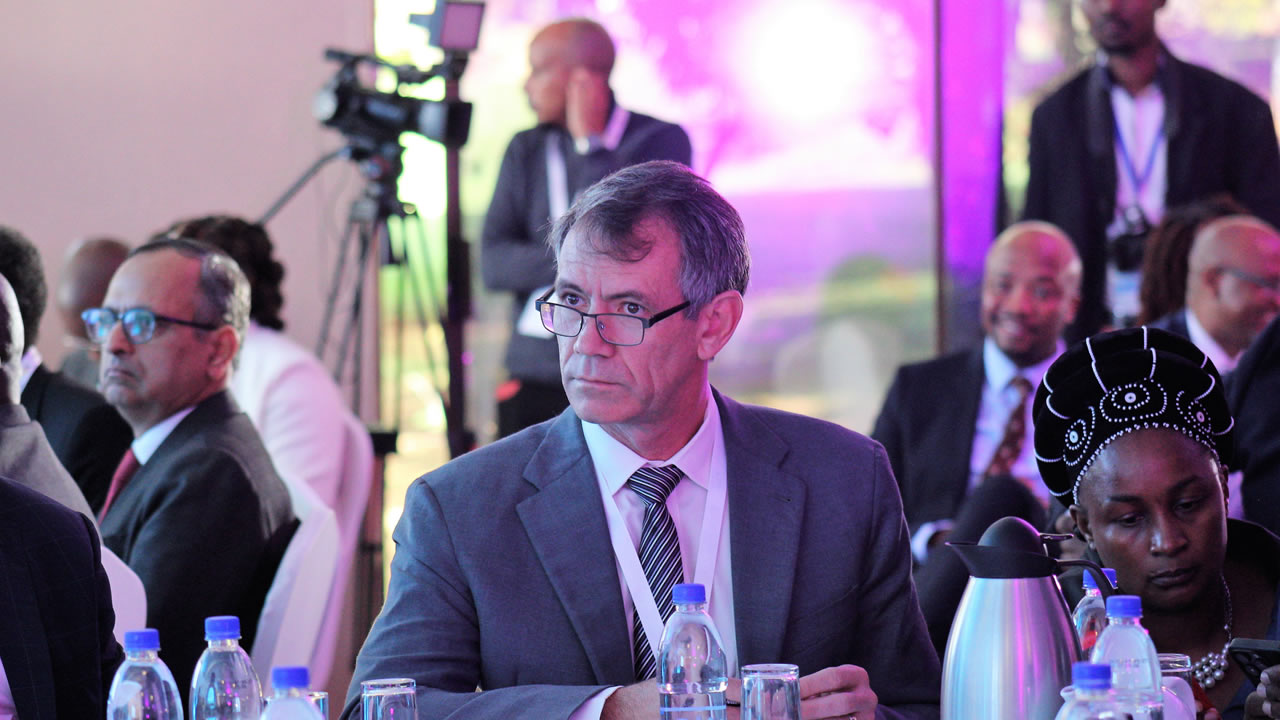
Minister for Finance - Neal Rijkenberg