MANZINI – South Africa’s Minister of Science, Technology and Innovation, Professor Blade Nzimande, has called on African countries to urgently strengthen cooperation in science, technology and innovation in order to accelerate sustainable development.
Nzimande said this will help close the widening digital divide and position the continent to compete effectively in the rapidly evolving global digital economy. Nzimande made the remarks yesterday during the official launch of the Eswatini National Science Month 2026 held at the University of Eswatini (UNESWA) Kwaluseni Campus, where government leaders, diplomats, academics, innovators, students and technology stakeholders gathered to discuss the future of science and digital transformation in the region.
The event was hosted by the Minister for Information, Communication and Technology, Senator Savannah Maziya, who reaffirmed government’s commitment to transforming Eswatini into a knowledge-based economy driven by innovation, entrepreneurship and digital technologies.
Addressing delegates during his keynote address, Nzimande said the Southern African Development Community (SADC) region could no longer afford to treat science, technology and innovation as secondary priorities, especially at a time when countries across the world were rapidly embracing digital transformation and artificial intelligence.
He said governments in the region needed to work collectively in developing evidence-based responses to some of the most pressing challenges facing Africa, including climate change, health crises, food insecurity, water scarcity, energy shortages, economic instability and governance challenges.
“The fundamental task that lies before us as public policymakers and social partners is to answer the question: how best can we use science, technology and innovation to transform the economic trajectory of our region and continent over the next 10 to 20 years?” said Nzimande. The South African minister stressed that stronger cooperation among African countries would be essential in ensuring that the continent develops the scientific and technological capacity required to compete globally.
According to Nzimande, African governments need to deliberately invest in research and development, digital infrastructure and institutional frameworks capable of supporting the growth of the digital economy. He further said Africa should move towards what he described as a ‘sovereign research and development agenda’, where African countries independently drive and fund their own innovation priorities, while maintaining equitable partnerships with international stakeholders.
“This is not a rejection of international partnerships. Rather, it is an affirmation of the importance of equity, mutual respect and African agency in our engagement with global partners,” he said.
Nzimande warned that although digitalisation and emerging technologies such as artificial intelligence (AI) have created enormous economic opportunities globally, they have also intensified inequalities between developed and developing countries.
*Full article available on Pressreader*
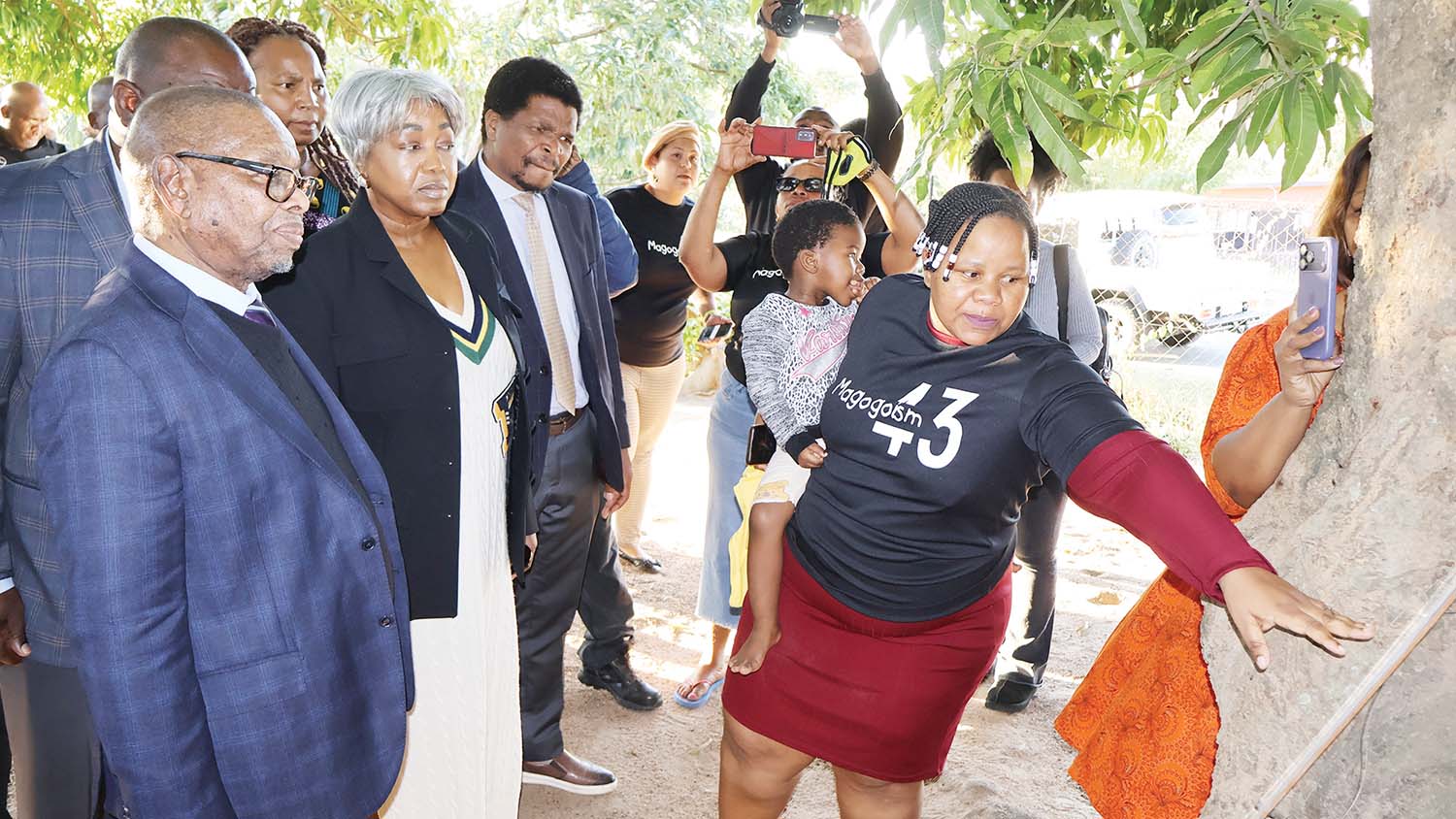
Blade Nzimande is taken through some of the historic sites and memorable moments preserved at KwaMagogo 43 during his visit to the liberation heritage centre in Trelawney Park yesterday, accompanied by Eswatini Minister of Information, Communications and Technology, Savannah Maziya.