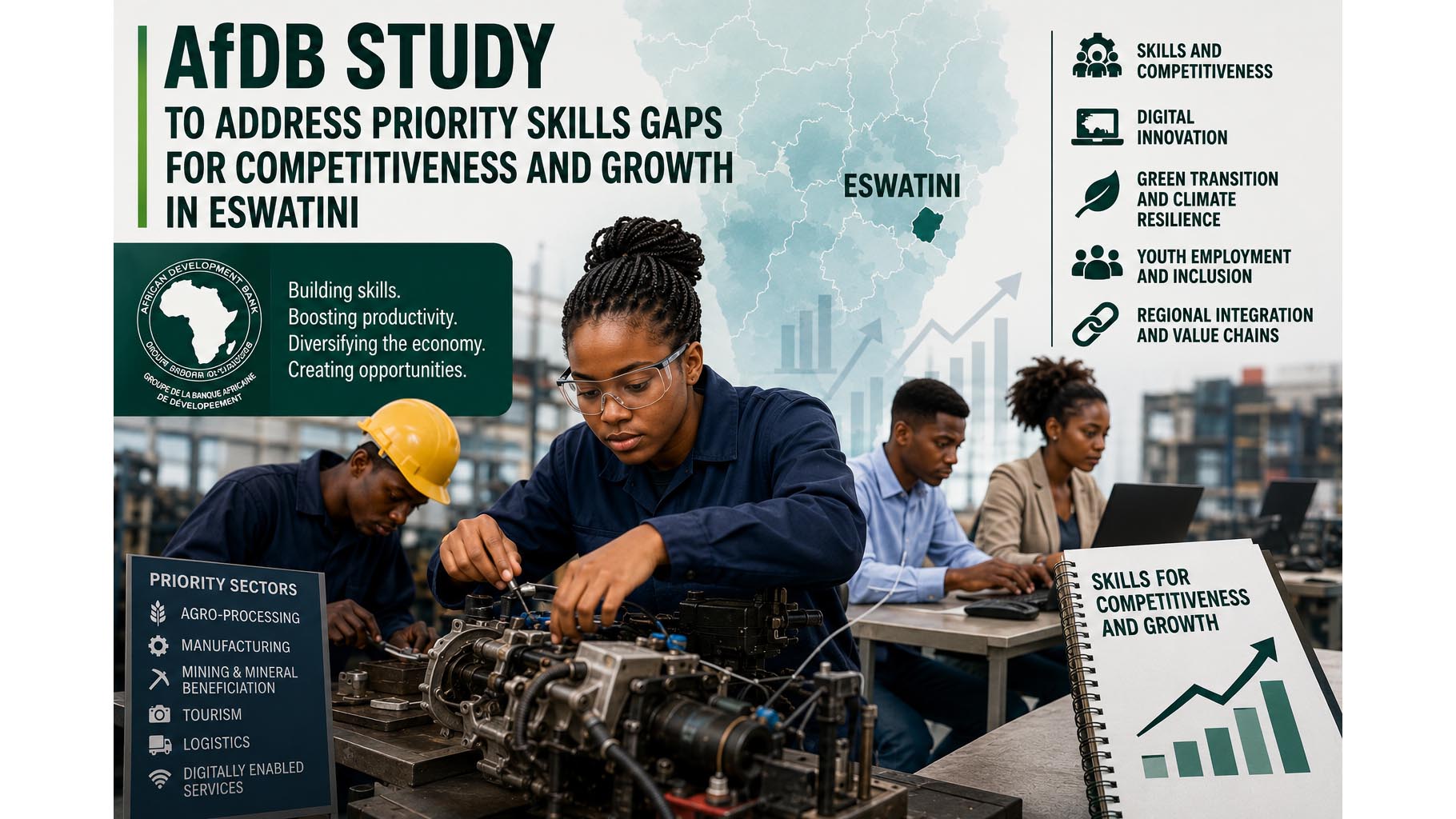
MBABANE – The African Development Bank (AfDB) is set to undertake a comprehensive country-level study aimed at identifying the priority skills gaps constraining competitiveness, productivity and economic diversification in Eswatini.
The study comes at a critical time for the country, which continues to grapple with high unemployment, particularly among young people, while simultaneously seeking to position itself as a more competitive player within regional and continental markets.
The continental lender seeks to recruit an individual consultant to undertake a comprehensive study- Analysis of priority skills gaps in Eswatini.
According to the AfDB, the study will identify the binding skills constraints affecting economic performance and help shape policy dialogue, future bank operations and national reform priorities.
It will also assess how Eswatini can strategically position its workforce to benefit from regional labour mobility, services exports and participation in regional value chains.
The initiative forms part of broader efforts to strengthen human capital development and ensure that the country’s workforce is equipped with the skills required to support industrialisation, private sector growth and structural economic transformation.
The analysis will be conducted within the context of the Southern African Development Community (SADC) and the African Continental Free Trade Area (AfCFTA), while drawing lessons from international best practices in demand-driven skills anticipation and labour market planning.
The AfDB said the study would review existing frameworks and research, including the Skills for Trade and Economic Diversification (STED) framework, labour market studies, Eswatini’s 2022 National Skills Audit and recommendations linked to the country’s Nationally Determined Contributions (NDC) Implementation Plan for 2021-2030.
Particular attention will be paid to the development of transferable skills that align with emerging green industries and digital innovation services, sectors increasingly viewed as critical drivers of future economic growth.
The study is being undertaken against a backdrop of persistent structural challenges facing the Eswatini economy.
While the country has demonstrated resilience in recent years, economic growth continues to be constrained by a narrow production base, limited economic diversification and declining productive sophistication.
The AfDB notes that between 2014 and 2021, Eswatini’s economic complexity ranking declined significantly from 46th position to 63rd position globally, highlighting concerns about the country’s ability to move into higher-value and more sophisticated economic activities.
*…
… youth bulge presents opportunity, risk
MBABANE - The study further highlights Eswatini’s demographic realities, which present both opportunities and challenges for economic development.
Youth currently account for approximately 54 per cent of the country’s population, creating the potential for a significant demographic dividend if the growing labour force can be productively employed.
However, the country continues to face exceptionally high unemployment rates, with youth unemployment estimated at 65 per cent and overall unemployment standing at 37.6 per cent.
The AfDB argues that transforming this youthful population into an economic asset will require substantial investment in skills development aligned with sectors capable of generating jobs, exports and productivity growth.
*Full article available on Pressreader*
The African Development Bank (AfDB) is set to undertake a comprehensive country-level study aimed at identifying the priority skills gaps constraining competitiveness, productivity and economic diversification in Eswatini.