MBABANE - EmaSwati may soon find themselves battling another sharp rise in food prices as two powerful global threats converge at the same time.
These are the looming return of El Niño weather conditions and escalating geopolitical tensions in the Middle East.
The dual threats are now raising concerns among economists, agricultural experts and global financial institutions that food inflation pressures across Southern Africa could intensify in the coming months, pushing up the cost of basic commodities and squeezing already strained household budgets.
For Eswatini, the risks are particularly significant because the country depends heavily on imports from neighbouring South Africa, especially food products, fuel and agricultural supplies. Any disruption to production, transport or input costs in South Africa often quickly spills over into local prices.
The first threat comes from nature itself.
The World Meteorological Organisation (WMO) announced on April 24, 2026, that an El Niño weather event is expected to develop around mid-2026. El Niño is a climate phenomenon associated with warmer-than-normal temperatures in the Pacific Ocean, which often leads to droughts, erratic rainfall patterns and extreme weather events across parts of Southern Africa.
Forecasts indicate that El Niño-related weather conditions could begin surfacing as early as May 2026, with rapidly shifting rainfall patterns expected over the next few months. Agricultural experts in South Africa have already warned that lower rainfall linked to El Niño could significantly reduce crop production during the upcoming planting season. However, what makes the situation even more dangerous this time around is that the region is not only facing possible drought conditions.
Farmers are also entering this uncertain weather cycle while battling soaring fuel and fertiliser prices caused by the ongoing war in the Middle East.
Agricultural Business Chamber of South Africa Chief Economist Wandile Sihlobo warned that these combined pressures could influence farmers’ planting decisions, with long-term implications for food prices.
*…
Middle East conflict sends shockwaves across global markets
MBABANE -The war in the Middle East is increasingly demonstrating how geopolitical tensions thousands of kilometres away can directly affect everyday life for ordinary emaSwati.
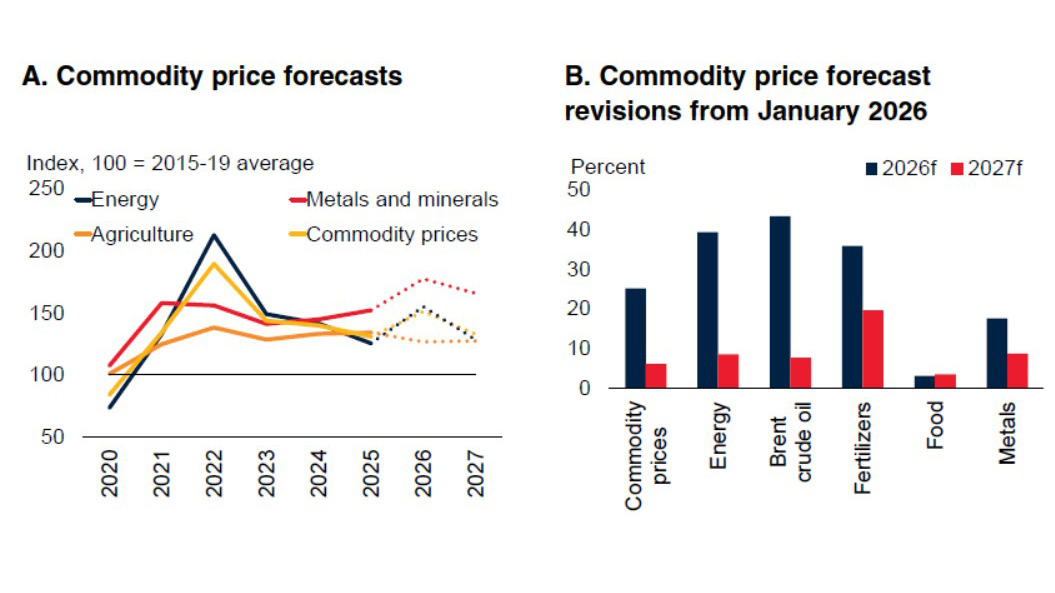
According to the World Bank, the conflict has become one of the most significant global commodity shocks in recent years. Beyond oil, the crisis is disrupting fertiliser supplies, natural gas markets, shipping routes and broader industrial supply chains. The World Bank said the Gulf region is a major global supplier of fertilisers, especially urea, which is heavily dependent on natural gas production.
As exports become disrupted and energy prices rise, fertiliser production costs globally also increase.
This has direct implications for food production worldwide because fertilisers are essential for maintaining crop yields.
The report warned that sustained disruptions could eventually reduce fertiliser use in poorer regions where farmers are financially constrained. That could create longer-term agricultural problems extending into future growing seasons. The World Bank further warned that prolonged disruptions in commodity exports from the Gulf region would represent a ‘grave and widespread supply shock to the world economy’. For Eswatini, the broader concern is inflation. Higher fuel costs affect nearly every sector of the economy, from transport and manufacturing to food distribution and electricity generation.Businesses facing rising operating costs often respond by increasing prices, while households face declining purchasing power. The World Bank said growth prospects for emerging markets have already been downgraded because of the conflict and rising commodity prices.
*Full article available on Pressreader*
Commodity price forcasts