MBABANE - Eswatini is sharpening its focus on broad-based economic diversification across multiple sectors.
Government is putting efforts around moving away from overreliance on a narrow set of industries in favour of a more resilient and inclusive growth model.
Minister for Finance Neal Rijkenberg said the kingdom is deliberately pursuing a wider economic base to strengthen long-term stability and reduce vulnerability to global shocks.
Speaking in an interview with CNBC Africa Journalist Keamo Mosepele on the sidelines of the ongoing OPEC Fund Development Forum 2026 in Vienna, the minister said government’s ambition is to build ‘a broad-based economy, not just focusing on specific areas, but keeping it as broad as possible’.
A key pillar of this strategy is accelerating diversification within the sugar industry, which remains one of Eswatini’s major export earners. Rijkenberg said government is pushing for increased value addition rather than exporting raw or minimally processed sugar products, to retain more value within the domestic economy.
The textile sector was also highlighted as an area requiring urgent structural improvement.
The minister noted that Eswatini’s position in the textile value chain remains relatively weak, limiting the country’s ability to fully benefit from global apparel supply chains. Strengthening this sector, he said, will be central to job creation and industrial expansion.
Infrastructure development remains a key enabler of diversification.
Rijkenberg pointed to ongoing construction of the Mpakeni Dam, describing it as a strategic investment expected to significantly boost water security and agricultural productivity.
The dam is also expected to support irrigation expansion, enhance climate resilience for farming communities and unlock higher-value agricultural production in surrounding areas.
The minister also touched on the impact of the dam towards the textile sector as there are proposed plans to grow cotton in large scale.
In forestry, the minister said Eswatini is exploring greater value addition rather than exporting raw timber products.
This shift is expected to stimulate downstream industries such as processing, furniture manufacturing and packaging materials, thereby creating additional employment opportunities and increasing export earnings.
Tourism was another sector identified as having strong growth potential.
Rijkenberg said Eswatini continues to position itself as a niche tourism destination, with recent investments expected to enhance its competitiveness in the regional and global market.
He singled out the recently opened Palazzo Ezulwini International Convention Centre, describing it as ‘stunning infrastructure with a royal touch’, aligned with Eswatini’s identity as a monarchy.
*Full article available on Pressreader*
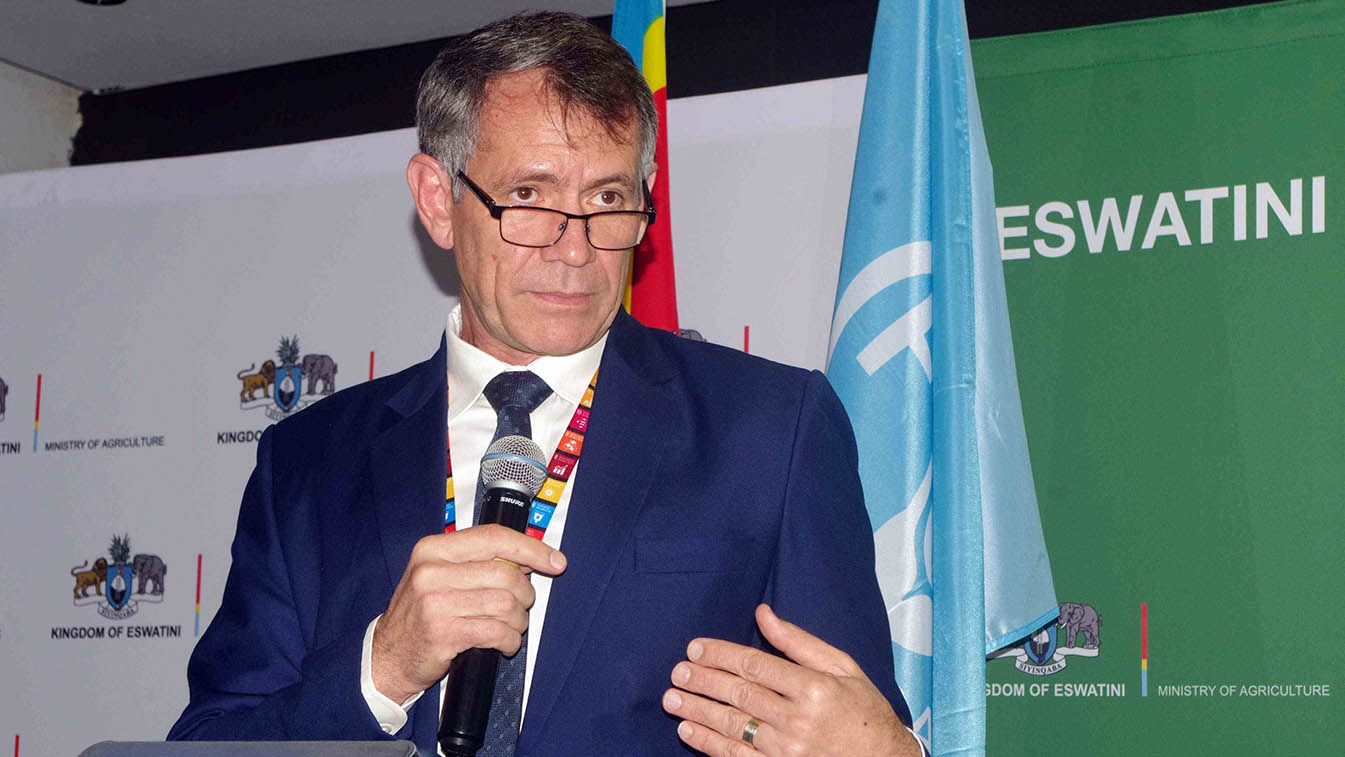
Minister for Finance Neil Rijkenberg. (File pic)