MBABANE – The Central Bank of Eswatini (CBE) commenced its participation in the 2026 Spring Meetings of the International Monetary Fund and the World Bank Group in Washington, DC on Monday.
The high-level engagements were aimed at strengthening the country’s macroeconomic positioning and deepening its integration into the global financial system.
The delegation, led by CBE Governor Dr Phil Mnisi, began its official programme on Monday morning with a strategic session involving the mission chief and executive director of the IMF Group 1 Constituency.
The discussions formed part of ongoing bilateral engagements that seek to assess recent economic developments in the Kingdom of Eswatini while mapping out areas for continued technical cooperation and policy support.
The spring meetings, which bring together central bankers, finance ministers, policymakers and development experts from across the globe, serve as a critical platform for countries like Eswatini to align domestic priorities with evolving global economic trends.
For Eswatini, the meetings come at a time when global financial conditions remain uncertain, marked by tightening liquidity, persistent inflationary pressures in some regions and shifting capital flows.
In the opening session, Eswatini’s delegation provided updates on the country’s macroeconomic outlook, policy reforms and ongoing efforts to maintain financial stability.
*…
... focus on market-based finance
MBABANE - Among the early high-level sessions attended by the delegation was a critical discussion on market-based finance.
It examined the growing role of capital markets in driving economic growth and development.
This session highlighted how countries, particularly emerging and developing economies, can leverage capital markets to mobilise private sector funding, reduce overreliance on traditional bank financing and enhance economic resilience.
For Eswatini, where financial intermediation remains largely bank-dominated, the insights from this session are expected to inform ongoing efforts to diversify funding sources and strengthen the domestic financial ecosystem.
Participants explored how well-functioning capital markets can support infrastructure development, facilitate long-term investment and improve access to finance for businesses.
The discussions also highlighted the importance of regulatory frameworks that can safeguard financial stability while encouraging innovation and market participation.
The Eswatini delegation’s participation in this session reflects a growing recognition within policymakers of the need to develop alternative financing channels, particularly in an environment where global financial volatility can constrain traditional lending.
Ahead of the formal programme, the delegation convened on Sunday afternoon to coordinate its strategy for the week.
Officials were assigned to various parallel sessions, ensuring that Eswatini is represented across a broad spectrum of discussions.
These sessions cover key thematic areas such as financial stability, sovereign debt sustainability, capital flow management and the regulation of non-bank financial institutions.
Such strategic allocation of responsibilities ensures that the country maximises its engagement while capturing insights that can be applied domestically.
*Full article available on Pressreader*
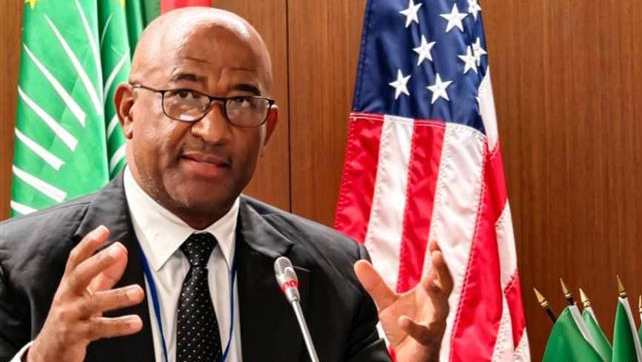
The CBE delegation, led by the Governor Dr Phil Mnisi, commenced its participation in the 2026 IMF–World Bank Spring Meetings in Washington, DC on Monday. (Courtesy pic)