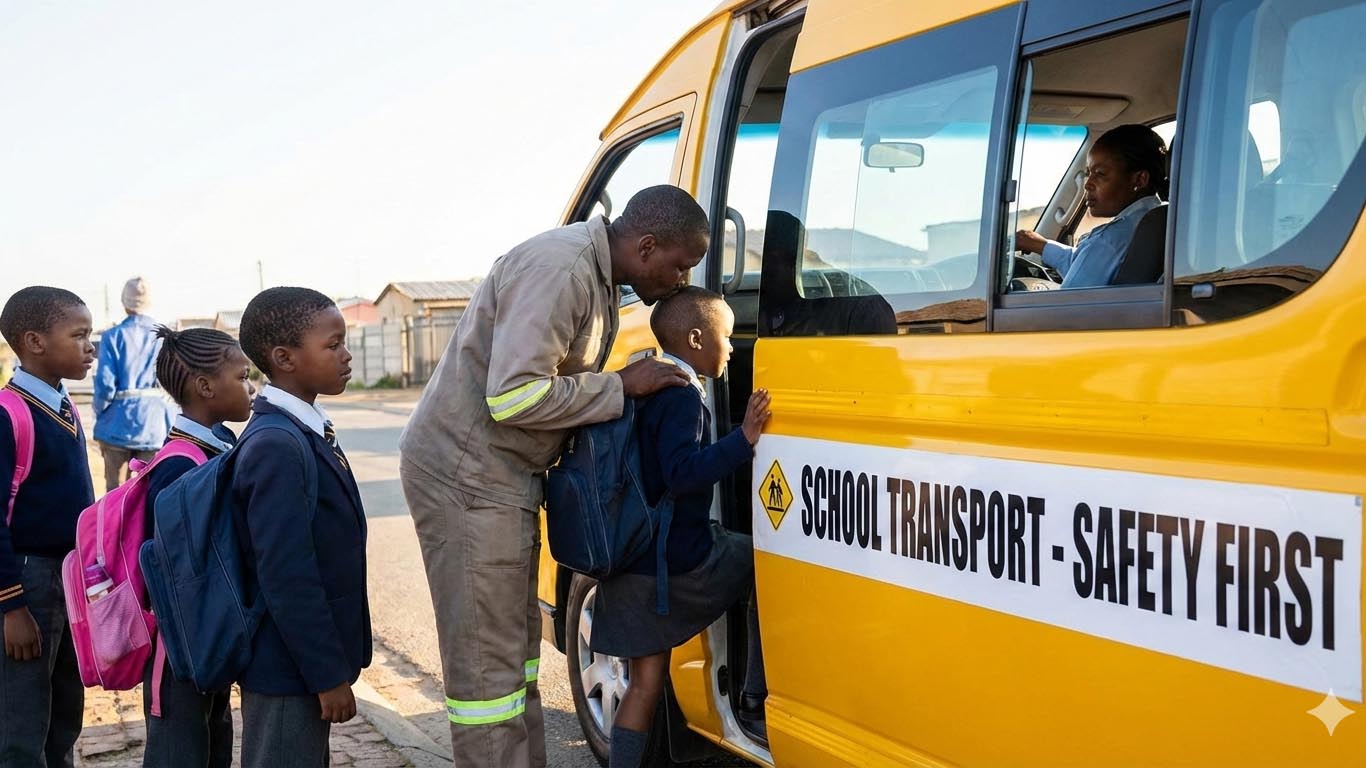
Every school day begins with hope. Parents watch their children put on uniforms, shoulder backpacks, and step out the door with dreams of learning, friendship and a brighter future. For many families, especially those relying on public or hired transport, the journey to school is an everyday routine entrusted to drivers and road users. Yet, this routine carries a heavy responsibility. Recent events in South Africa, where 12 children lost their lives in a horrific road accident caused by reckless driving, remind us in the most painful way that children’s safety on the road can never be taken lightly.
Children are among the most vulnerable road users. They depend entirely on adults: Drivers, parents, transport operators and other road users, to make safe decisions on their behalf. When a driver speeds, overtakes carelessly, ignores traffic rules, or drives under fatigue or influence, it is not just a traffic violation; it is a gamble with young lives. The South African tragedy underscores how one moment of recklessness can permanently devastate families, schools, and entire communities.
Transporting children to school demands a higher standard of care than ordinary driving. School transport drivers are not just drivers; they are temporary guardians. Their duty goes beyond getting from point A to point B, it includes ensuring that every child arrives alive, unharmed, and emotionally secure. This means obeying speed limits at all times, especially in residential areas and school zones; avoiding distractions such as mobile phones; and refusing to drive when tired, stressed, or unwell. No deadline, traffic jam, or pressure from passengers justifies unsafe driving.
Vehicle safety is equally critical. Vehicles used to transport children must be roadworthy, properly serviced and suitable for passenger transport. Overloading is a common and dangerous practice that significantly increases the risk of fatal outcomes in an accident. Children should be properly seated, and where possible, seatbelts must be used. Doors, brakes, tyres and lights should be checked regularly. A poorly-maintained vehicle combined with reckless driving is a deadly combination.
Parents and guardians also play a crucial role. Choosing who transports your child should never be based on cost alone.
Asking questions about the driver’s experience, driving habits and vehicle condition is not being difficult, it is being responsible. Parents should encourage children to speak up if they feel unsafe during their commute and take such concerns seriously. Silence, often born from fear or respect for adults, can place children in continued danger.
Communities and schools have a shared responsibility to promote a culture of road safety. Schools can engage transport providers on safety standards, organise awareness sessions, and work with authorities to ensure safe pick-up and drop-off zones. Community leaders and civil society organisations can advocate for stricter enforcement of traffic laws, especially those relating to school transport. When unsafe practices are normalised, tragedies become more likely; when safety is prioritised collectively, lives are saved.
Governments and law enforcement agencies must also act decisively. The loss of 12 children in South Africa is not just a personal tragedy; it is a public safety failure that calls for accountability. Strict enforcement of traffic laws, regular inspections of school transport vehicles, and meaningful penalties for reckless driving are essential deterrents. Road safety campaigns should consistently emphasise child protection, reminding drivers that every child on the road is someone’s son, daughter, sibling or grandchild.
At its core, road safety is about values. It is about recognising that children’s lives are priceless and that every adult has a moral obligation to protect them. Reckless driving steals futures, shatters families, and leaves wounds that never fully heal. No apology, compensation, or explanation can replace a child who never makes it home from school.As we remember the children who lost their lives in that tragic South African accident, let their story be a call to action. Let it push drivers to slow down, parents to ask questions, authorities to enforce the law, and communities to demand better. Every morning journey to school should end with children safely stepping into their classrooms, ready to learn and grow. Being careful on the road is not an inconvenience - it is an act of love, responsibility, and respect for life.
Parents watch their children put on uniforms, shoulder backpacks, and step out the door with dreams of learning, friendship and a brighter future.