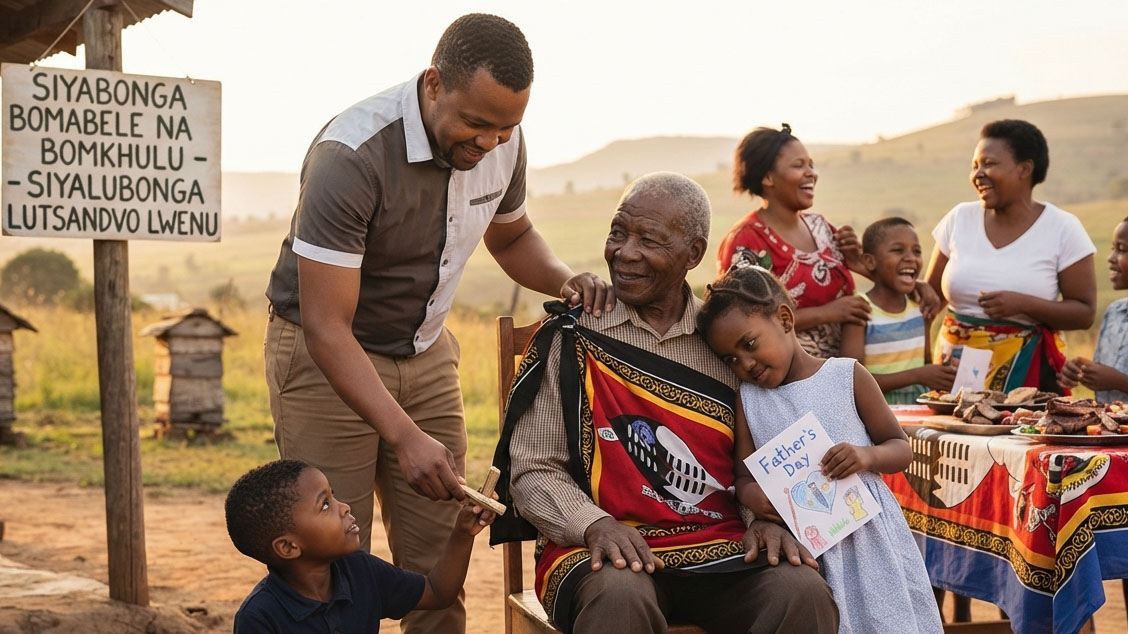
Father’s Day is an internationally recognised occasion dedicated to honouring fathers, fatherhood and the significant influence of paternal figures in society. It is a time for families to express appreciation, celebrate paternal bonds and recognise the sacrifices and guidance provided by fathers, grandfathers and stepfathers.
This day was celebrated last Sunday. Many fathers were honoured by their families with kind messages of appreciation, enjoyed nice meals, many received gifts as a token of appreciation. Fathers indeed looked forward to this day so that they could enjoy kind messages from their children, grandchildren and nieces.
Meaning and significance
Father’s Day provides a dedicated moment to thank fathers for their love, support and contributions to the welfare of their families. It honours men who act as mentors, guide their children and foster strong family connections. For many, it is also a time of reflection, an opportunity to cherish the memories and legacies of fathers who have passed away.
Fathers are pillars in a child’s emotional development. Children look to them to set and enforce rules, providing a sense of physical and emotional security. An involved father promotes inner growth and strength, inspiring children to make them proud. In fact, in our Eswatini society, even when you are an adult, you still represent your father. If one behaves well, society appreciates one’s father as having nurtured their child well.
Furthermore, fathers set the bar for future relationships. The way a father treats his child deeply influences what that child will look for in others as they grow. This is indeed a daunting task that fathers have.
Daughters, for example, depend on their fathers for emotional support. A loving and gentle father models what a healthy relationship with a man looks like. This grounding tend to have a positive influence when a daughter gets married.
Sons on the other hand, learn how to function in by imitating their father’s character. When a father treats others with respect, his son learns to do the same. In the absence of a father, young boys will look to other male figures to learn how to survive and behave.
We appreciate the father figures like bomalume and bomkhulu, who take the role of a father. Some orphans have grown up to be fine human beings because bomalume influenced them positively. We say to such fathers, Siyabonga.
Challenges of modern fatherhood
Being a father is not easy.
In a patriarchal society, traditional norms pressure men to be the primary financial providers, which can lead to stress, burnout and feelings of inadequacy during financial hardships. Fathers are expected to be invincible protectors, an unrealistic expectation in a violent society.
They are also expected to be decision-makers, despite rarely being taught how to lead, outside of what they observe from their own fathers or society. Many are conditioned to embody a stoic masculinity that demands physical strength and emotional control while suppressing vulnerability.
Today, fatherhood occurs within a challenging context. Many fathers are caught in systemic societal issues, including high levels of poverty, unemployment, rebellious children and the pain of divorce, to mention a few.
Navigating challenges of modern fatherhood
We applaud the fathers who, despite these immense challenges, place their families at the top of their agenda.
They choose to remain present, ensuring their children feel secure in their commitment.
These fathers provide for basic needs like food, shelter, clothing, education and healthcare.
They act as spiritual and moral guides, teaching their children faith, embracing Christ and demonstrating respect for elders, siblings and peers.
They pass down vital life skills, whether navigating modern life or as many raised in rural areas remember learning to farm and care for livestock.
Crucially, these fathers demonstrate love for their children’s mother, treating her as an equal partner. Through this, sons learn that women and girls are not inferior, but are vital, valued members of the family and society.
As the Bible admonishes in Ephesians 6:4 (Amplified Version): “Fathers, do not provoke your children to anger [do not exasperate them to the point of resentment with demands that are trivial or unreasonable or humiliating or abusive; nor show favouritism or indifference to any of them], but bring them up in the discipline and instruction of the Lord.”
Fathers who adhere to Paul’s exhortation, where fathers are called upon to gentle guide their children, tend to have a positive effect on their children and in turn they become responsible citizens.
We deeply appreciate every father who refuses to abandon his post, remaining a steadfast anchor for his family.
The renowned international Preacher Billy Graham said: “A good father is one of the most unsung, unpraised, unnoticed and yet one of the most valuable assets in our society.”
Father’s Day is an internationally recognised occasion dedicated to honouring fathers, fatherhood and the significant influence of paternal figures in society.