If you have ever believed that someone was the cause of your failure, you are right. You are!
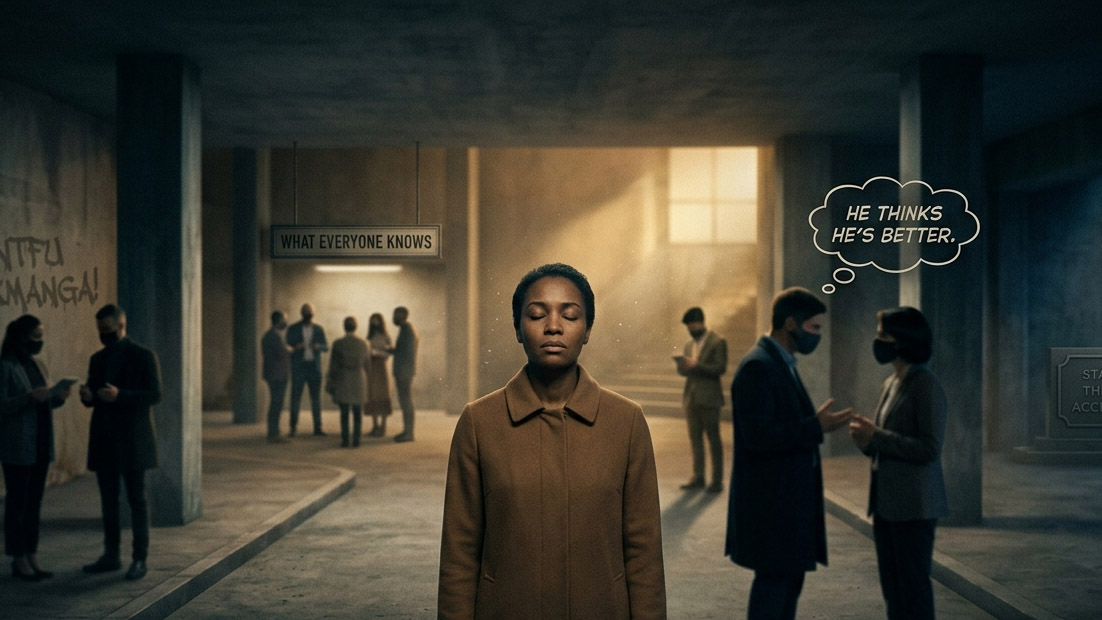
Let’s break it down. Ordinarily, you will hear people tell the truth. That’s what they’ll say while they’re lying to your face. That’s the performance, truth. That’s the costume. That’s what makes the lie believable. Nobody ever stands up and says: “I’m about to deceive you.” No, they say, ‘Let me be honest’. That’s how you know something dangerous is coming. Bantfu banemanga! People lie and not just for convenience. They lie to control outcomes. They lie to justify power. They lie to make injustice look like order and the worst kind of lie? The one that arrives dressed as truth. Let’s take it to communities. That’s where injustice gets social approval. You don’t just get judged, you get summarised. Your entire life is reduced to a version that fits the narrative people are comfortable with. ‘She’s changed.’ ‘He thinks he’s better.’ ‘They’re not like us anymore.’
Nobody investigates. Nobody verifies, because truth takes effort. A lie just needs agreement. And once enough people agree, it stops being a lie, it becomes ‘what everyone knows’. That’s how injustice spreads. Not through force, but through repetition. People will watch someone be isolated, misrepresented, even destroyed and call it accountability, but it’s not accountability if the story is edited. It’s punishment with better branding. Truth is precisely a mirage. Bantfu banemanga! Relationships? That’s where injustice becomes personal. People don’t always hurt you by lying outright. Sometimes they hurt you by controlling the truth. They decide what you’re allowed to know. What you’re allowed to question and what you’re allowed to feel. You’re not being lied to, you’re being managed. And when you react? Now you’re too sensitive. Now you’re overthinking. Now you’re the problem. That’s the trick. They lie, then redefine your response to the lie as the issue. That’s not miscommunication. That’s manipulation. The longer it goes on, the more you start doubting your own instincts. You start asking yourself questions you should never have to ask: “Maybe I’m the one exaggerating?” “Maybe I misunderstood?” No, you understood perfectly, but someone needed you to question that, because once you doubt your own reality, they don’t have to lie as hard anymore. You’ll do it for them. At work, injustice doesn’t shout. It’s documented.
You’re not forced out; they simply say you’re not in step. You don’t get ignored; your ideas are not prioritised at this stage. You don’t get exploited; you’re told it’s an opportunity to grow. That’s not feedback. That’s translation, because if they told you the truth, ‘We don’t value you, but we need your labour,’ the whole structure would collapse. So they lie… professionally. You’ll watch someone’s underperformence rise faster than the one doing the work. Not because they’re better, but because they understand the system. They don’t tell the truth. They tell the right story, and the system rewards them, not for competence, but for compatibility with the lie. Meanwhile, the one who speaks plainly? Labelled. Difficult. Uncooperative, because truth, in an unjust system, is not a virtue, it’s a disruption. Politics? That’s where injustice gets a microphone. They don’t just lie, they announce it. ‘We are serving the people.’
‘We are committed to change.’ ‘We are addressing the issue.’ Everything sounds correct. That’s the point, because the more polished the language, the harder it is to challenge. You don’t argue with words, you argue with what’s happening behind them, and behind them? Nothing. Or worse, something happening that benefits the same people who wrote the words, but if you question it, you’re negative.
If you push, you’re disruptive. If you persist, you’re dangerous, because truth, when it exposes injustice, is treated like rebellion.
So, people learn. Not how to tell the truth, but how to survive without it. You smile when you’re overlooked. You clap when something feels off. You nod through explanations that don’t explain anything. Calling it out comes at a cost and most people have too much to lose. People lie! And the lie is not just what is said. It’s what is accepted. Injustice doesn’t always need loud liars. It needs quiet participants. People who see, but don’t say. Who know, but don’t act. Who feel, but suppress, because speaking the truth would disturb the arrangement. The arrangement, even if it’s unfair, is… stable, and stability is seductive. Even when it’s built on something false. That’s how people live in injustice and still call it normal, because normal is just what people have agreed not to question anymore. And once that agreement is in place, the lie becomes invisible. Until someone breaks it. Until someone says, ‘This is not right’. Suddenly, everything shifts. Not because the injustice started then, but because it was finally named, and naming it?
That’s the most dangerous thing you can do in a world that survives on polite lies. So yes, people lie. Not harmlessly. Not occasionally, but consistently enough to build systems where injustice looks like structure, silence looks like peace and control looks like truth. Bantfu banemanga, period!
And until we stop mistaking polished lies for truth, the truth will remain an illusion.
If you have ever believed that someone was the cause of your failure, you are right. You are!