


MBABANE – Land disputes remain the country’s most pressing human rights issue, accounting for nearly half of all grievances lodged with the Eswatini Commission on Human Rights and Administration.
Commission representative Nelly Zwane said land issues alone constituted 46 per cent of all complaints received nationally. These ranged from forced evictions and boundary conflicts to disputes involving traditional authorities and strained relations between farm dwellers and landowners.
“We receive reports of land evictions and disputes on a daily basis,” she said. “Farm dwellers’ issues are constant, and most cases involve families contesting boundaries or raising concerns over processes handled by traditional structures.”
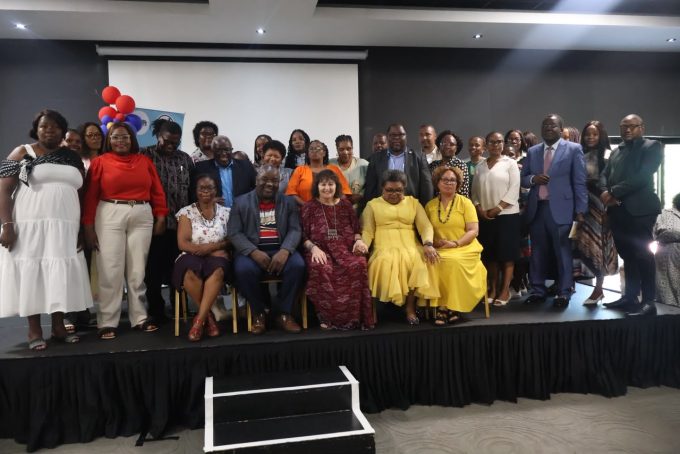
This was revealed during the commemoration of Human Rights Day held at the Mbabane Theatre Club yesterday, where experts, civil society and government representatives unpacked the country’s most persistent rights violations under the theme “Human rights: Our daily essentials.”
Civil society echoed these concerns. Coordinating Assembly of Non-Governmental Organisations (CANGO) Executive Director Thembinkosi Dlamini, speaking during the panel discussion, said the country’s colonial history continued to influence today’s land conflicts. He cited the Vuvulane farm dwellers dispute and the recent success story of the Mbondzela resettlement as longstanding examples of communities being displaced or inadequately compensated.
He criticised the lack of adherence to Section 9 of the Constitution, which mandates proper resettlement and compensation standards. “The land policy that is meant to regulate resettlement has been in drafting stages for close to 30 years,” he noted, adding that “Dutch law continues to override customary law in practice, leaving vulnerable people without adequate protection.”
The executive director further pointed out that major agricultural and infrastructural projects often left communities disconnected from the benefits. “Sugar cane plantations make millions, yet the communities relocated to make way for them remain underdeveloped years later,” he said.
He also lamented that courts were ‘not rising to the occasion’ in adjudicating land matters decisively, adding that judgments that could clarify what constitutes legal occupancy remained scarce.
Despite the challenges, Zwane highlighted recent positive interventions. At Mbondzela, the commission facilitated dialogue leading to a more acceptable resettlement process. At Gucuka, a farm dispute was resolved after the owner agreed to construct houses for the dwellers. At Dvokolwako, Zwane said traditional leaders reversed an unfair land seizure after the commission intervened and the chief fined the responsible bandlancane members.
Panellists agreed that solutions lay in stronger collaboration between traditional leaders, civil society, and development partners. “We need to bring traditional leaders to the table to discuss both their challenges and the grievances of residents,” Zwane said.
She particularly highlighted the continued collaboration with development partners such as the United Nations Development Programme (UNDP), the European Union (EU), whose representatives were also present during the commemoration.
*…
… access to justice still hampered by delays, system gaps
MBABANE – Access to justice remains one of the most frequent complaints received by the Commission on Human Rights and Public Administration.
emaSwati have expressed frustration over delayed judgments, long-pending cases and difficulties navigating the legal system.
During the Human Rights Day commemoration at the Mbabane Theatre Club, Commission representative Nelly Zwane said many complaints involved cases that “drag on for years without being finalised,” including matters lodged by inmates who have spent prolonged periods on remand awaiting trial.
Another recurring grievance involved legal practitioners. “Some complain that lawyers take money and disappear, leaving clients stranded with no updates on their cases,” she said. Divorce cases – especially those under customary unions – also featured prominently. “Many spouses feel their voices are not heard, particularly women who are denied the opportunity to present their side,” Zwane noted.
The Ministry of Justice and Constitutional Affairs’ Nozipho Mazibuko, representing the NMRF, said notable progress had been made through alignment with international human rights treaties. She revealed that the ministry had recently cleared a 20-year backlog of overdue reports.
*…
… lack of real men fuelling GBV – principal magistrate
MBABANE – Mbabane Principal Magistrate Fikile Nhlabatsi has attributed the rise in gender-based violence (GBV) to what she termed the lack of real men in Eswatini.
The principal magistrate said many men are failing to uphold principles of responsibility, restraint and emotional maturity.
Sharing an intervention during the Human Rights Day commemoration hosted by Eswatini Commission on Human Rights and Administration, Nhlabatsi said a ‘real man’ would never intentionally inflict harm on a woman.
“A real man would not use a woman as a punching bag,” she said. “He would resolve conflict maturely, without resorting to violence.”
She called on senior citizens, traditional authorities and community leaders to play a more active role in mentoring boys and young men. “We need structured guidance on what responsible manhood looks like,” she said.
Nhlabatsi also welcomed the recent parliamentary motion proposing mandatory DNA testing for newborns, describing it as a positive step towards resolving disputes around paternity and child maintenance.
She argued that the motion should go further by creating mechanisms to compel biological fathers to financially support their children, emphasising that many women bear the entire burden of child-rearing.
The event also highlighted broader youth-related grievances.
Swazi Youth Coalition Chairperson Bulelani Matsebula said young people faced exclusion from decision-making bodies, including land boards, traditional structures, resulting in difficulty accessing land.
He added that the LGBTQI+ community also continued to face discrimination in health and fintech services, where some reported being profiled or denied respectful treatment.
“Skills mismatch between what young people study and available opportunities also remains a major concern,” he said.
*Full article available in our publication












Leave a comment