MBABANE – The Eswatini National Petroleum Company (ENPC) spent almost E10 million more on its operations during the 2024/25 financial year, with operating expenditure increasing by E9.84 million from E37.1 million to E46.95 million.
This is reflected in the parastatal’s annual performance report for the year 2025, which was tabled in Parliament on Thursday.
An analysis of the report reflects that the company significantly increased its operating expenditure during the 2024/25 financial year, with spending rising by almost E10 million despite the income remaining virtually unchanged.
The State-owned enterprise’s latest annual financial statements show that operating expenses climbed from E37.1 million in the previous financial year to E46.9 million for the year ended March 31, 2025, an increase of approximately 26.6 per cent.
By comparison, total income rose by less than one per cent, increasing from E142.8 million to E143.9 million.
The company’s largest operating expense remained employee costs, which increased from E13.1 million to E14.3 million.
Staff costs alone account for roughly one-third of ENPC’s annual operating expenditure, reinforcing payroll as the single biggest cost of running the organisation.
Advertising expenditure recorded one of the sharpest increases in the accounts, more than doubling from E1.04 million to E2.5 million.
On the other hand, professional consultancy remained another major area of expenditure.
Although consultancy fees declined from E5.26 million to E4.06 million, they remained among the company’s largest non-payroll expenses.
Another notable addition to the accounts is an impairment charge of E1.7 million, compared with no such expense in the previous year.
Impairments generally reflect a reduction in the value of company assets and can signal operational or investment challenges.
The financial statements do not specify the assets affected in the income statement itself, with further detail expected in the accompanying notes.
Several other operating costs also moved upwards during the year.
Subscriptions and licence fees more than doubled, rising from E383 000 to nearly E892 000, while repairs and maintenance increased to almost E2 million.
Motor vehicle expenses also rose sharply, increasing from approximately E114 000 to E269 000, while insurance costs edged upwards to just over E400 000.
Tender evaluation expenses climbed to approximately E719 000, reflecting another area where operational costs continued to grow.
It should be noted, however, that not every expense category increased.
Auditors’ fees fell by more than 40 per cent, legal expenses declined, printing and stationery costs were reduced significantly, and staff welfare expenditure also decreased.
Those savings, however, were outweighed by larger increases elsewhere across the business.
Despite the higher operating costs, ENPC remained financially strong, posting a surplus of E96.5 million for the year.
Worth noting is that it is not the first time that operational costs of the ENPC jump higher.
In his Compliance Audit Report for the financial year ended March 31, 2024, the Auditor General (AG), Timothy Matsebula, raised a query that the parastatal had recorded a significant increase in operating expenses.
The AG reported that operating expenses increased significantly by E14 341 532 (90.8 per cent) from E15 782 732 00 in the financial year ended March 31, 2023 to E30 124 264 in the financial year ended March 31, 2024.
This increase, the AG said in his report, was mainly driven by substantial rises in selected key expenditure items including consulting fees, employees and seconded officers’ costs, rent, advertising, training and other operating expenses.
Matsebula said he expressed concern to management that, if the rising operating expenses were not brought under control, they could negatively impact the company’s financial performance and potentially jeopardise its ability to continue as a going concern.
He said he advised management to take proactive measures to control operating expenses.
“I further requested a detailed explanation for the significant increase in advertising, particularly the expenditure items reflected in the table above,” the AG said in his report.
He said the response he got at the time was that the increase in operating expenses was due to an increase due to an increase in tender adverts, recruitment adverts and marketing for a new product.
Consulting fees increased due to the engagement of consultants for ICT planning, facility design, fundraising and organisational change.
Office expenses increased due to higher utility costs and increased meetings, including events and staff refreshments.
Subscriptions and licences increased due to new memberships, increased contributions, and additional IT licences.
On the other hand, telephone and fax increased due to network upgrades and fibre installation.
The AG had raised concern that the ENPC management did not provide a detailed explanation justifying the value for money obtained from the expenses incurred.
In addition, he said there was no supporting documentation provided to corroborate the legitimacy and accuracy of the costs.
Furthermore, the cost for fines and penalties are concerning, as they indicate non-compliance with the laws of the land and regulations thereof.
Last month, the ENPC management got an opportunity to justify the spending before the Public Accounts Committee (PAC).
Established through the Petroleum Act No. 18 of 2020, the ENPC is a 100 per cent State-owned entity under the Ministry of Natural Resources and Energy and is recognised as the country’s national oil company by the Petroleum Act of 2020.
ENPC has a vision to be an innovative leader in the supply of and access to petroleum products towards economic growth and sustainability.
*Full article available on Pressreader*
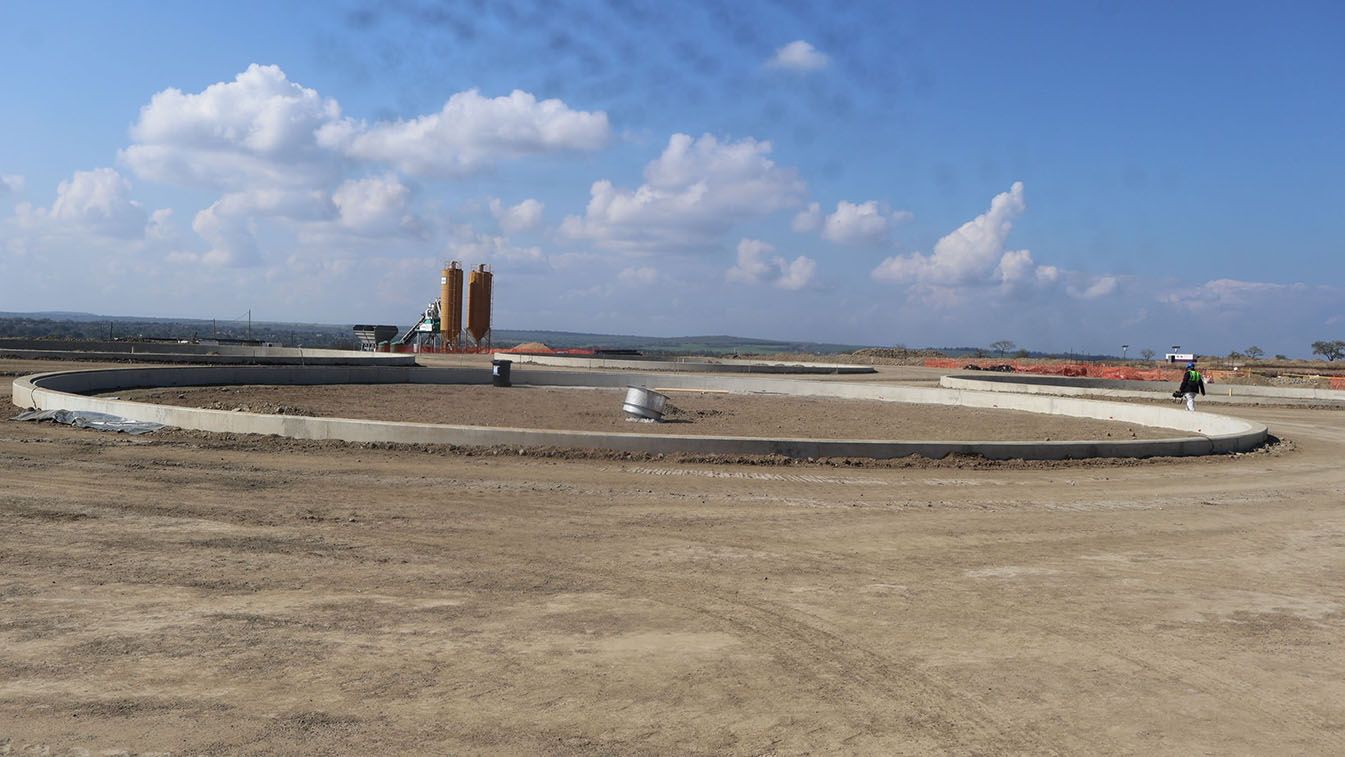
Construction works at the Strategic Oil Reserve Facility. (Pic: Ntombi Mhlongo)