MBABANE – Government plans to tighten controls on private colleges accused of advertising unaccredited courses and misleading prospective students.
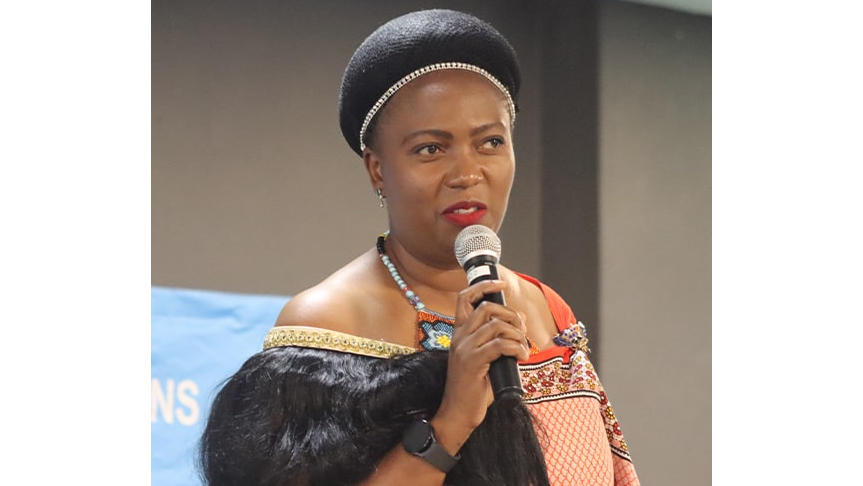
Principal Secretary in the Ministry of Education and Training Nanikie Mnisi told the Public Accounts Committee (PAC) yesterday that the practice continues to disadvantage emaSwati students.
She said the ministry is concerned by reports of colleges enrolling students who do not meet minimum entry requirements and facilitating their admission to foreign institutions offering unrecognised qualifications.
Mnisi said stakeholders had already been engaged on the issue, with further discussions scheduled for June 23. One proposal under consideration would require private colleges to obtain ministry approval before advertising programmes and courses.
“Many students are boarding flights to pursue studies at institutions that later prove problematic, leaving them with qualifications that are not recognised or do not meet industry requirements,” she said.
The PS said the ministry had intervened in cases where institutions were accused of denying students their right to education. She rejected suggestions that colleges owned by emaSwati should be treated leniently.
“That would be unfair because it is also emaSwati students who suffer the consequences,” she said.
To strengthen oversight, the ministry has requested additional inspector posts from the Ministry of Public Service to enable regular inspections of higher learning institutions.
“As the mother ministry, it does not look good on us when students face challenges after enrolling in institutions that are not properly accredited,” Mnisi added.
Mnisi also acknowledged governance challenges at the Eswatini Higher Education Council (ESHEC), citing the absence of a substantive chief executive officer.
“We need a CEO who will do the work, be accountable and ensure the institution sustains itself,” she said.
She revealed that a recent fact-finding mission to Mauritius found ESHEC’s fees comparatively high, making it difficult for emaSwati wishing to establish educational institutions.
The PS said the CEO position had been advertised twice without success and questioned reports that a head-hunting process was now underway despite about E200 000 already being spent on recruitment.
She said the ministry had dispatched a team to determine the cause of the delays and why no suitable candidate had been identified.
*…
Exams Council blames E12m personnel costs on exam paper leak
LOBAMBA – ECESWA says a leaked examination paper and emergency interventions significantly drove up costs, deepening its E9.3 million deficit.
The Examinations Council of Eswatini (ECESWA) told the Public Accounts Committee (PAC) that a leaked examination paper triggered costly emergency responses during the year ended March 31, 2024.
The explanation followed questions from MPs on rising expenditure and an operating deficit highlighted by Auditor General Timothy Matsebula.
The auditor general reported a net deficit of E9.3 million, widening from E4.8 million in the previous year, warning that expenditure was outpacing income.
ECESWA Finance Manager Duduzile Malinga said the leak forced the cancellation of the affected paper and the urgent setting of a replacement.
She said examiners had to be reconvened, new papers printed and nationwide redistribution undertaken, all at unplanned cost.
MPs, however, questioned whether the incident fully explained the rising expenditure, particularly sharp increases in personnel costs.
*Full article available on Pressreader*
PS in the Ministry of Education and Training Nanikie Mnisi, Phondo MP Bonginkosi Dube and Kubuta MP Masiphula Mamba. (File pics)