MANZINI – A worrying trend emerging from correctional facilities suggests that some inmates are not breaking out of prison in pursuit of freedom, but rather because they feel safer behind bars than in the communities awaiting them after release.
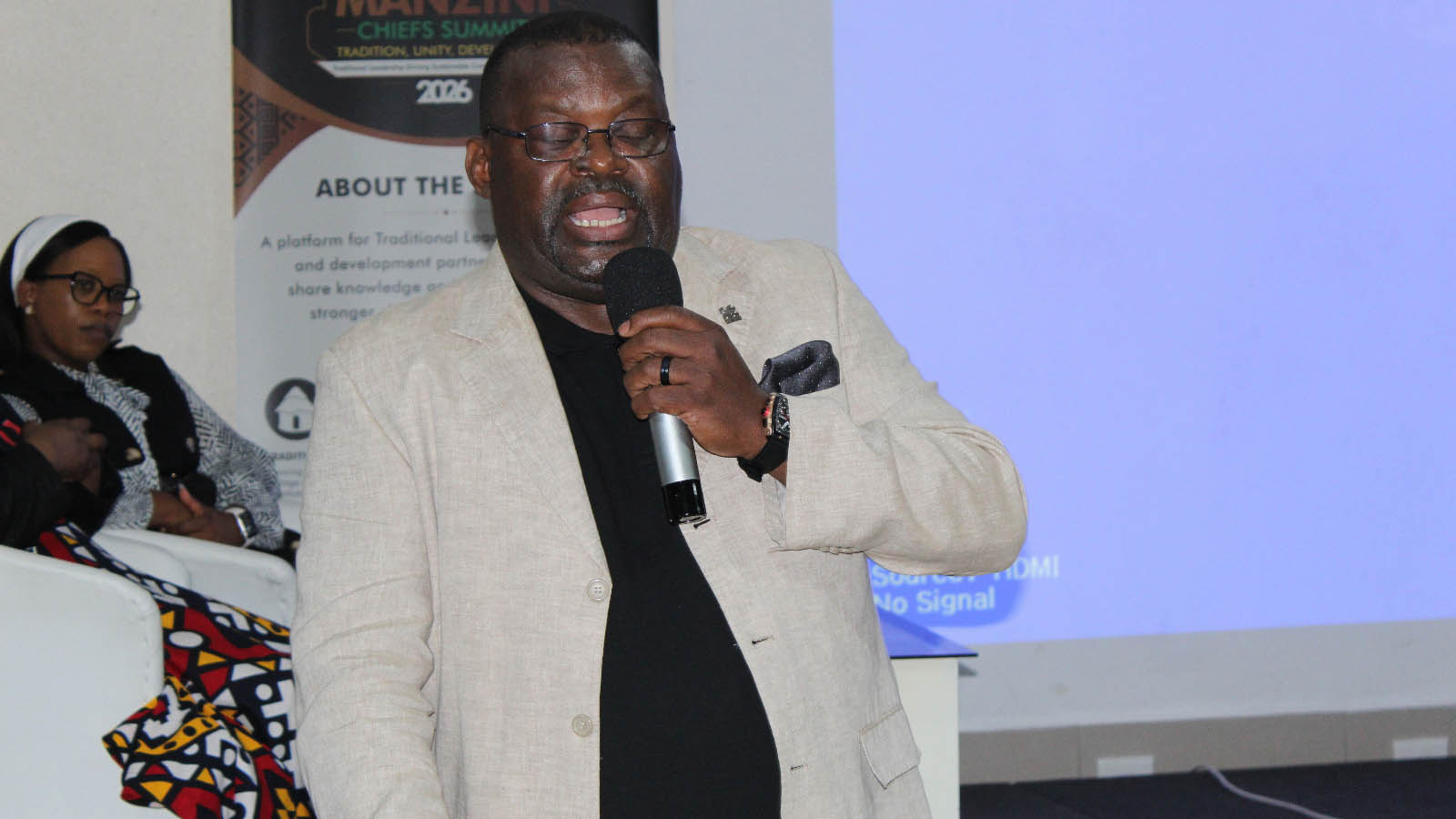
This was disclosed by Mfanawenkhosi Kenneth Nhlengetfwa, Chief Assistant Commissioner within His Majesty's Correctional Services (HMCS), during the conclusion of a three-day Chiefs’ Summit held in Manzini yesterday.
The summit, organised by the Office of the Manzini Regional Administrator in collaboration with key stakeholders, also focused on strengthening the role of chiefs in promoting social cohesion, rehabilitation and development at community level.
Addressing delegates, Nhlengetfwa said HMCS research has uncovered what he described as a hidden but significant driver behind repeated prison escapes: The rejection of former inmates by families, communities and in some cases traditional authorities.
He explained that this rejection often begins while inmates are still serving their sentences, particularly as they near release. At that stage, rumours or warnings sometimes circulate that offenders will not be welcomed back, or worse, that they may face retaliation for crimes committed before imprisonment.
Faced with such psychological pressure, uncertainty and fear of harm, some inmates reportedly choose to escape from correctional facilities. However, according to HMCS findings, the intention is not always to evade justice permanently, but rather to avoid reintegration into hostile environments.
In some cases, he said, escapees deliberately position themselves to be re-arrested shortly after fleeing, effectively preferring continued incarceration over returning to communities where they feel unsafe or unwanted.
“These are not always individuals escaping because they want to be free in the conventional sense,” he said. “In certain cases, they escape because they fear what awaits them outside prison. They would rather be arrested again than return to communities where they believe they will face harm or rejection.”
He added that this behaviour is supported by observable trends in which many escapees are re-captured within a very short period after fleeing correctional centres, sometimes within hours or days, suggesting that permanent evasion is not always their goal.
“When you analyse these cases, you notice that some do not go far. They are found very quickly, which indicates they were not necessarily trying to disappear completely. It often looks like they were waiting for re-arrest,” he said.
Nhlengetfwa contrasted this with another category of offenders, particularly foreign nationals, who escape custody with the clear intention of avoiding law enforcement entirely. He said such individuals are rarely re-apprehended, as they often cross borders or go into hiding beyond the reach of local authorities.
The HMCS official said the findings highlight a deeper societal challenge that goes beyond prison security, pointing instead to how communities respond to offenders after they have served their sentences.
He expressed concern that some traditional leaders continue to refuse reintegration of former inmates into their chiefdoms, even after those individuals have completed rehabilitation programmes and officially served their time under the law.
In certain reported cases, he said, chiefs have declined to accept former offenders back into their communities altogether, effectively excluding them from their homes, social networks and cultural belonging.
Nhlengetfwa further disclosed that in extreme situations, some traditional authorities have even refused to allow deceased former inmates to be buried within their chiefdoms, reflecting the deep stigma attached to certain crimes.
He warned that such practices risk undermining rehabilitation efforts, as they create conditions of permanent exclusion that leave former inmates with little opportunity to rebuild their lives in a lawful and stable manner.
Families, he added, are also part of the broader challenge. Some relatives, particularly where crimes involved close family members or were considered especially serious, have chosen to sever ties completely with offenders upon release.
This combined rejection from both families and communities, he said, leaves many former inmates in a vulnerable position, with no social support, no sense of belonging, and limited pathways to reintegration.
Nhlengetfwa appealed to chiefs, families and communities to play a more constructive role in the rehabilitation process by embracing forgiveness and supporting reintegration initiatives.
He stressed that successful rehabilitation cannot be achieved within correctional facilities alone, but depends heavily on whether society is willing to accept and support former offenders after release.
“We are appealing to chiefs, families and communities to have forgiving hearts and to support rehabilitation efforts,” he said. “Without acceptance at community level, the process of rehabilitation remains incomplete.”
He reminded the gathering that His Majesty King Mswati III had recently exercised the Royal Prerogative of Mercy, granting a Royal Pardon to selected inmates, as part of efforts to promote rehabilitation and reintegration.
“If His Majesty has shown mercy and forgiveness, then it should also encourage reflection at community level on how former offenders are treated after serving their sentences,” he added.
During the same engagement, Nhlengetfwa also addressed ongoing public debate regarding the official Siswati term Tivakashi teNgwenyama, used to describe inmates. The term has previously attracted criticism in public discourse, including parliamentary discussions.
He defended its usage, stating that it should be understood within the cultural and linguistic traditions of Siswati, where respectful or softened expressions are often used even in serious or sensitive contexts.
To illustrate his point he said emaSwati may describe a drunk person as “eaten”, or refer to a deceased person as “gone’, even though these expressions are not literal.
Similarly, he said, Tivakashi teNgwenyama should be viewed as a culturally grounded expression that does not diminish the seriousness of offences but reflects linguistic norms of respect.
Nhlengetfwa also addressed concerns around the use of fingerprint records in the criminal justice system, saying they play a vital role in ensuring accurate identification of offenders.
He explained that some individuals attempt to evade prior convictions by changing names, and fingerprint systems help prevent such cases from misleading courts, employers and law enforcement agencies.
However, he emphasised that fingerprint records should not be used to unfairly disadvantage rehabilitated individuals seeking employment opportunities.
He said there is a growing misconception that a criminal record permanently disqualifies someone from work, arguing instead that employment should be assessed on relevance and suitability rather than past offences alone.
“Fingerprint records are not intended to block people from employment,” he said. “They are simply a tool for identification and accountability within the justice system.”
He added that in many cases, a person’s previous offence has no direct relation to the job they are applying for, and therefore should not automatically prevent reintegration into the workforce.
Instead, he said, such systems should strike a balance between public safety, accurate identification and providing former offenders with a fair opportunity to rebuild their lives.
The summit concluded with renewed calls for closer collaboration between traditional leaders, correctional services and communities in addressing crime, rehabilitation and reintegration challenges across the Manzini region, with emphasis on restoring social cohesion and reducing repeat offending.
Chief Assistant Commissioner of His Majesty’s Correctional Services, Mfanawenkhosi Kenneth Nhlengetfwa, speaking during the closing ceremony of the Chiefs’ Summit in Manzini, addressing delegates on inmate reintegration, prison escapes and community acceptance of former offenders.