MBABANE-Across parts of the developing world, the challenge of delivering quality education is often framed in terms of funding, infrastructure, or teacher shortages.
Yet, a quieter but equally powerful obstacle persists beneath the surface, which bothers on how people are settled in much of African countries, with specific mention on Eswatini.
Shiselweni Regional Education Officer (REO) Siboniso Gumbi, speaking to this publication on the pattern of settlement in Eswatini, he said the manner in which household settlement was being administered by chiefs was becoming increasingly difficult to for the education sector.
Gumbi, whose view was seconded by another education official, who however preferred to remain anonymous openly, acknowledged that scattered and poorly planned settlement patterns were undermining efforts to provide equitable access to schooling.
This, they said, raised broader questions about whether the global community can realistically achieve the United Nations (UN) Sustainable Development Goals (SDGs), particularly SDG 4 on Quality Education.
SDG 4 aims to “ensure inclusive and equitable quality education and promote lifelong learning opportunities for all.” It is one of the most ambitious global commitments, promising universal access to free primary and secondary education by 2030.
However, in much of the country’s rural and sparsely populated areas, the reality on the ground tells a more complicated story.
Structural barrier
In the Shiselweni Region of the country’s southern part, Gumbi recently highlighted a dilemma that resonates far beyond the country’s borders. Communities such as kaZenzile, Ncangosini, under Mtsambama Inkhundla, Mooihoek, Phongolwane under Mfishane Inkhundla and several other communities were without high schools and enough primary schools.
This is due to the schools being located on private farms, with fewer than 100 homesteads scattered across vast distances. According to him, this scenario creates an impossible equation for the ministry to ensure every child has access to education in a dignified manner.
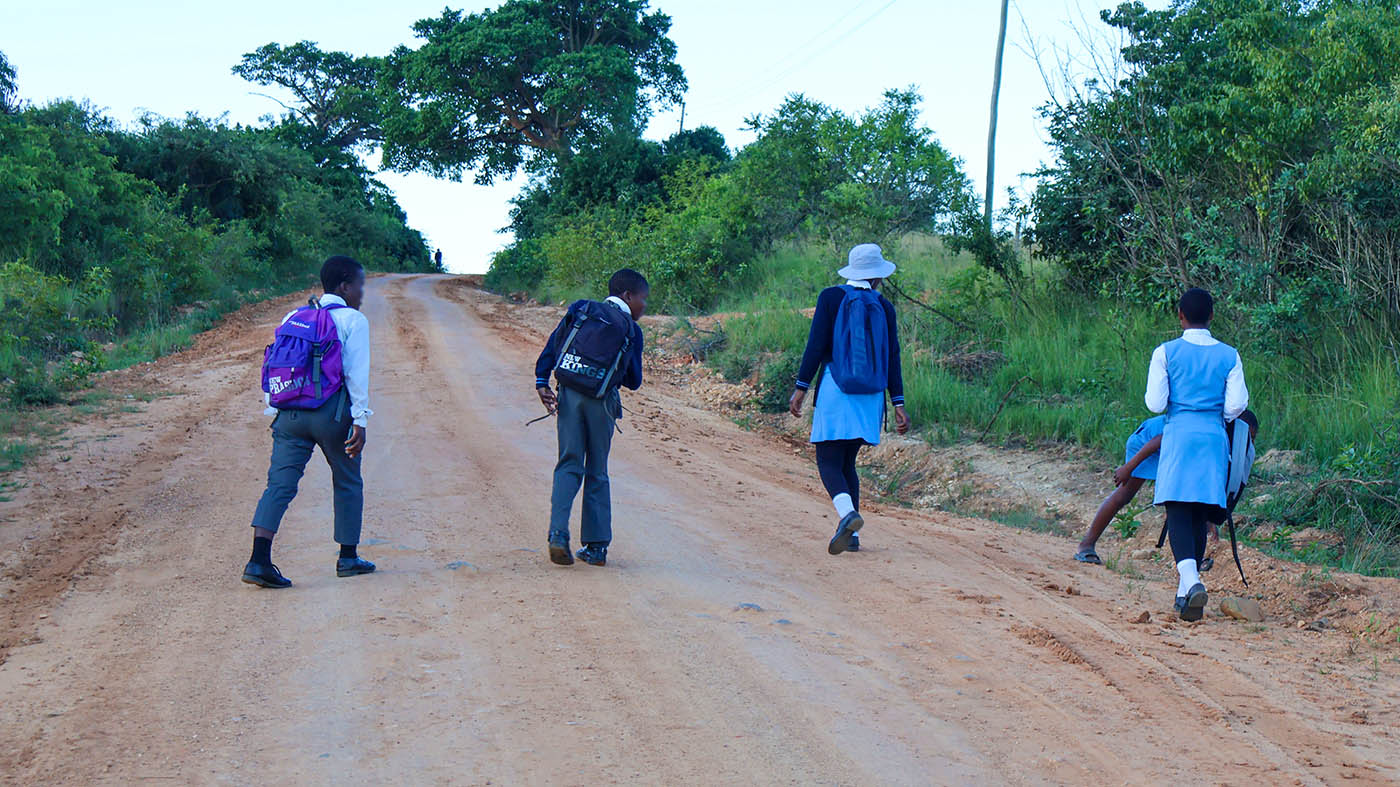
This unbalanced equation results to pupils, not only in the Shiselweni Region alone, but across the country’s four regions, walking longer distances to reach schools, especially for high school education.
For example, pupils from Madlangempisi in communities such as Buhlebuyeza, Tfuntini and Mabhibha in the Manzini Region, travel more than two hours to reach the nearest high school.
This boils down to the way the homesteads from these communities are settled, as they are a fair away from critical social services and infrastructure.
Building a school in such communities, Gumbi argued, would not only result in low enrolment but also strain already limited public resources.
He cited one case of a primary school in the Shiselweni Region, in which a school currently operates with just 25 pupils in total, with some grades having only a single learner.
He said this was despite teachers being deployed and salaries paid, the scale of learning remained minimal.
According to Gumbi, this has nothing to do with a simple local inconvenience. Rather, it is a structural inefficiency that cuts to the core of education planning.
“Schools depend on a critical mass of learners to function effectively. Without it, the entire system, from staffing to curriculum delivery, becomes unsustainable,” he said.
Similar patterns can be found across rural Africa, parts of Asia as well as Latin America, where populations are dispersed due to historical land arrangements, economic necessity, or cultural practices.
The result is a growing mismatch between where people live and where essential services can realistically be delivered.
Remote settlement
For learners in remote settlements, education is often less about policy and more about distance. Children walk long distances to the nearest school, navigating difficult terrain and, in some cases, unsafe conditions. Fatigue, lateness and absenteeism become routine.
Globally, studies have shown that distance to school is a major factor in dropout rates, particularly among younger children and girls. Where transport infrastructure is weak or non-existent, the burden falls entirely on families, many of whom cannot afford alternatives.
In Eswatini, the government through the Education Ministry is exploring transport solutions to bridge this gap. However, such interventions come with their own logistical and financial challenges.
Gumbi said providing transport to learners over long distances is costly, difficult to sustain and often unreliable in rural contexts.
For example, think of a pupil from Monti community under Kubuta Inkhundla, who travels every day to Salem or Nkwene for secondary education
This raises a fundamental question: Is it more effective to bring schools closer to people or people closer to schools?
Revisiting resettlement
As part of a solution, Gumbi recently suggested what he termed “the second resettlement programme”, as a way to resolve the obtaining quagmire before the country fails to meet the world’s SDG 4.
He called it a second resettlement policy because following independence, Eswatini undertook a resettlement initiative under King Sobhuza II, aimed at consolidating communities and improving access to services.
Today, the idea of resettlement is far more complex. Land ownership patterns have evolved, populations have grown and social ties to ancestral land remain strong. Moving communities is not simply a logistical exercise, it is a deeply political and cultural issue.
Yet, urban planners and development experts argue that without some form of spatial reorganisation, service delivery will continue to lag behind.
Scattered homesteads make it difficult to justify investments in schools, clinics, roads and other infrastructure.
In effect, governments are forced into a cycle of inefficiency, often seen through either building underutilised facilities or leave communities underserved.
The economics of low enrolment
Gumbi, elaborating further on the issue of pupils walking for longer distances while communities make consistent calls for the construction of high schools, highlighted that education systems are designed around scale.
“Teacher deployment, classroom construction and resource allocation all assume a certain number of learners. When enrolment falls below that threshold, costs per student rise dramatically,” he stated.
In extreme cases, he said, government ends up paying full teacher salaries for classrooms with only a handful of learners. While this may ensure access in the short term, it is not financially sustainable.
This is the paradox facing many countries striving to meet SDG 4. On paper, access exists as there is a school, a teacher and a curriculum.
However, in practice, the quality and efficiency of education are compromised.
Moreover, education experts have observed that low enrolment limits peer interaction, which is essential for social and cognitive development. A classroom with one or two learners cannot replicate the dynamics of a fully functioning learning environment.
A continental challenge
While Eswatini provides a compelling case study, the issue is far from unique. In countries such as Kenya and Nepal, mountainous terrain and dispersed settlements present similar obstacles.
In parts of Brazil, communities in the Amazon basin face extreme isolation, with schools accessible only by boat.
Even in more developed regions, rural depopulation has led to school closures and consolidation, forcing students to travel longer distances. The challenge, therefore, is not confined to low-income countries, rather it is a global issue shaped by geography, history and policy choices.
Beyond education
The implications of poor settlement planning extend beyond SDG 4. Limited access to education reinforces cycles of poverty, aligning with challenges under SDG 1 (No Poverty). It exacerbates inequality (SDG 10) and hampers economic growth (SDG 8).
Education is often described as a foundation for development. When access is uneven, the entire development agenda is at risk.
Children who struggle to attend school are less likely to complete their education, limiting their future opportunities. Communities without access to quality education are less equipped to participate in the modern economy, perpetuating regional disparities.
One common response to education challenges is to build more schools. However, as Gumbi’s observations illustrate, infrastructure alone cannot solve a problem rooted in spatial distribution.
Without addressing where and how people live, new schools risk becoming underutilised. Conversely, investing in transport or boarding facilities introduces recurring costs that many governments cannot sustain.
Technology is often presented as a solution, with digital learning platforms bridging the gap. While promising, such approaches depend on reliable electricity, internet connectivity, and digital literacy, resources that are often scarce in remote areas.
Integrated planning
Therefore, Gumbi has argued for a more holistic approach, integrating land use planning with service delivery. This, he said, means aligning settlement policies with education, health and infrastructure strategies.
The road to 2030
With less than a decade remaining to achieve the SDGs, the gap between ambition and reality is becoming more apparent. Progress on SDG 4 has been uneven, with many countries struggling to ensure universal access to quality education.
For countries like Eswatini, the path forward may involve difficult choices, like rethinking land use, investing in transport, or revisiting policies that date back decades.
A question of priorities
Ultimately, the question is not whether the world can achieve SDG 4, but whether it is willing to confront the underlying issues that stand in the way.
As Gumbi’s remarks suggest, education planning cannot be separated from where people live. Without addressing this fundamental reality, efforts to expand access may continue to fall short.
The vision of inclusive and equitable education remains within reach. But achieving it will require more than classrooms and teachers. It will demand a reimagining of how societies organise themselves in space as well as how governments respond to that reality.
As the 2030 deadline approaches, one thing is clear: the map of human settlement may prove just as important as the policies designed to educate those who live upon it.
Pupils from KaZenzile sub-chiefdom on their way from Thembelihle High School under Mtsambama Inkhundla. This was on Tuesday and the time was after 5:30pm. They estimated that they were going to reach their respective homes around 7pm and expected to leave early in the morning at 5am. Their parents have called for the amendment of the Farm Dwellers' Act, which they said was hindering development in their area. (Pic: Khaya Simelane)