

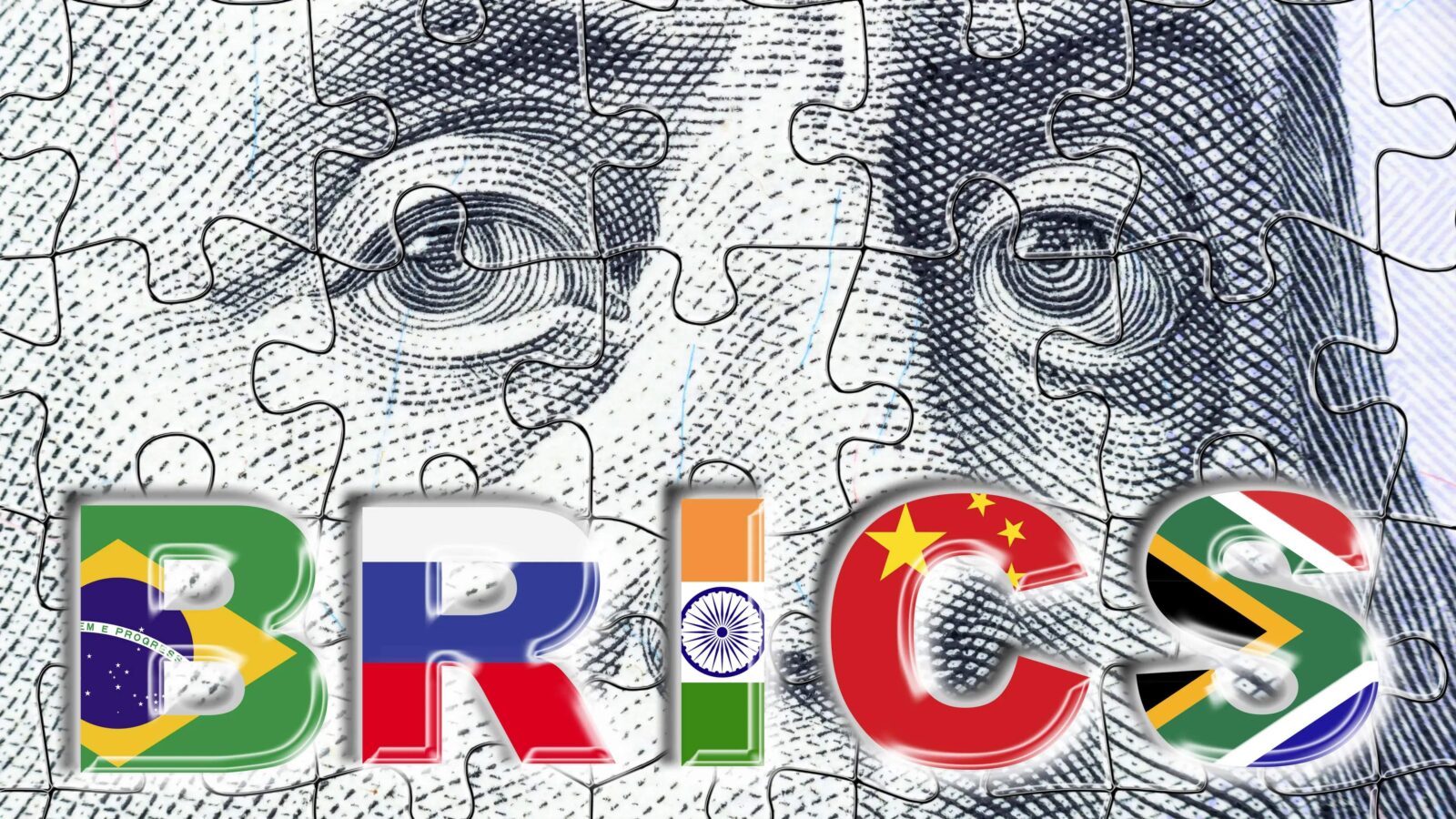
JOHANNESBURG – Member countries of the BRICS trading bloc seem to have backed down from their rather lofty ideal of establishing their own currency to counter the dominance of the US Dollar and the Euro, choosing to slow down the process by focusing on growing cross-border trade in national currencies – for now.
Commentators noted that current economic and geopolitical uncertainties may have contributed to the new cautious approach while US President Donald Trump’s trade war certainly led to it by pitting the US against everyone else.
Although the creation of a BRICS currency featured prominently at the 2024 BRICS Summit in Kazan, Russia, it has become clear that ambitions for an immediate launch have cooled.
Russian President Vladimir Putin, who once led the charge for de-dollarisation, appeared on stage at the summit holding what seemed to be a prototype BRICS banknote, dubbed the Unit.
Now, even Putin has softened his tone, stating that the bloc’s goal was not to break away from the US-dominated SWIFT (Society for Worldwide Interbank Financial Telecommunications) financial system entirely, but rather to reduce the Dollar’s ‘weaponisation’ and promote the use of local currencies for trade between the BRICS members.
Putin then said the BRICS countries were ready to issue a new reserve currency backed by a basket of BRICS currencies. Brazil’s President Luiz Inácio Lula da Silva echoed this vision in 2023, but hopes of a major announcement at that year’s summit failed to materialise.
The latest summit, held in July 2025 in Rio de Janeiro, took a more measured tone.
While the idea of launching a BRICS currency – potentially backed by gold – remains on the table, there is no timeline for its implementation. Brazil, which holds the rotating presidency of the group this year, confirmed that no significant decisions on a new currency are imminent.
The final declaration of the summit runs to 31 pages and outlines extensive plans to deepen cooperation across a range of issues, from global institutional reform and AI development to climate change and logistics infrastructure.
The document reaffirms the bloc’s commitment to using national currencies in cross-border trade and promoting financial systems independent of the US Dollar, including the further development of the BRICS Pay platform and consolidation of the BRICS New Development Bank (NDB).
The goal is clear: Shift away from Dollar dominance without destabilising global markets or member States’ economies.
The return of Donald Trump to the White House on January 20, 2025 has added a new layer of complexity.
Markets reacted immediately. The Dollar strengthened and currencies such as the Chinese yuan, Russian ruble, Brazilian real, Indian rupee and SA Rand depreciated sharply in the days following Trump’s election and subsequant inauguration.
While these initial losses were later reversed, the shock underscored the power the US still holds in global finance – and why BRICS nations may be hesitant about provoking unnecessary volatility by launching a competing currency.


















Leave a comment