LOBAMBA – At a time when local participation in the economy is under scrutiny, the Eswatini Electricity Company (EEC) has come under strong criticism for allegedly sidelining emaSwati businesses in the awarding of tenders.
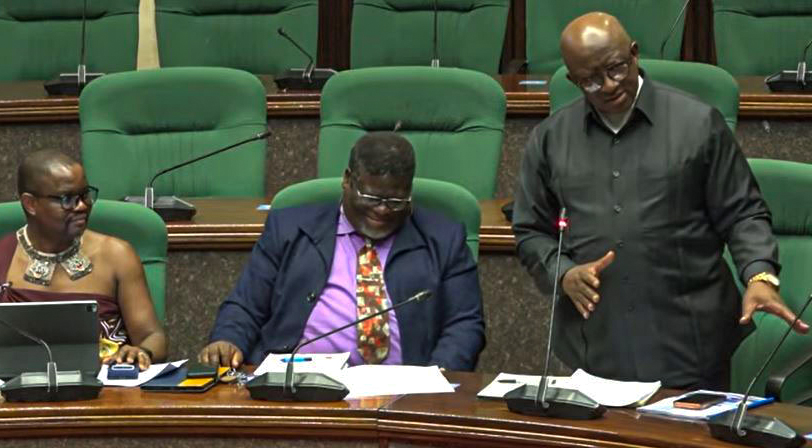
The issue was raised yesterday during the Portfolio Committee debate on the Ministry of Natural Resources and Energy’s First Quarter Performance Report for the 2026/27 financial year. Lobamba Lomdzala Member of Parliament (MP) Marwick Khumalo criticised the power utility for what he described as its continued preference for South African companies, even in cases where local businesses have the capacity to supply the required goods and services. The veteran parliamentarian claimed that some South African companies awarded EEC contracts do not manufacture the materials they supply, but instead import them from China.
He argued that if those companies are able to source products internationally and secure EEC tenders, there is no reason why capable emaSwati businesses should not be afforded the same opportunity. “EmaSwati can supply those materials. Even now EEC has issued tenders and trust me, foreign companies will benefit more,” Khumalo said. He urged the Minister for Natural Resources and Energy, Prince Lonkhokhela to ensure that procurement policies prioritise local businesses, saying this would help stimulate economic growth and create employment.
Khumalo further argued that neighbouring countries place greater emphasis on protecting their domestic industries and questioned why Eswatini continues to allow foreign companies to dominate lucrative contracts. “What we do here is invite foreign companies, yet in South Africa local companies can never be invited in the same way. What we are doing is taking money out of our economy, and that is killing it,” he said.
Beyond procurement, the MP also criticised government over delays in amending the Farm Dwellers Act, saying the prolonged inaction continues to leave vulnerable communities without adequate legal protection. He said Parliament had repeatedly raised the matter, yet little progress had been made despite assurances that the legislation was nearing completion. “The issue of the Farm Dwellers Act is troubling. The non-action from government is a disservice to the people. We have raised this issue time and again, but there is still no action. We appeal to the minister to ensure that this Bill is tabled during this financial year because the emaSwati living on farms are our people and they continue to face the same challenges,” he said.
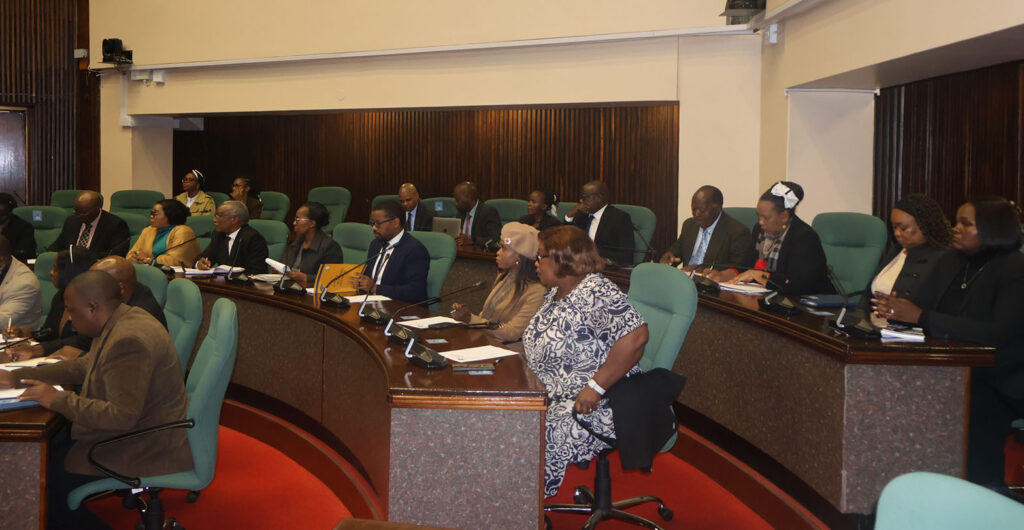
Khumalo said residents of farming areas in his constituency, particularly around Malkerns, continue to experience insecurity and uncertainty because of the delay in finalising the legislation.
The MP also turned his attention to the Eswatini National Petroleum Company (ENPC), accusing it of failing to implement Parliament’s directive to establish fuel service stations in underserved areas. He said farmers in some parts of the country are still forced to travel more than 20 kilometres to access fuel, creating unnecessary costs and inconveniences, particularly during the peak farming season.
Khumalo argued that the absence of nearby filling stations undermines agricultural productivity and questioned why the ministry had not acted despite the enabling legislation having already been passed. He further maintained that the distribution of gas cylinders could not be regarded as a substitute for accessible fuel stations, insisting that rural communities require permanent petroleum infrastructure. Furthermore, he called on the Eswatini Energy Regulatory Authority (ESERA) to disclose how many licences it has issued to independent power producers and investors seeking to generate electricity in the country.
According to Khumalo, greater transparency is needed to demonstrate whether government’s energy policies are creating meaningful opportunities for local participation or continue to favour foreign investors. He concluded by urging the minister to give urgent attention to procurement practices and the broader localisation agenda, arguing that increasing the participation of emaSwati-owned businesses in strategic sectors would strengthen the economy, retain wealth within the country and create much-needed employment opportunities.
Mafutseni MP Sabelo Mthethwa challenged the utility’s pricing model, arguing that consumers should not be burdened with higher electricity costs when the company is financially profitable. He further proposed that EEC explore financing from local institutions such as the Public Service Pensions Funds (PSPF) to enable it to generate more of its own electricity instead of relying heavily on imports.
He argued that the hundreds of millions of emalangeni paid annually to Eskom could instead be channelled towards repaying a loan from the PSPF if the pension fund financed local generation projects. “You demand tariff increases, yet you have declared profits. EEC belongs to government, and if it produces its own electricity, government will ensure that electricity does not become costly for emaSwati,” Mthethwa said.
Somntongo MP Sandile Nxumalo also criticised the utility, calling for improved planning and faster delivery of electricity connections to communities that have already paid installation fees. He questioned whether EEC adequately assesses the number of households without electricity in each constituency to ensure equitable access to the service. Nxumalo further argued that customers who have paid for electricity installation should not face prolonged waiting periods before being connected to the grid, saying efficient service delivery should remain a priority.
Beyond electricity, the MP raised concerns over water infrastructure, urging the Eswatini Water Services Corporation (EWSC) to strengthen maintenance programmes, particularly by repairing damaged pipelines. He also said communities should continue to have the option of using borehole water alongside piped water supplies, noting that boreholes have served many communities for decades.
Nxumalo questioned whether borehole water is routinely tested before being distributed to residents, following complaints from some communities about its quality.
Responding to concerns over the awarding of contracts to foreign companies, Minister for Natural Resources and Energy Prince Lonkhokhela acknowledged that local contractors exist but explained that procurement requirements attached to externally funded projects often limit their participation. “Local contractors are there. However, because some of these projects are funded by institutions such as the World Bank and the IMF, it becomes a challenge as those organisations sometimes determine that local companies do not yet meet the required standards. As a country, we need to ensure that our companies are capacitated,” the minister said.
His remarks came after MPs criticised EEC for allegedly favouring foreign companies in the awarding of tenders, arguing that greater participation by emaSwati-owned businesses would help stimulate economic growth, create jobs and retain more money within the local economy.
On another note, the minister spoke strongly about the challenges faced by the EWSC. In particular, he revealed that between E900 million and E1 billion is needed to fix most of the old and damaged water pipes countrywide.