

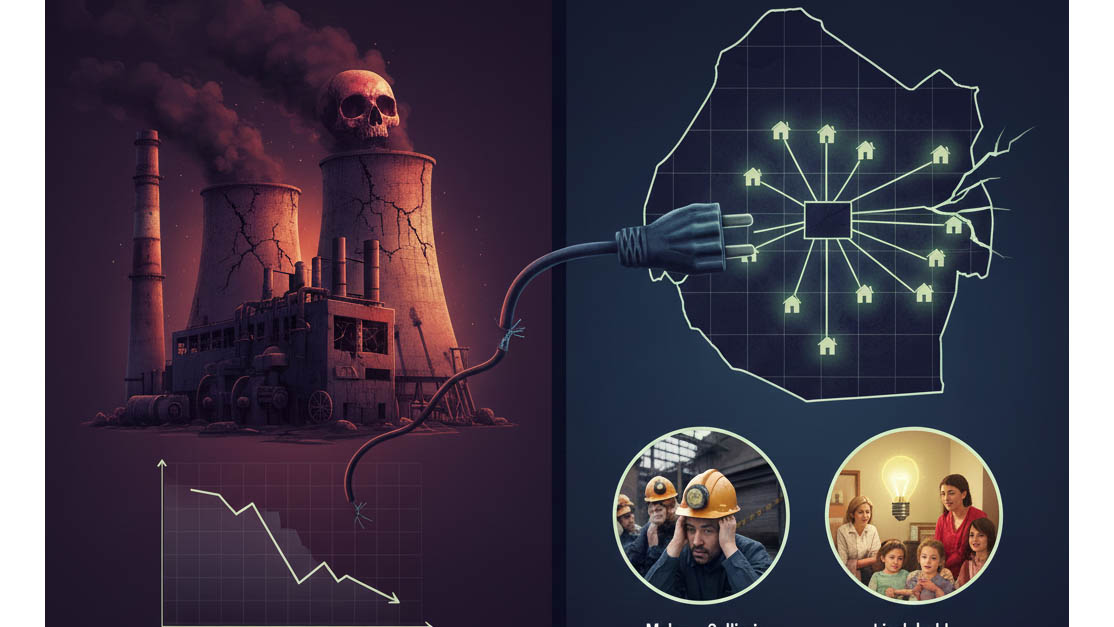
A recent BusinessTech article warns that South Africa is heading for another disaster unless structural reforms are urgently implemented to rescue its ailing industrial sector -especially its energy-intensive industries that depend on cheap, reliable power to survive. While the article focuses squarely on South Africa’s internal challenges, its implications extend far beyond the border -cutting straight to the heart of Eswatini’s own energy security crisis.
At the centre of the BusinessTech warning is the undeniable reality that South Africa’s energy model – hailed in decades past as a cornerstone of industrial competitiveness – is now a strategic liability. Smelters and heavy industries are on the brink of collapse because electricity prices are prohibitive and the national utility, Eskom, continues to grapple with outdated infrastructure and policy missteps that have made reliable power neither cheap nor consistent.
South Africa’s industrial foundation was built on plentiful and inexpensive electricity, fuelled largely by coal. The country’s historic industrial powerhouses – smelters, steelmakers and heavy manufacturing firms – were competitive because energy costs were low and supply seemed abundant. That era has passed.
This is more than a business problem for South Africa – it is a regional economic issue. Eswatini, like many of its Southern African neighbours, is deeply entangled in South Africa’s energy fate. Our country lacks the scale to generate electricity at home in the volumes we need. Domestic generation from hydro, biomass and small solar installations makes only a fraction of what the nation uses, forcing Eswatini to import approximately 60–90 per cent of its electricity from South Africa under long-standing agreements.
Dependence on South African electricity seems convenient on paper, but in practice, it binds Eswatini’s energy future to a system that is faltering. When Eskom’s aging coal-fired plants break down, or when reactive policy responses temporarily stabilise one part of the grid while leaving others exposed, Eswatini feels the shock waves. The stakes for Eswatini’s economy are already visible in our own coal sector. Though small by regional standards, Eswatini’s coal producers have historically supplied anthracite to South African smelters. Today, that lifeline has evaporated. High electricity tariffs in South Africa have crippled smelting operations, slashing demand for Eswatini coal and forcing retrenchments at Maloma Colliery, the kingdom’s largest coal mine and elsewhere in the logistics chain.
This should alarm policymakers, business leaders and citizens alike. South Africa’s energy crisis is not abstract. It affects livelihoods here at home: from coal miners to transport operators, from factories to households struggling with rising electricity costs. Nor can we afford to remain complacent about our own energy strategy. Government plans have previously included proposals for domestic coal plants in Eswatini, but these have been controversial and slow to materialise. Meanwhile, renewable energy projects – solar, hydro and biomass -offer an alternative way forward, but require accelerated investment and policy support to scale fast enough.
A failure to build meaningful domestic generation capacity leaves us perpetually exposed to external shocks. Eswatini must seize this moment as a call to action. We need a comprehensive energy strategy that includes: Significant expansion of renewable energy capacity backed by clear policy incentives; targeted investments in decentralised and grid-connected solar and biomass solutions; strategic development of domestic energy projects – not only as an economic opportunity, but as a necessity for national security, regional cooperation that balances import contracts with safeguards against supply instability.
We face a clear choice: To remain dependent on a system in decline, or to begin building our own resilient energy future. South Africa’s looming disaster is a warning sign – not just for its own economy – but for all of SADC, and especially for countries like Eswatini that are bound to its fortunes.

















Leave a comment