

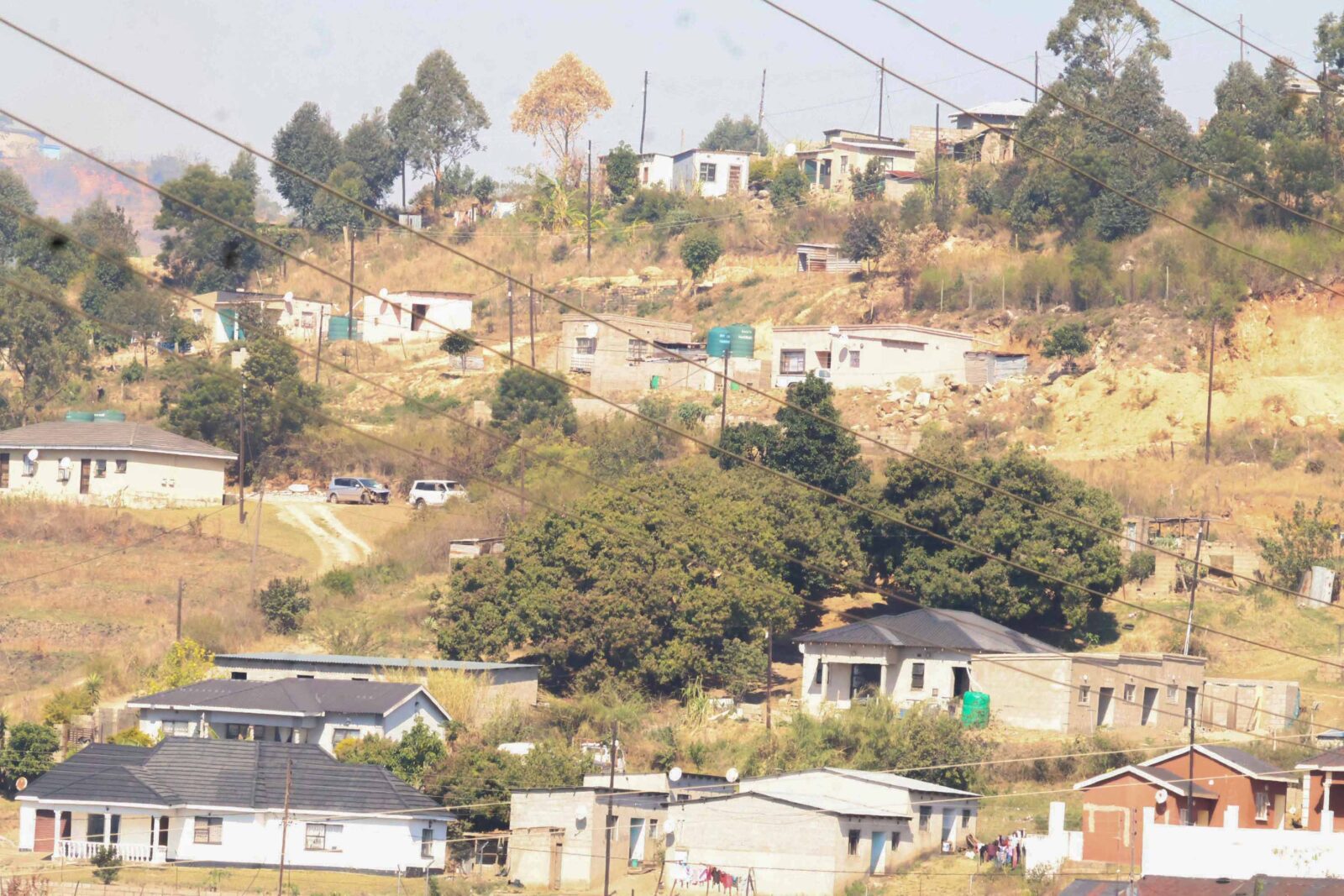
MBABANE – EmaSwati who were allocated land on hills and mountainous areas could soon see their homes demolished as the Land Management Board (LMB) moves to finalise a comprehensive policy that will strengthen its hand to enforce demolitions.
The impending action comes as investigations by Eswatini News revealed that homesteads, guesthouses, rental rooms commonly known as titimela, bedsitters and other structures continue to be built on the country’s hills and mountains, despite growing environmental and safety concerns.
Petros Mavimbela, Chairman of the LMB, confirmed that the Board was working towards finalising a policy tool that would enable it to take action against structures built on mountains.
Mavimbela was called by this publication to ascertain how far the Board had gone towards addressing the continued allocation of land by chiefs and other relevant structures to people who then build on hills and the sides of the country’s mountains.
This followed an investigation by Eswatini News, which uncovered that people continue to construct homes on land that, according to authorities, should not be used for such developments.
The issue has also previously attracted the attention of the Eswatini Environment Authority (EEA), which has warned against constructing homes on mountainous areas because of the environmental and safety risks associated with disturbing steep slopes and removing vegetation.
Mavimbela minced no words, saying those whose homesteads were built on mountains could soon face eviction as the Board races to finalise the policy.
“Sesiyacedza kwakha lithulusi lekubuketa lendzaba lena. Previously, we did not have it and once finalised, we will be compelled to enforce demolitions on a number of structures built on mountains,” stated Mavimbela.
Loosely translated, the chairman said they were about to finalise a policy tool that would authorise them to carry out demolitions against people who had been wrongly allocated protected or unsuitable land.
Mavimbela, who also served as Speaker during the last term, said the continued construction of homes on mountains was due to alleged corruption and rot that had infiltrated every part of the country.
The chairman said he was personally feeling the pain on behalf of the King over the embarrassment he continued to suffer as hills and mountains were quickly disappearing, being replaced by homes and other structures.
Referring to the development as umkhuhlane, Mavimbela said the scourge of illegal mountain settlement had reached intolerable levels, hence the Board had seen it fit to hasten the policy in an effort to put an end to it.
One area where the problem is becoming increasingly visible is Mbekelweni, under Ludzeludze Inkhundla, where a number of homesteads have been built on the Mpholi Mountains.
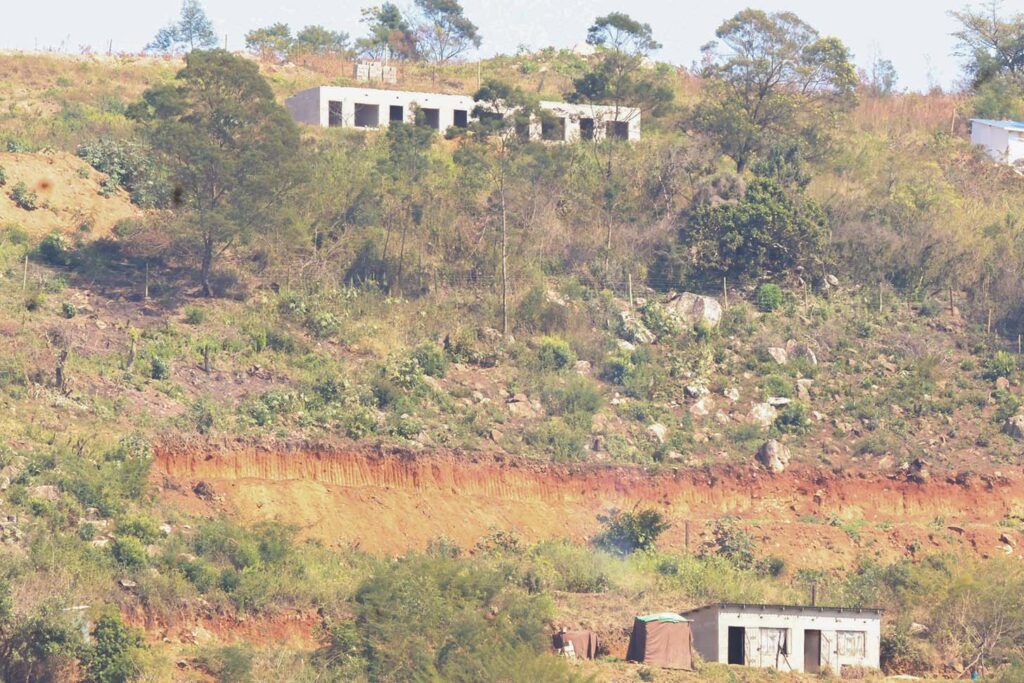
The latest home has been settled on top of the mountain yet it was not there last November when the same issue was raised.
This means that settlement on the hill has continued despite the concerns previously raised, with other structures now under construction while more groundwork is being done for additional homes.
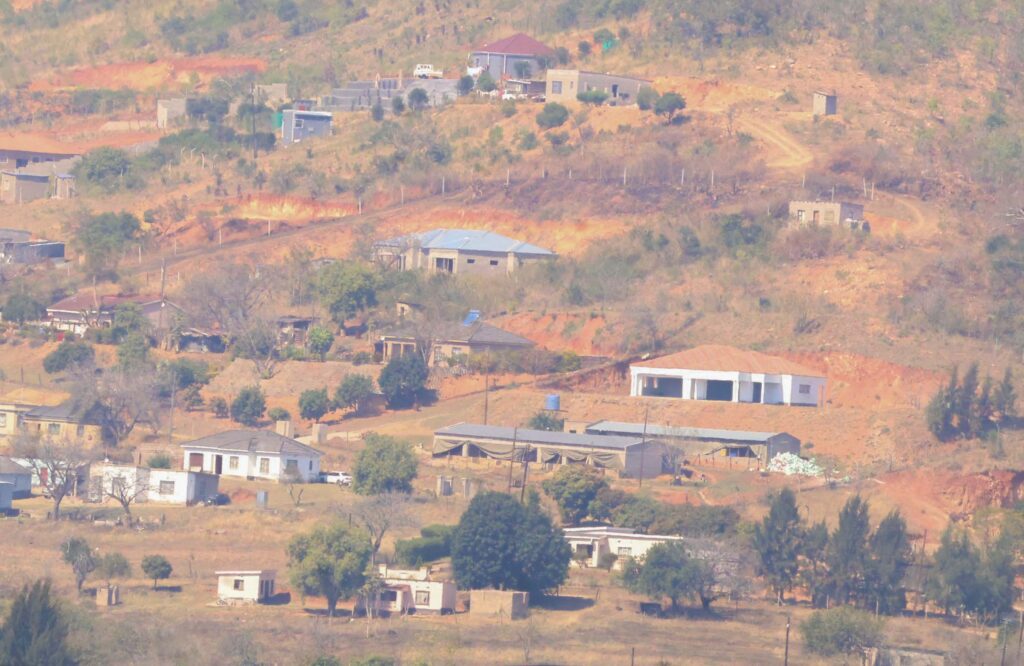
On the other side of the hill, from the Mhlaleni-Ndzevane side, further structures are being built, with the hill appearing to be on course to becoming increasingly covered by homesteads.
People interviewed at Mpholi said it was no longer shocking to see structures being built on mountains.
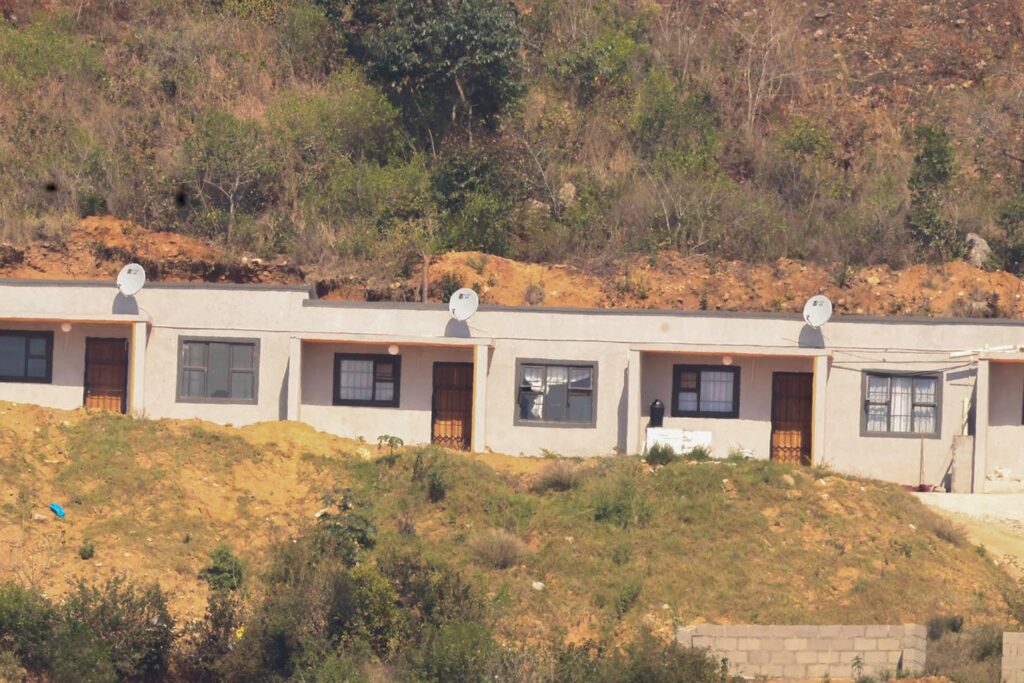
However, they said the allocation of land on the mountain had become a challenge for emaSwati who also used the area for prayers and other rituals.
“It now feels like we are encroaching on someone else’s property. In the next few years, I do not see the place being used as a prayer sanctuary,” said one resident.
For residents, therefore, the issue is not only about the physical appearance of the mountain.
It is also about losing a space that has traditionally provided them with a place for prayer, reflection and other rituals.
There have also been growing concerns about poor drainage systems as more soil continues to be washed down the mountains into other people’s homes and onto public roads.
For instance, along the road from Manzini towards Mbekelweni, there are places filled with deposits of washed-away soil, making driving dangerous as motorists negotiate for space.
The environmental risks associated with such developments have previously been highlighted by the EEA.
Belusile Mhlanga, Head of Environmental Impact Assessment and Monitoring Coordination at the EEA, previously warned that mountainous areas may appear scenic, yet pose significant environmental and safety risks when their natural structure is disturbed.
“First, mountains help reduce the impact of strong winds and serve as natural barriers. Destroying them threatens both lives and the environment,” she said.
Mhlanga said desperation was pushing people to occupy places that were neither safe nor stable, particularly on Swazi Nation Land (SNL), where new structures could sometimes appear overnight on steep slopes.
She said such developments interfered with natural slope stability.
The environmental expert further explained that building on mountainous areas disturbed the natural balance and could expose residents to landslides.
“Trees play a crucial role in holding the soil together, thus cutting them down to create space for houses weakens the ground. When it rains, water easily washes away the soil, in turn damaging roads. Therefore, people need to reconsider building homes in such places,” she added.
On another note, Mavimbela revealed to this publication that they had held several engagements with chiefs, especially those from affected areas, where they made it clear that they should stop settling people on the country’s hills and mountains.
Speaking specifically about the Mbekelweni matter, he said they had warned the relevant authorities that it was illegal to allocate people land on such places.
“As a Board, we then asked the Manzini Regional Administrator (RA) Chief Gija to manage and monitor the said areas,” added the chairman.

















Leave a comment