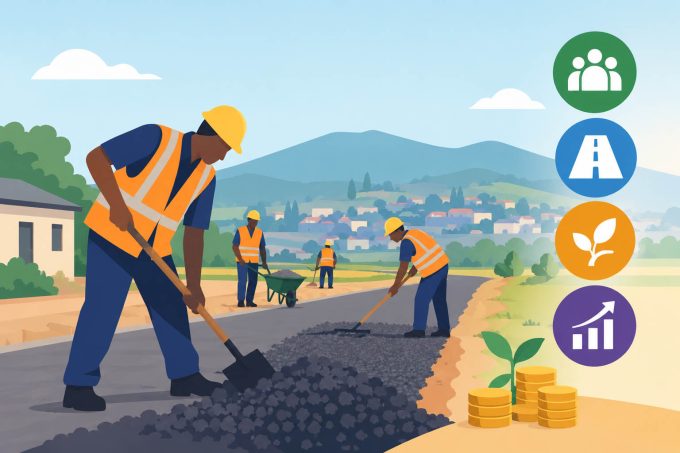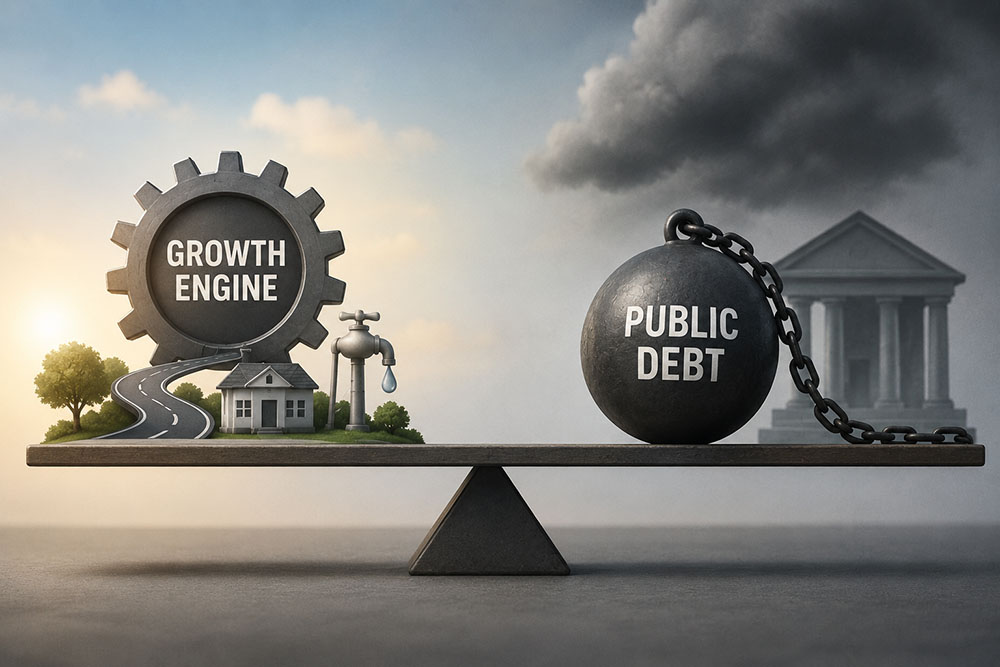
As one assesses the implied path and debt theory within the public sphere, debt can be used as an engine for growth, provided it is used as a critical input into the construction of roads, schools and water projects, among others. As a result, multiple such projects were financed through loans, with the promise that today’s debt would yield tomorrow’s prosperity. Yet the trajectory tells a different story. Public debt, which spiked sharply post-2015, has risen year after year and projections are that the debt-to-GDP ratio will get to 47 per cent in FY2026/27. The deficit is expected to widen above 6 per cent; we are deviating from the 40 per cent debt-to-GDP ratio and the 3 per cent of GDP as a deficit standard. The line between borrowing for productive investment and borrowing for survival is fading. What was once a strategy for development risks is becoming a trap of dependency, with debt accumulation outpacing the returns it was meant to deliver.
Hidden cost of debt service
The most sobering reality is not the debt stock itself, but the cost of servicing it. Interest payments now exceed what government spends on education. This inversion of priorities is more than a budgetary quirk; it is a moral crisis. When debt service consumes nearly one in every E10 of GDP, classrooms remain underfunded, clinics understaffed and the promise of inclusive development slips further away. Debt management is no longer about abstract ratios; it is about whether the nation can protect its people while meeting obligations to creditors.
Structural weakness in debt management
The structure of the country’s debt compounds the challenge. Heavy reliance on shortterm domestic bonds with coupon rates of 10–12 per cent locks the country into a cycle of rollover risk and escalating interest costs. Without a deliberate strategy to lengthen maturities, diversify financing sources and engage rating agencies to lower borrowing costs, the debt burden will intensify. What the country needs is a debt management revolution, a shift from firefighting to foresight. This means strengthening the Debt Management Office, embedding fiscal rules that prevent reckless borrowing and ensuring that every Lilangeni borrowed is matched by a clear return on investment.
A genuine debt revolution must be anchored in clear fiscal rules and a binding debt ceiling. Without hard limits, borrowing decisions are too easily swayed by shortterm political pressures and recurrent expenditure demands. Establishing a statutory debt ceiling, for example, capping public debt at 50 per cent of GDP would force government to weigh every new loan against longterm sustainability. Complementary fiscal rules, such as requiring balanced budgets over the medium term or limiting the wage bill as a share of revenue, would provide discipline and predictability. These measures are not about austerity for its own sake; they are about ensuring that borrowing remains a tool for growth rather than a spiral into dependency. By codifying fiscal responsibility, we can restore investor confidence and protect essential spending on education and health from being crowded out by interest payments.
Transparency
Citizens deserve clarity. I note with concern that the debt-to-GDP ratio changes depending on who has the podium and that is not just. We require improved communication on the country’s debt levels through regular publication of Debt Sustainability Analyses (DSAs); this would not only inform the public but also discipline policymakers. Transparency is not a luxury; it is the cornerstone of credibility. Furthermore, governments should also pursue a sovereign credit rating. While ratings expose governments to scrutiny, they also open doors to cheaper financing and force fiscal discipline. In the absence of transparency, debt becomes a shadowy figure, whispered about but never confronted. A democracy cannot afford such opacity.
Lessons from SACU peers
The kingdom’s debt trajectory must be understood in regional context. South Africa’s debt hovers around 70–75 per cent of GDP, Namibia’s around 60 per cent, while Botswana remains below 25 per cent. Eswatini sits in the middle, but its smaller economy and faster debt accumulation make it more vulnerable. Unlike South Africa, Eswatini lacks deep capital markets; unlike Botswana, it lacks fiscal buffers. The lesson is clear: Debt can be managed, but only with discipline, diversification and a coherent growth strategy. Government must learn from both the cautionary tale of South Africa and the prudence of Botswana, we should seek to emulate Botswana and keep debt levels at 24 per cent of GDP.
Conclusion
The country’s debt dilemma is not merely about numbers. It is about choices, whether to prioritise classrooms or creditors, whether to borrow for roads or for salaries, whether to manage debt as a tool for growth or allow it to become a trap. Interest payments already exceed education spending, a fact that should jolt policymakers into action.
The path forward requires three pillars: Discipline, transparency and foresight. Discipline to curb recurrent deficits, transparency to build public trust and foresight to restructure debt intelligently. Without these, we risk mortgaging its future for the comfort of the present. A mortgage is a dead pledge; that is the root meaning of the word. We, therefore, must endeavour to ensure that we do not shackle unborn future generations with a debt they were not party to.