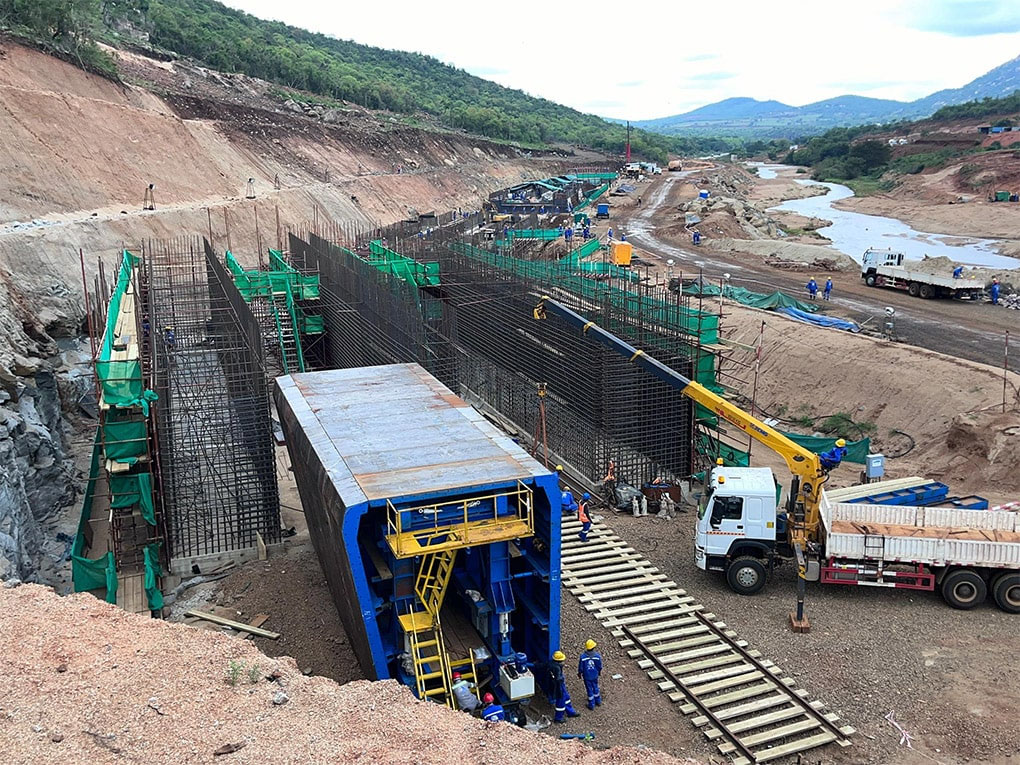
MBABANE – Government has asked the African Development Bank (AfDB) to waive two key loan conditions delaying the release of funding for Phase 1B of the Mkhondvo-Ngwavuma Water Augmentation Programme (MNWAP).
This seeks to pave the way for the construction of a critical bulk water conveyance system that will distribute irrigation water from the under construction Mpakeni Dam to thousands of hectares of farmland.
The request, submitted by the Ministry of Finance to the bank, seeks the relaxation of two conditions attached to the about E2.08 billion AfDB loan approved in December 2022 for MNWAP Phase 1B. “The borrower, through its Ministry of Finance’s letter dated May 7, 2026, has requested the bank for waiver of two conditions precedent to first disbursement of the loan, namely Section 4.04.(b) and (c) (Conditions Precedent to First Disbursement), under the ADB Loan Agreement between the bank and the borrower,” read the addendum published in the AfDB website.
The proposed waiver would enable the first disbursement of the loan and allow work to commence on the project’s main conveyance infrastructure after months of delays.
The addendum relates specifically to Phase 1B, which focuses on downstream irrigation infrastructure needed to transport water from the dam to agricultural land earmarked for commercial production.
According to the AfDB, Phase 1B is aimed at increasing agricultural production by providing a reliable supply of irrigation water while creating new income-generating opportunities for farmers.
The project is also expected to lay the foundation for agro-industrial development through sustainable cotton production, edible oil processing and garment manufacturing.
The project comprises four major components. The first is infrastructure development, which includes construction of a 38-kilometre main conveyance pipeline from the Mpakeni Dam to the irrigation command areas at St Philips, secondary distribution systems serving Maloma, Mconcwane, Mcathuvane and St Philips, as well as infield irrigation infrastructure covering approximately 4 600 hectares.
The remaining components focus on potable water supply for affected communities, farmer capacitation and environmental management, and overall project supervision by the Eswatini Water and Agricultural Development Enterprise (EWADE).
The bank’s report reveals that while the loan became effective on November 22, 2024, implementation of the AfDB-funded main conveyance system has yet to begin.
An initial tender process failed after none of the bidders met the required minimum liquid asset threshold, forcing the project to be retendered.
Following a fresh procurement process, the bank issued its no-objection in December 2025 and the construction contract was signed on January 31, 2026. However, despite the contract being in place, construction has remained on hold because government has not fulfilled all the conditions required before the bank can release the first tranche of funding. The report also highlights that not every aspect of Phase 1B has been delayed. Construction of the secondary distribution system, financed separately by the OPEC Fund, commenced in September 2025. The outstanding issue relates specifically to Lot 1 of the project, which covers construction of the main conveyance pipeline financed by the AfDB. Government is seeking a waiver on two outstanding conditions.
The first requires government to conclude an agreement with a private investor to establish and operate a cotton processing and garment manufacturing factory, including signing off-take agreements with cotton producers.
The second requires agreements between EWADE and private farm owners participating in the irrigation development. According to the bank, government argues that both conditions are premature at this stage of implementation. While a private sector partner has already been identified and remains committed to the project, authorities say cotton production has not yet reached a level capable of sustainably supporting a processing factory. Government believes entering into legally binding agreements now would expose both the project and the investor to unnecessary commercial risk. It has, therefore, requested that the investor agreement be converted into an undertaking to be fulfilled later during project implementation when agricultural production has reached the required scale.
Govt requests changes to land earmarked for irrigation
MBABANE – Government has also requested changes relating to land earmarked for irrigation.
The report states that authorities abandoned plans to purchase the initially designated private farms and instead identified suitable Swazi Nation Land within the Maloma project area.
Following an inspection, the bank confirmed that the replacement land consists of Class A soils suitable for the intended crops and lies within the existing service area of the main conveyance system, meaning no additional project costs would be incurred.
The move is expected to reduce project costs while increasing the number of beneficiaries participating in the irrigation scheme.
The report further notes that government has already complied with several other loan conditions.
Among these are the submission of a project agreement between the bank and EWADE and the deposit of funds required for the Abbreviated Resettlement Action Plan into a dedicated account acceptable to the bank.
The resettlement budget was revised from E259.5 million to E56.4 million following changes to the project. The remaining funds will be used to complete outstanding resettlement activities, reimburse value-added tax costs associated with the Mpakeni Dam contractor and settle outstanding consultancy fees. AfDB management has recommended that its Board of Directors approve government’s request to waive the two conditions and amend the loan agreement accordingly.