

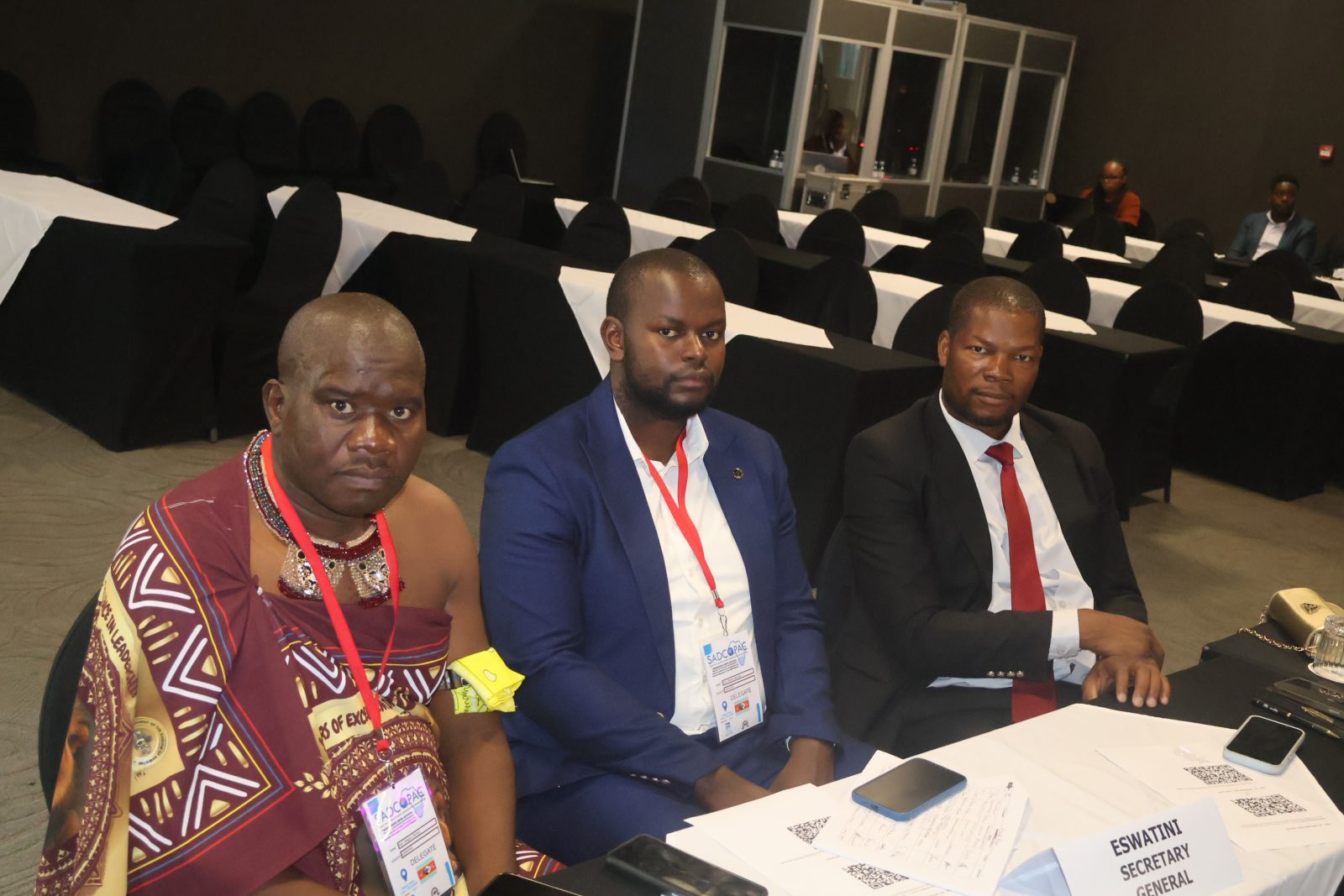
EZULWINI – Public Accounts Committees (PACs) across the SADC region have vowed to take a tougher stance against the wastage of public funds.
They promised closer scrutiny of government contracts and regular investigations into whether taxpayers are getting value for their money.
The commitment was made at the 18th Annual SADCOPAC Conference and 22nd Annual General Meeting in Eswatini, where parliamentary financial watchdogs adopted a series of resolutions aimed at strengthening oversight of public expenditure.
At the centre of the resolutions is a commitment to intensify scrutiny of major government procurement contracts through value-for-money inquiries and performance audits.
Under the resolution on ‘Oversight of Public Procurement and Value-for-Money Expenditure’, PACs and similar committees resolved to conduct at least two value-for-money inquiries into major procurement projects every year.
The findings are to be published, while follow-up hearings must be conducted within six months of each inquiry.
The move signals a stronger focus on what governments actually get for money spent, rather than simply checking whether officials followed procurement procedures.
PACs will be expected to establish whether major projects, goods and services delivered the intended results and whether the expenditure was justified.
The resolution also requires PACs to track the implementation of recommendations arising from performance audit reports, ensuring that problems identified by auditors general do not simply remain on paper.
The SADCOPAC resolutions seek to broaden parliamentary oversight from compliance to results and impact.
Under a separate resolution on outcome accountability, PACs committed themselves to monitoring whether government programmes achieve their intended objectives and benefit citizens.
They are expected to adopt outcome-based oversight frameworks and conduct at least two outcome-focused inquiries within 18 months.
The committees will also be encouraged to use performance audits and citizen feedback to assess whether public programmes are delivering the services for which funds were allocated.
This approach places greater emphasis on the question of whether public money is producing measurable results.
For major infrastructure, health, transport, technology and other government projects, PACs will, therefore, have a stronger mandate to examine not only how money was spent, but what was achieved with it.
SADCOPAC also resolved to strengthen cooperation between PACs and Supreme Audit Institutions (SAIs), including Offices of the auditor general.
PACs are expected to engage their respective auditors general more proactively and advocate for greater use of value-for-money and performance audits.
The committees will also be expected to establish regular engagements with SAIs before and after the audit cycle and develop mechanisms for jointly tracking the implementation of audit recommendations.
Joint SAI-PAC working groups are expected to be established in priority areas such as public debt, climate finance and digital transformation.
The resolutions further provide for the development of an SAI-PAC integration framework and the sharing of best practices across the region.
The objective is to close the gap between the identification of financial weaknesses and corrective action.
The regional parliamentary body has also resolved to strengthen mechanisms for tracking recommendations made by PACs and auditors general.
These mechanisms could include digital repositories and public dashboards showing the status of recommendations.
The Executive is expected to report on the implementation of PAC recommendations twice a year, while cases of non-compliance could be referred to Parliament for further action.
The measures are intended to prevent audit findings and parliamentary recommendations from being forgotten once reports have been tabled.
For PACs, accountability will increasingly be measured by what happens after an audit finding is made.
The fight against wasteful expenditure will also extend to government financial management systems.
SADCOPAC resolved that PACs should advocate for and oversee the implementation of e-procurement, e-payment and digital audit trails.
The systems are expected to improve transparency, reduce opportunities for discretionary decision-making and strengthen the tracking of public funds.
PACs are expected to map major digital transformation projects in their respective countries and conduct at least one value-for-money review of a digital system within 12 months.
Members will also receive targeted training in digital oversight tools within 18 months.
The emphasis on digital systems comes as governments increasingly rely on electronic procurement and payment platforms, creating opportunities to strengthen transparency while requiring PACs to develop the skills necessary to scrutinise increasingly complex financial systems.
SADCOPAC has also placed public participation at the centre of its accountability drive.
PACs and similar committees are expected to develop public engagement strategies, conduct at least two public hearings annually and publish citizen-friendly versions of key reports.
The resolutions further encourage PACs to use media and digital platforms to communicate their findings and actions to citizens.
This is intended to make parliamentary financial oversight more accessible and enable citizens to follow how public resources are being used.
The wider accountability framework, therefore, brings together PACs, auditors general, civil society, the media and citizens in monitoring public expenditure.
The resolutions collectively give PACs a more interventionist role in monitoring public finances, particularly where major contracts and government programmes involve substantial public resources.
Rather than waiting for problems to surface after money has been spent, PACs are being encouraged to scrutinise major projects, assess their value and follow up on shortcomings identified through audits.
The commitment to conduct regular value-for-money inquiries, publish findings and return for follow-up hearings within six months provides a more structured mechanism for keeping pressure on government entities.
The resolutions were adopted on September 16, 2026 at the conclusion of the SADCOPAC conference at the Happy Valley Hotel in Ezulwini.
They seek to translate the conference theme, ‘Oversight into Action: Building an Integrated Accountability System for Anticipatory Governance and Systemic Resilience in the SADC Region’, into practical measures for ensuring that public money is not only accounted for but produces results for citizens.














Leave a comment