

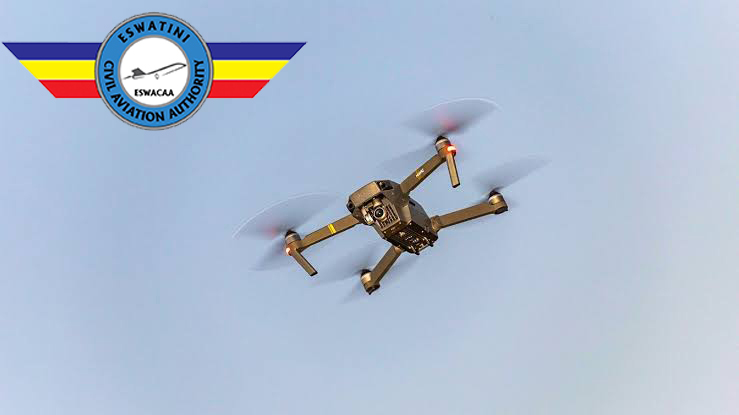
As drone technology becomes deeply integrated into mainstream commercial operations across Eswatini, businesses are unlocking unprecedented efficiencies and cost savings.
From precision agriculture and aerial land surveying to critical infrastructure inspections, high-end real estate marketing and corporate event coverage, unmanned aerial vehicles (UAV) and remotely piloted aircraft systems (RPAS) have transitioned from novel gadgets to vital corporate assets.
However, this rapid adoptation to this technology introduces a serious, often overlooked, corporate risk – the use of unlicensed, unapproved drone service providers.
To safeguard corporate assets and ensure legal compliance, the Eswatini Civil Aviation Authority (ESWACAA) is urging businesses, non-governmental organisations (NGOs) and state enterprises to mandate strict operator verification as a standard part of their procurement process and due diligence.
The hidden corporate risks of non-compliant drone operations
Hiring an unapproved drone operator (an operator that does not have a valid UAV Air Operator Certificate (UAOC) issued by ESWACAA), is not merely a technical oversight, it is a significant regulatory and financial liability. Engaging an illegal operator exposes an organisation to several severe consequences, including legal and regulatory penalties, insurance invalidation and reputational damage.
The corporate due diligence checklist
To protect your organisation, procurement and compliance teams should treat drone service providers with the same vetting rigor applied to any high-risk technical contractor. Before signing any commercial contract, businesses must verify that the service provider possesses the following mandatory ESWACAA-approved credentials:
Valid UAV air operator certificate (UAOC): This is an official certification from ESWACAA authorising the holder to conduct commercial operations using an unmanned aerial vehicle (UAV), known as a drone, within Eswatini airspace.
Valid remote pilot licence (RPL) / certificate (RPC): This is a drone pilot licence. It confirms that the specific holder is formally trained, tested and licensed by ESWACAA or by an authority acceptable to ESWACAA, to operate a UAV.
Valid medical certification: A medical certificate issued to each RPL holder confirming that the holder is medically fit to safely operate the UAV.
Safety risk assessment and mitigation plan: A documented safety risk assessment and mitigation plan tailored to the specific complexities of the intended project, issued to and accepted by the project owner.
Landowner and airspace permissions: Documented clearances (approvals) to operate over and within the specified site (aera), ensuring no infringement on private property, restricted airspace, domestic laws and rules, and/or national security. These approvals may include, but are not limited to, the landowner, the umphakatsi, the UEDF, the REPS, the town or city council and other authorities.
Driving safe innovation and economic growth
When correctly executed, compliant drone operations are powerful drivers of corporate innovation and sustainable economic development. By insisting on using only valid holders of RPL (RPC) pilots and UAV Air Operator Certificates, the business sector directly supports the safe, structured integration of advanced technology into Eswatini’s aviation ecosystem.
Regulatory compliance is not a bottleneck to business agility; rather, it is a foundational framework that protects corporate investments, validates operational data and ensures the safety of the public and the skies.
Verify before you procure
Before onboarding your next aerial service provider, conduct the necessary due diligence. To verify the compliance status of a drone operator or to register a corporate drone, or seek guidance on airspace regulations, contact the ESWACAA Flight Safety Standards Division:
Email: drones@eswacaa.co.sz
Telephone: (+268) 2333 5370

















Leave a comment