

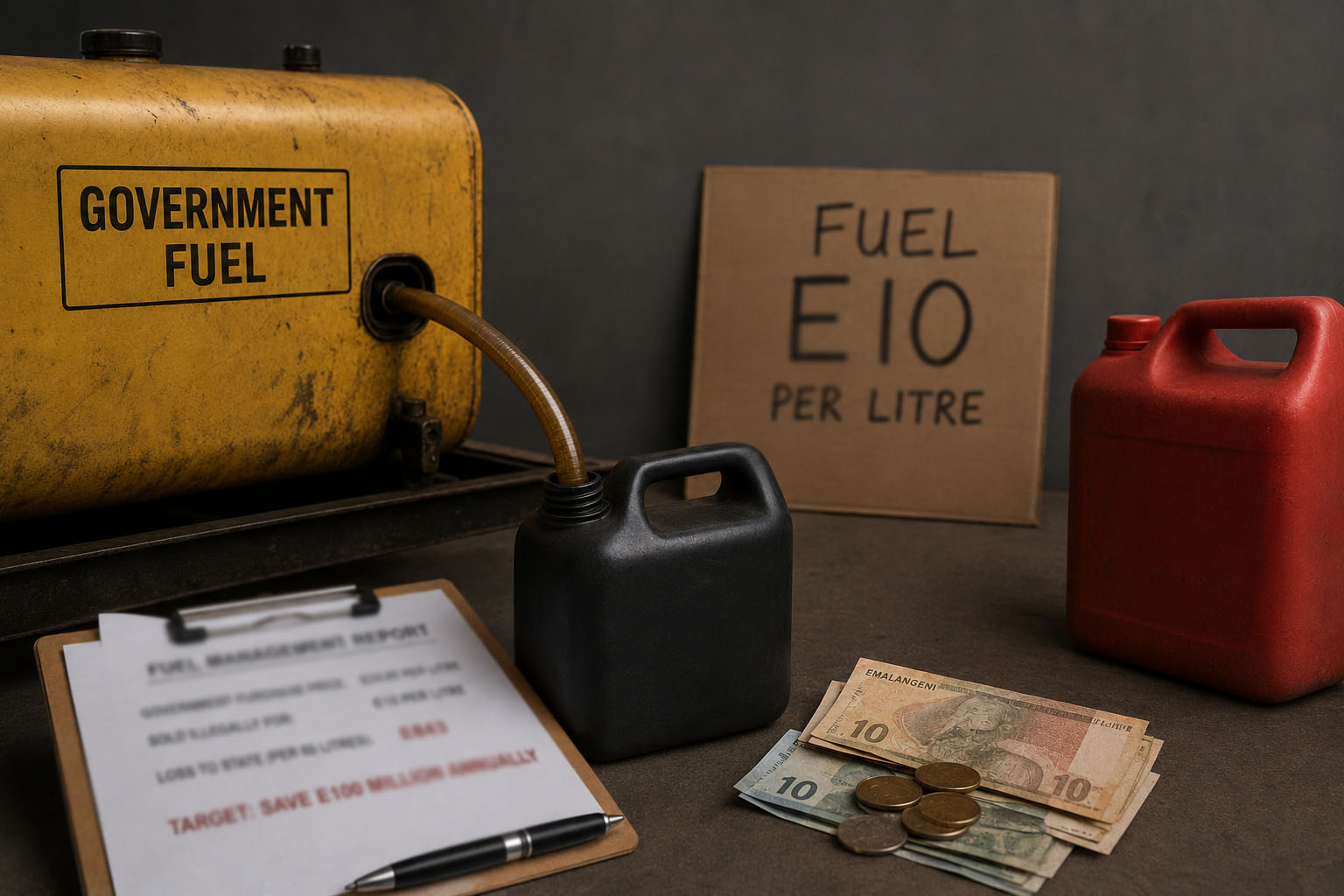
MBABANE – Government fuel was allegedly siphoned from machinery and sold to businesspeople for as little as E10 a litre, exposing a costly public-sector fuel racket.
The revelation forms part of an internal investigation by the Chief Ndlaluhlaza Ndwandwe-led Ministry of Public Works and Transport into losses suffered through alleged corruption and abuse of government resources.
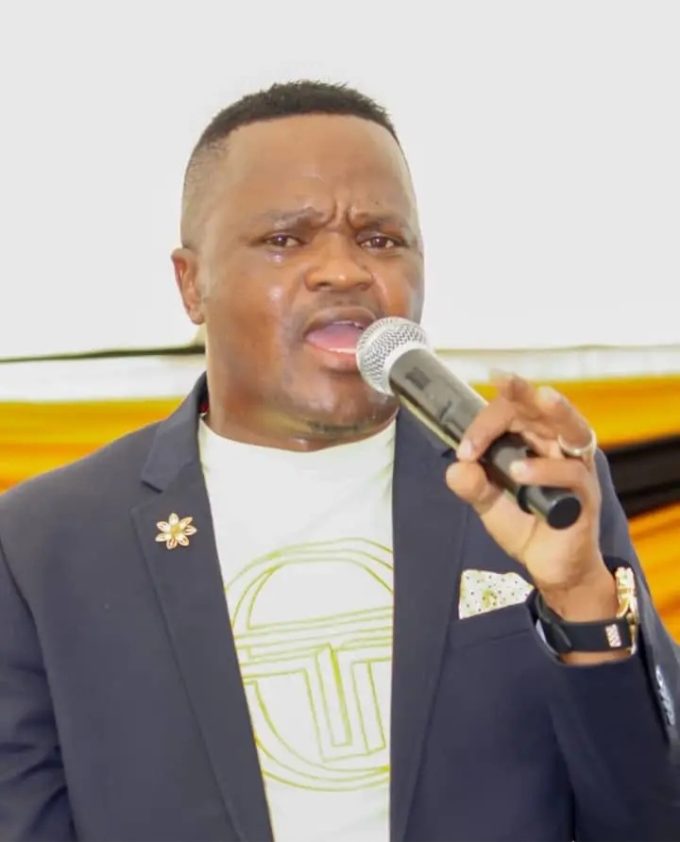
Principal Secretary and Controlling Officer Thulani Mkhaliphi said the investigation uncovered widespread abuse of government fuel, including the alleged diversion of fuel from government machinery for personal gain.
Mkhaliphi said some State drivers operating heavy plant were accused of siphoning fuel from government machinery and selling it to businesspeople.
He said investigations established that government fuel was being sold at several places, including Mahlanya, Mbabane and Siteki.
“We established that fuel was being sold for as low as E10 per litre, yet government buys the same quantity at E24.05,” Mkhaliphi said. The figures show the scale of the alleged discount. A buyer obtaining 60 litres at E10 a litre would pay only E600, compared with E1 443 at the government purchase price of E24.05 a litre. This represents a difference of E843 on every 60 litres, while the State would lose E1 443 worth of fuel if the entire quantity was stolen. Mkhaliphi said members of the public had played an important role in the investigation by providing information that helped the ministry identify alleged fuel abuse and strengthen its controls. He said the ministry had also uncovered allegations that government machinery was being used to perform private jobs, with operators allegedly pocketing money generated from the work. The findings suggest that the abuse went beyond fuel theft, with State equipment allegedly being diverted for private financial benefit.
The ministry has since introduced fuel management systems on government vehicles and fuel bowsers to close loopholes and monitor consumption.
Mkhaliphi said the system tracks kilometres travelled by individual government vehicles, allowing officials to compare fuel consumed with the distance covered. The system has already helped identify discrepancies in fuel consumption and possible abuse.
Each driver is also required to account for work performed against the mileage accumulated. After 42 days of operation, Mkhaliphi said the Central Transport Administration (CTA) was recording savings equivalent to E294 000 per day. “We have six service stations under CTA where the government fleet refuels. Daily, we were consuming 31 000 litres of fuel; however, following the installation, we are saving on average 11 000 litres per day,” he said.
The six stations are now consuming about 20 000 litres a day, according to the PS. Mkhaliphi said the biggest saving recorded so far was 15 000 litres in a single day. However, he said the system had not yet been installed on the armed forces fleet or vehicles assigned to the Ministry of Agriculture. The ministry has set a target of saving E100 million annually through improved fuel management and the elimination of leakages. According to the ministry’s findings, the public transport sector reportedly benefitted the most from stolen government fuel.
The revelation comes as the ministry intensifies efforts to ensure that fuel purchased with taxpayers’ money is used exclusively for government operations.
Mkhaliphi said the ministry had relied heavily on whistleblowers and information from members of the public to identify corrupt practices. He said the ministry would continue strengthening its systems to identify vehicles and machinery whose fuel consumption did not correspond with recorded operations. Mkhaliphi believes existing penalties for employees found guilty of fuel-related offences are not severe enough to deter others. He said fuel theft and related offences should attract dismissal from the public service. try’s position follows the uncovering of alleged fuel siphoning, the use of government machinery for private work and the sale of State fuel to businesspeople.
The crackdown is intended to ensure that government resources benefit taxpayers rather than individuals allegedly involved in illicit activities.
The latest investigation comes against a troubled history within the CTA. The department’s trading account was suspended in 2020 after it was dogged by corruption-related scandals, including the alleged theft of government fuel valued at more than E10 million, theft of automobile parts and failures in maintaining the government fleet.
In 2023, the Ministry of Public Works and Transport engaged a service provider to assess government fleet and fuel management. The service provider was tasked with assessing the adequacy of the procurement method and vendor list, identifying opportunities for fuel-cost savings and recommending management systems.
It was also expected to objectively assess government fleet requirements and the types of vehicles required by each ministry and department. The service provider installed a model for cost-effective fleet deployment and management across government. The ministry also conducted physical inspections of fuel depots and bowsers to assess their condition and functionality. The exercise examined the entire government fuel management system, from the supplier through to consumption, with a specific focus on weaknesses, possible fraud and losses. The service provider was further tasked with proposing a model for fleet workshop operations and fuel management. It also analysed CTA management, workshop staff, support staff and transport officers deployed across ministries. The reforms have already been linked to a sharp reduction in CTA expenditure. At the beginning of June, the CTA reported that it had reduced its expenditure by 94 per cent. The submission was captured in the Quarterly Economic Bulletin released by the Ministry of Economic Planning and Development. The CTA is responsible for purchasing, maintaining and disposing of government vehicles and related equipment, as well as providing fuel for government vehicles. It also rents vehicles to government ministries and departments.
The department operates five workshops located in Mbabane, Matsapha, Nhlangano, Pigg’s Peak and Siteki.
Its fleet comprises about 3 000 vehicles and machines, ranging from motorcycles, sedans and light delivery vehicles to trucks, tractors and specialised heavy construction equipment. Following years of operational problems, the Ministry of Public Works and Transport embarked on a programme to modernise the management and use of the government fleet. The stated objective was to improve operational efficiency and service delivery.










Leave a comment