


MBABANE – Two emaSwati professionals have earned continental recognition after being nominated among the Top 100 Most Influential Africans in Infrastructure for their contributions to investment, energy and development.
The nominees are Zizwe Vilane, an Economic Development Consultant and Director of Mpowered Eswatini, as well as Director of the Africa Centre for International Development, a South Africa-based consultancy and training organisation and Nosipho Simelane, a Research and Renewables Engineer at the Eswatini Electricity Company (EEC).
Their nominations are part of the inaugural Powered By Africa Top 100 Most Influential Africans in Infrastructure, a pan-African recognition programme celebrating individuals influencing the continent’s infrastructure development through policy, investment, engineering, innovation, financing, governance and project delivery.
The final Top 100 list is expected to be announced in September 2026, with those selected invited to participate in a high-level international delegation to Accra, Ghana, from November 17 to 21, 2026.
The programme will include the flagship Infrastructure and Investment Conference on November 19, bringing together policymakers, investors, financiers, business leaders and development partners.
Powered By Africa is a global campaign and convening platform focused on reshaping how the world understands Africa’s contribution to the global economy.
The campaign was founded by Samuel Kasumu, former Special Adviser to former UK Prime Minister Boris Johnson.
This will be followed by an invitation-only Powered By Africa Gala on November 20, coinciding with United Nations Africa Industrialisation Day.

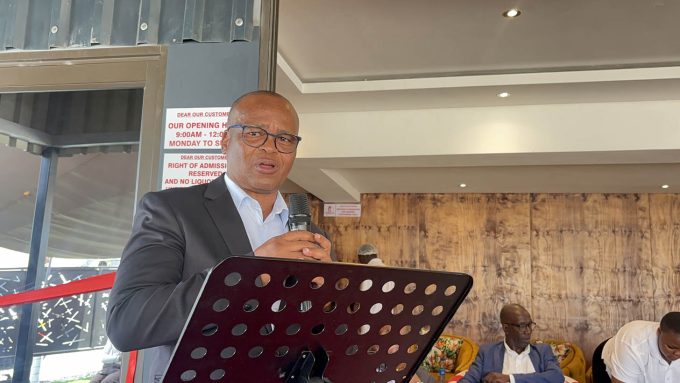
Vilane recognised for policy, investment work
MBABANE – Zizwe Vilane’s nomination recognises his work at the intersection of economic development, investment policy, private-sector engagement and infrastructure development.
As Director of Mpowered Eswatini and Director of the Africa Centre for International Development, Vilane works in areas linked to economic development, investment promotion, policy design and institutional development.
His work has increasingly focused on creating an environment in which private-sector capital can support national and regional development.
Vilane said the recognition was significant because of the work being undertaken by Africans who believe in the continent’s potential. “We keep doing what we do because, sometimes even without pay, because we believe in a better continent,” he said.
Vilane said he believed Africa’s mineral resources, youthful population and geographical position could help create a vibrant continent driven by empowered Africans.
He said infrastructure would determine whether Africa was able to fully realise the opportunities presented by the African Continental Free Trade Area (AfCFTA), rapid urbanisation, population growth and the expansion of the digital economy.
According to Vilane, infrastructure development requires investment supported by political will and robust policies that encourage private-sector capital formation.
“As an expert in the policy design and investment space, the work done at national and regional level aims at creating a vibrant single African market,” he said.
“Connectivity is key in that equation.”
His comments highlight the broader role of infrastructure in Africa’s economic transformation, where roads, ports and power networks are only one part of the equation.
Investment frameworks, trade policy, regulatory systems, digital connectivity and the ability of businesses to move capital and goods across borders are equally important to creating an integrated African market.

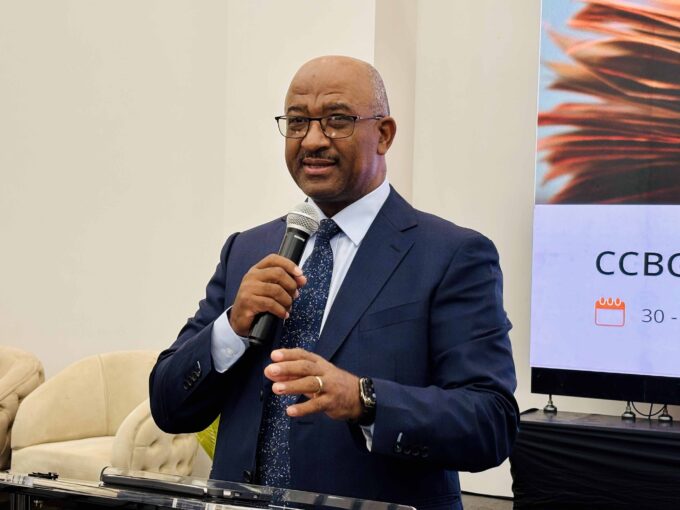
Simelane brings energy expertise
MBABANE – The nomination of Nosipho Simelane provides a strong representation of Eswatini’s technical contribution to Africa’s infrastructure development, particularly in the energy sector.
A research and renewables engineer at EEC, she holds a Master of Engineering from Stellenbosch University and has nearly two decades of experience in power distribution, e-mobility integration and sustainable-energy projects in Eswatini. Her work has included renewable-energy integration and research aimed at strengthening the country’s energy systems.
She has also been involved in initiatives supporting the development of mini-grids and increased access to electricity, areas that are becoming increasingly important as African countries seek to expand energy access while transitioning towards cleaner sources.
In her reaction to the nomination, Simelane said the recognition celebrated leadership in shaping Africa’s energy future, expanding access to reliable electricity, accelerating sustainable development and building partnerships for an inclusive energy transition. “What fills me with the greatest pride is what this says about Eswatini,” she said.
“Eswatini awumncinyana.”
She said the nomination demonstrated that although Eswatini is a small nation, its people could still contribute and lead at continental level. “We may be a small nation, but we contribute, we lead and we belong at every table where Africa’s future is being shaped,” she said.
Simelane further described the recognition as a reminder that professional impact could sometimes reach further than individuals realised. “Sometimes people are watching. Not to judge, but to notice. Sometimes they see your impact before you’re ready to see it yourself,” she said.
She encouraged other professionals to continue serving and making contributions regardless of their positions or titles. “Keep serving, you don’t need a big title or position,” she said. “Your role matters. Your contribution matters. And your impact may be reaching further than you realise.”

















Leave a comment