

Madam,
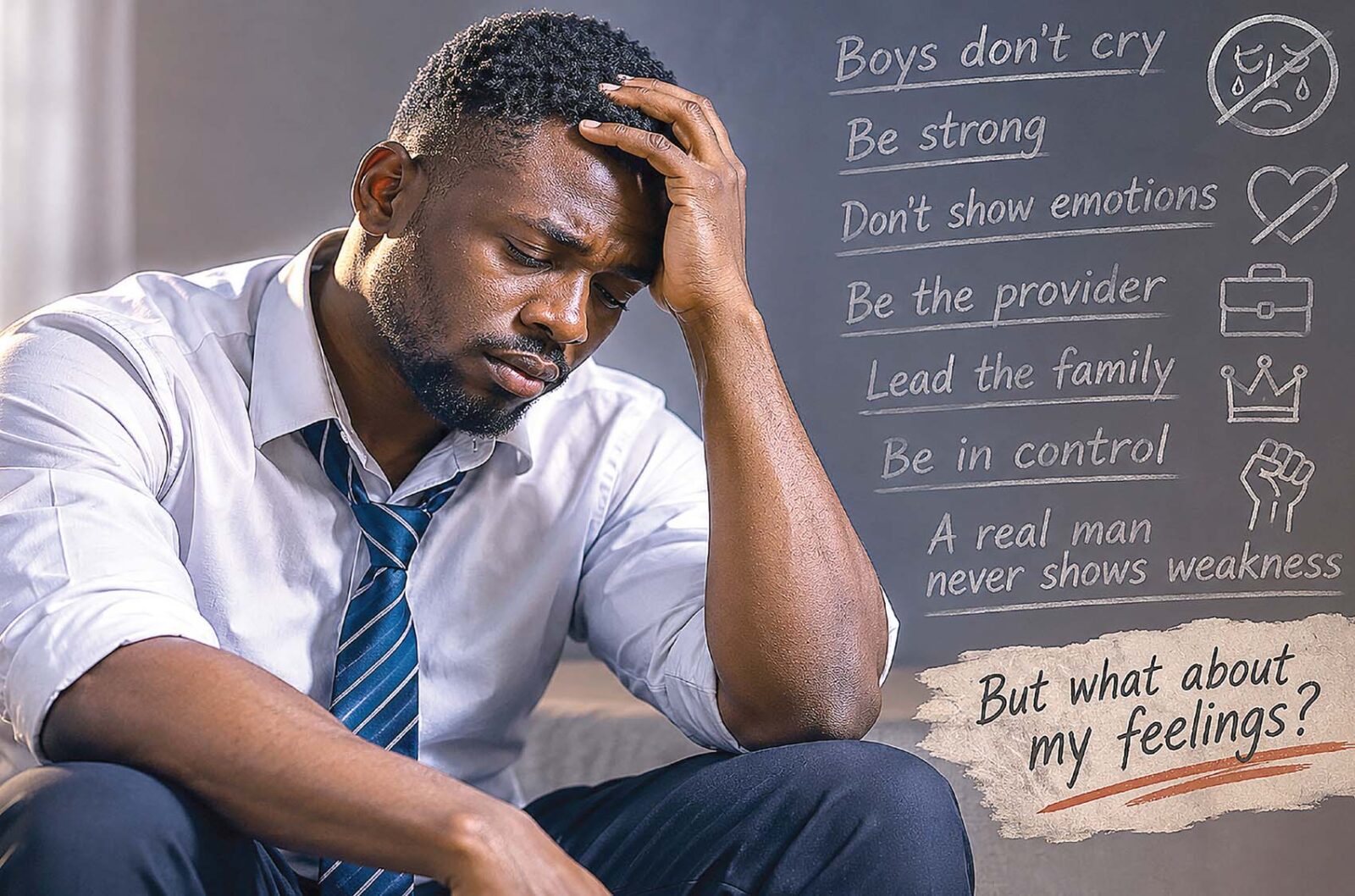
We never got to know the world from a place of admiration. From the first moment we were born out of our mother’s womb, we were given a script; from the moment we took our first steps, we had to follow it. This life was never ours to live.
From the moment we first cried, our mothers would whisper, ‘Indvodza lenjani lekhalako?’ and we would stop and laugh amid the tears. To the moment we picked out our first toys, we again had to perform: “Umfana akayidlali imidlalo yemantfombatane.” To the moment we had our first girlfriends, we were told about the good qualities of a wife. From the moment we huddled with elders in meetings, we were told what a good man is. We were told how to act, speak, laugh and dress. We were machines; we never had a say. The script did.
We were taught never to show emotions, for only weak men did. We didn’t want to be weak men, nor did the silent audience. The only emotion allowed was joy. I never knew what it felt like to cry, to love, not that I was incapable of such. Society never afforded me such luxury.
The script somehow made us feel we had a mammoth task to lead the world.
“Inkunzi isematholeni”, they would say. It gave us a sense of ownership. It is a man’s world, they said. With blissful ignorance, we affirmed the latter and we grew. Our future roadmap, the producer had already done. We knew the first car we had to buy: “Indoda mayibe neVan.” We knew the career path we would take: “Indoda ngeke ibe yi midwife.” We knew our music taste before we even discovered it: “Yindvodza lenjani lelalela Rihanna?” And we grew and performed perfectly.
The audience applauded. We took wives with qualities the script dictated. We ruled with an iron fist and built cold homes. “Ungamyekeli umfati akugibele enhloko.”
Masculinity was the way. We had to make it work. We grew, we bore children and we ruled with an iron fist. We were animals. The world never gave us a chance to be truly human. When we came back from work, our children would all scatter amid their favourite TV show. Our wives were the only brave ones to face us. How could they be afraid? They had to follow their own script. We grew and started to have grey hair. We hesitated to hand down the script.
But it felt wrong. Our children grew, yet something changed in us. Looking at them grow up, looking up to us, their heroes- these were our children, our little humans. Their hugs and affection stirred feelings. “Dad, I love you.” We never knew how to reply. The script did not tell us what to do, but somehow, we learnt to say the words back. They sounded distant, cold.
Most importantly, we said them back. We learnt to hug back when they did. In them, we saw a script-free version of us. Pure. Optimistic. Filled to the brim with possibilities. Possibilities the script never gave us. We grew. Our skin wrinkled, our bones became frail and we had regrets. If only we broke out of character. Correcting our performances was too late, but not impossible. We love-bombed our grandchildren, bought them toys our dads never bought us, opened their minds to possibilities we never knew. But we couldn’t grow further. We eagerly waited for death. And in the darkness and stillness of the night, it came. We were happy for once. Death made us feel human. Men marvelled as our obituaries were read: “He was a man among men,” they thought. Our sons sat on the front church pews, still motionless.
There were no tears. They were in character. They knew the script. Six men carried the coffin to the cemetery—men he had lived with. They poured the last ounces of soil into the grave, their faces cold as stone. They were in character. At last, he was free.
Wandile Sihlongonyane













Leave a comment