Madam,
Think of the last time you tried to change something and quit within two weeks. It probably wasn’t laziness. More likely, you started too big, missed one day and decided the whole thing was ruined.
Most of us picture consistency as something other people have: The early risers who never skip a day. The truth is quieter. Consistent people mostly make their habits so small and so easy that a bad day can’t stop them. That’s a core idea in ‘James Clear’s Atomic Habits’: Tiny changes, repeated every day, add up the way interest does. One per cent better barely shows today, but give it a few months.
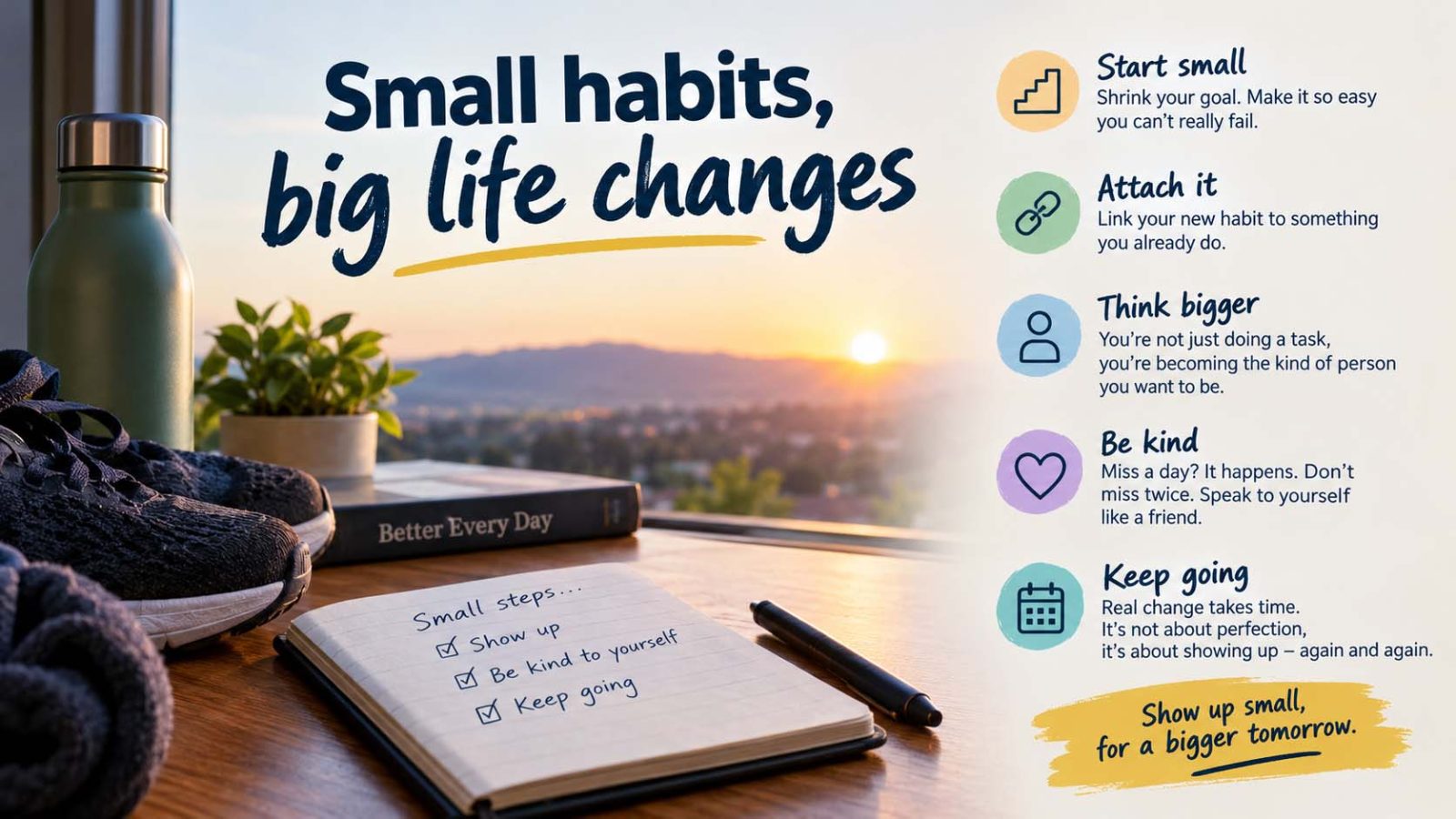
So start smaller than feels respectable. Not ‘run 5km’ but ‘put on my shoes and step outside’. Not ‘journal for 10 minutes’ but ‘write one honest sentence’. It sounds almost silly and that is exactly why it works. You can’t really fail at something that small and the showing up is what you’re actually building.
Next, stop relying on how you feel. Attach the new habit to something you already do, like reading one page right after you brush your teeth and prepare the night before: Running clothes by the bed, a book on the pillow. How you feel at 6pm is a terrible guide, so don’t ask it.
Then think about who you’re becoming, not just what you’re doing. Every small action is a vote for a kind of person. A short walk on a day you don’t feel like running is a vote for ‘I’m someone who keeps promises to myself’. You don’t have to win every vote. You just need to win most of them.
The part most people skip is kindness. You will miss days, because everyone does. One missed day is an accident, and two in a row is how a new pattern starts, so the rule is never miss twice. What matters even more is what you say to yourself afterwards. ‘I’ve ruined it’ is a lie. Harshness feels like discipline, but it mostly makes starting again harder and research on self-compassion suggests that people who answer a setback with kindness tend to try again more readily than those who beat themselves up. Habits are also slower than we’re promised: In one well-known study from University College London, it took anywhere from about 18 days to more than eight months for a new behaviour to feel automatic and a single missed day did little harm.
If you’re starting something, here’s what to try this week. Pick one habit. Shrink it to two minutes. Attach it to something you already do. Mark it off each day. Decide now what your tired-day version looks like. And when you miss, speak to yourself the way you would to a friend who is trying something for the first time.
Real change rarely arrives as one big decision. It arrives as a quiet choice repeated: Show up small, forgive quickly, begin again. You’re allowed to be a beginner.
Siyandasive Zwane