

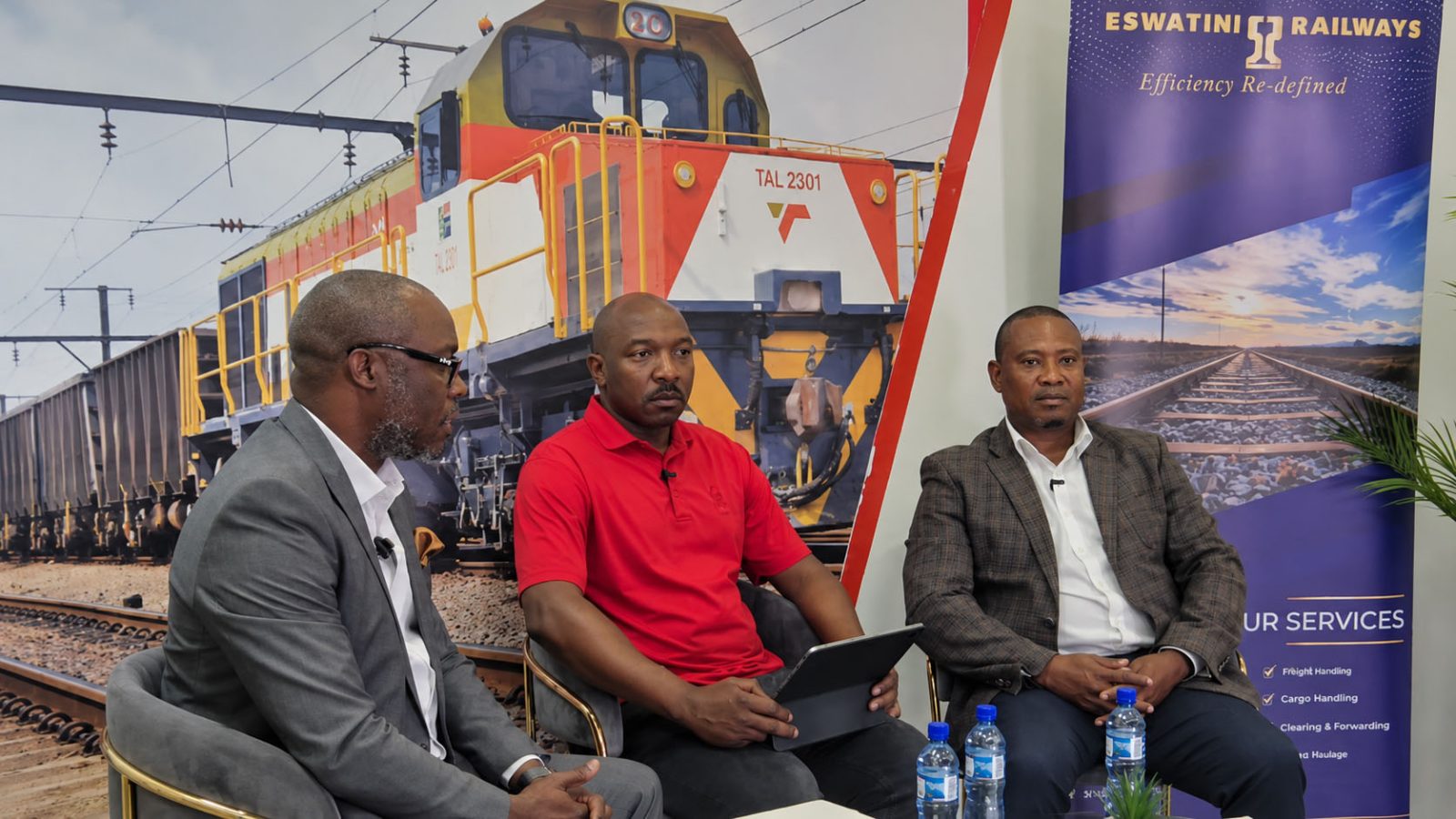
MANZINI – Eswatini Railways (ESR) has brought four major railway entities to the country to showcase a united regional logistics system at the 58th Eswatini International Trade Fair (EITF) 2026.
The unprecedented joint exhibition saw ESR sharing a platform with Mozambique’s Caminhos de Ferro de Moçambique (CFM), South Africa’s Transnet Freight Rail (TFR) and Transnet Engineering (TE), creating a rare opportunity for customers, businesses and other stakeholders to engage directly with the region’s railway operators.
ESR Marketing and Customer Services Manager Vusani Simelane, who shared information on the collaboration, explained that the initiative demonstrates the growing strength of regional railway partnerships and provides a platform for customers, businesses and stakeholders to explore opportunities for integrated regional logistics solutions.
The collaboration marks a significant expansion of ESR’s regional partnerships and demonstrates how railway operators are increasingly working across national borders to strengthen trade routes, improve connectivity and provide businesses with more integrated logistics solutions.
It also reinforces Eswatini’s strategic position between some of Southern Africa’s major commercial centres and ports.
The joint stand attracted considerable attention during the official opening of the trade fair, including from His Majesty King Mswati III, who took an interest in the structural and financial progress of the Eswatini Rail Link (ESRL) project.
The King’s interest placed the rail link firmly within the broader conversation around Eswatini’s economic development, infrastructure expansion and regional connectivity.
The four-way exhibition represents an expansion of the partnership ESR began developing with Transnet Engineering at EITF 2025. What was previously a collaboration involving ESR and one regional partner has now grown into a joint showcase involving four important railway entities from Eswatini, Mozambique and South Africa.
Simelane described the development as a demonstration of an ‘active and living partnership’, highlighting the progression made within a year.
He explained that the expanded collaboration provides a platform for the railway entities to collectively demonstrate the possibilities offered by interconnected regional rail infrastructure.
It also gives businesses an opportunity to understand how rail can be used to move goods across borders and connect industries in Eswatini to major regional ports. It is understood that the presence of the four entities at one exhibition stand, therefore, goes beyond branding and visibility. It reflects an effort to strengthen cooperation between railway operators whose networks already intersect and complement each other.
One of the key elements of the regional network, according to Simelane, is the Eastern Corridor, through which ESR and CFM provide a rail connection from Matsapha to the Port of Maputo.
The route runs through Mpaka and Goba before reaching Maputo, providing Eswatini with an important connection to the Mozambican port.
For businesses based in Eswatini, this link provides access to an established regional gateway for goods moving into and out of international markets.
The corridor is particularly important because Matsapha remains a major industrial and commercial centre, making efficient access to ports critical for businesses involved in manufacturing, distribution and trade.
The rail connection therefore places ESR in a position where its domestic network becomes part of a much larger regional logistics chain.
Simelane said the Eastern Corridor forms an important part of the relationship between ESR and CFM, allowing the two railway entities to connect Eswatini with Maputo through Mpaka and Goba.
The regional connectivity extends beyond Mozambique.
Simelane explained that through the North-South Corridor, ESR connects through Phuzumoya and Golela into South Africa, with access to major ports including Richards Bay and Durban.
This gives Eswatini connections to more than one major maritime gateway and strengthens the country’s ability to participate in regional and international supply chains.
The links also demonstrate the strategic value of maintaining strong relationships between railway operators across Southern Africa. Instead of operating as isolated systems, ESR, CFM and the Transnet entities can provide interconnected routes that allow goods to move across borders and towards major commercial destinations. This network is increasingly important as businesses seek reliable and efficient transportation solutions capable of supporting regional trade.
Simelane said the various connections reinforce ESR’s role in regional trade and logistics while strengthening Eswatini’s position as a strategic link within Southern Africa’s interconnected rail network.

















Leave a comment