

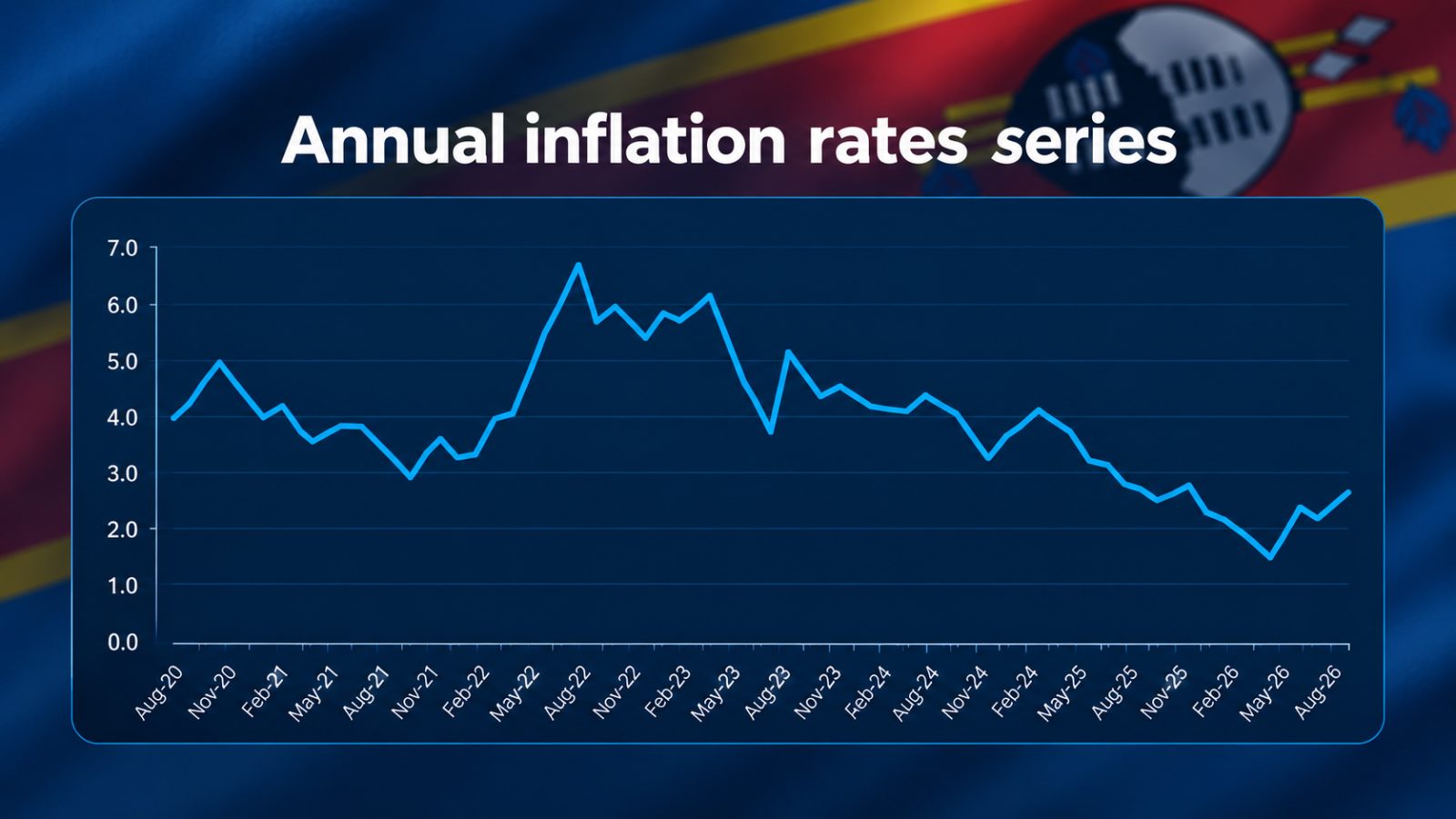
MBABANE – Transport costs, particularly fuel and air travel, have emerged as key drivers of Eswatini’s rising inflation.
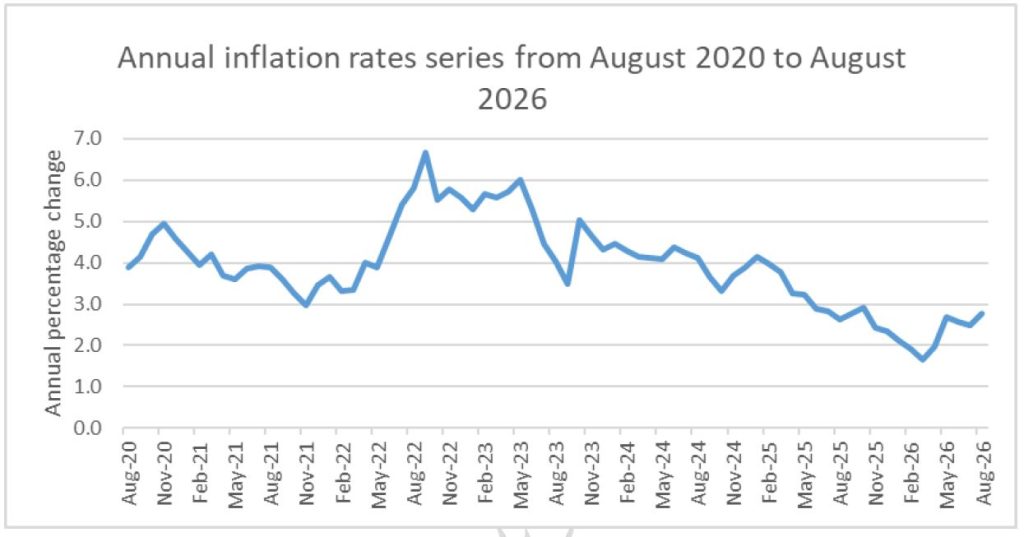
This has pushed the country’s annual inflation rate to 2.8 per cent in August 2026 from 2.5 per cent in July.
The increase was recorded in the latest Consumer Price Index (CPI) report released by the Central Statistical Office (CSO) on Tuesday, September 15, 2026.
The latest inflation figure represents a 0.3 percentage-point increase over the previous month and is also 0.2 percentage points higher than the 2.6 per cent recorded in August 2025.
According to the CSO, the annual inflation rate for goods stood at 3.3 per cent, while services recorded a lower inflation rate of 1.9 per cent during the month under review.
Transport inflation rose to 3.5 per cent in August 2026, compared with a negative 0.3 per cent recorded during the same month last year.
The CSO attributed the increase mainly to higher growth rates in fuels and lubricants, as well as passenger transport by air.
The transport category, which carries a 17.53 per cent weighting in the national CPI basket, recorded a monthly inflation rate of 0.3 per cent in August, compared with negative 0.8 per cent in July.
The increase was again driven primarily by fuels and lubricants and passenger transport by air.
The report shows that the cost of operating personal transport remained a significant source of pressure within the category.
Fuels and lubricants for personal transport recorded annual inflation of 19.5 per cent in August. This was considerably higher than the overall transport inflation rate of 3.5 per cent.
Passenger transport by air recorded an annual inflation rate of 28 per cent, following a monthly increase of 9.8 per cent.
However, the cost of purchasing motor vehicles declined by 0.6 per cent annually, while passenger transport by road recorded negative inflation of 0.2 per cent.
Despite the increase in transport costs, housing and utilities remained the largest contributor to the overall annual inflation rate.
The category contributed 1.7 percentage points to the headline inflation rate of 2.8 per cent, followed by transport at 0.6 percentage points and clothing and footwear at 0.4 percentage points.
Housing and utilities recorded annual inflation of 5.8 per cent in August, although prices in the category declined marginally by 0.1 per cent on a monthly basis.
Within the category, electricity recorded annual inflation of 15.1 per cent, while liquid fuels increased by 28.2 per cent. Water supply recorded annual inflation of 4 per cent.
Actual rentals for housing rose by 3.3 per cent annually.
The clothing and footwear category, which was the third-largest contributor to headline inflation, recorded annual inflation of 6.2 per cent. Footwear prices increased by 9.4 per cent, while clothing recorded inflation of 4.9 per cent.
Food and non-alcoholic beverages, which account for 20.15 per cent of the CPI basket, recorded zero annual inflation in August 2026.
However, prices in the category increased by 0.6 per cent compared with July.
The CSO reported mixed movements among food products. Bread and cereals recorded annual deflation of 2.2 per cent, while fish and seafood declined by 1.1 per cent.
Meanwhile, milk, cheese and eggs recorded annual inflation of 2.2 per cent, and vegetables increased by 2.1 per cent.
Non-alcoholic beverages recorded annual inflation of 6.6 per cent, with coffee, tea and cocoa recording an increase of 7.3 per cent.
The August inflation rate of 2.8 per cent remains below the annual average of 3.1 per cent recorded in 2025.
The CSO’s figures show that inflation has fluctuated during 2026, falling from 2.1 per cent in January to 1.6 per cent in March before rising to 2.7 per cent in May. It then eased to 2.6 per cent in June and 2.5 per cent in July, before increasing in August.


















Leave a comment