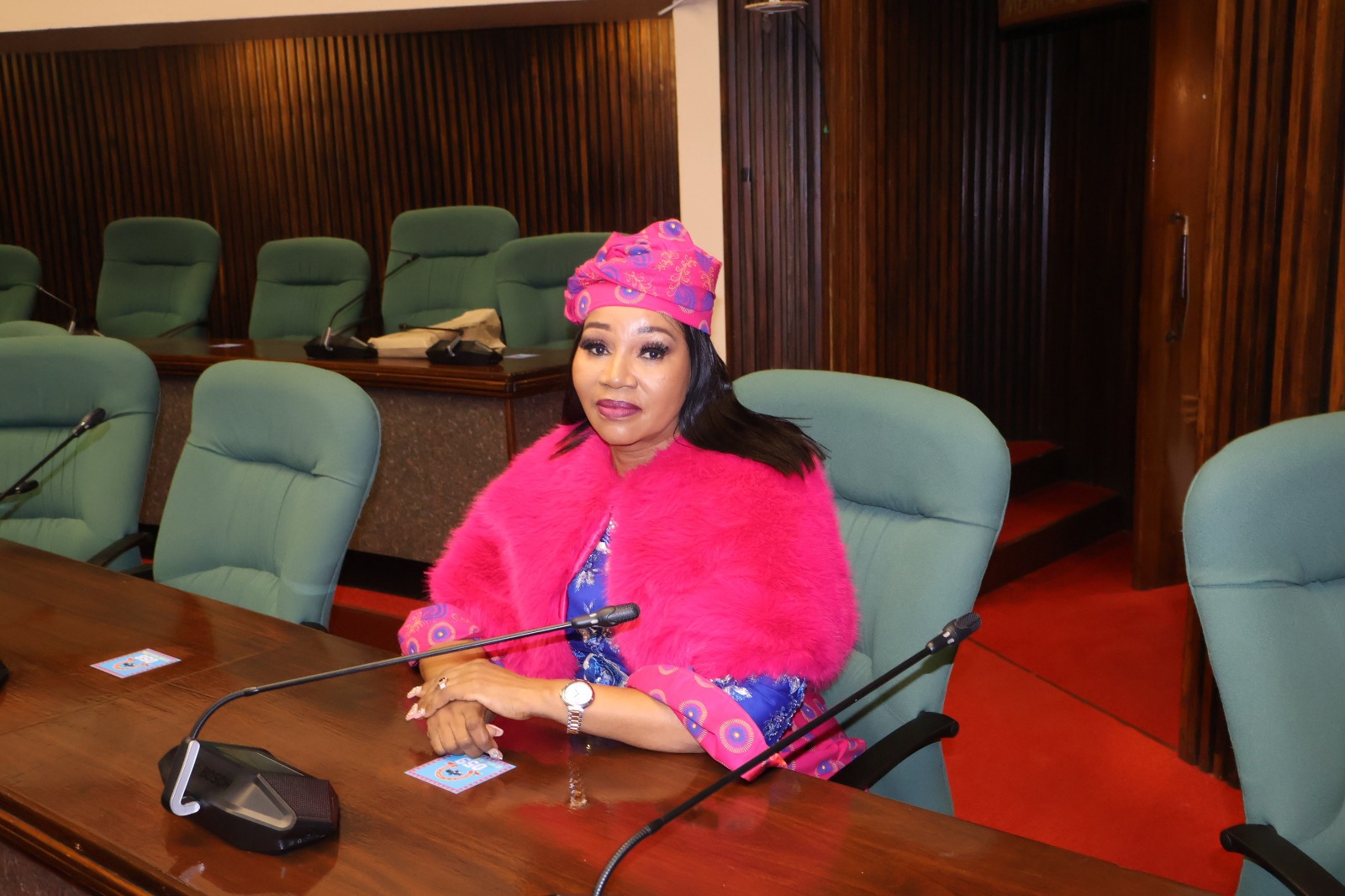
BRUSSELS – Senate President Pastor Lindiwe Dlamini has received the Global-South-EU Women in Institutional Leadership Award 2026 at the EuropeAfricaInvestment Forum in Brussels.
The award recognises women’s leadership and institutional strengthening. Its citation describes Dlamini as a leader committed to good governance, women’s empowerment and inclusive development.
It also notes that, under her leadership, the Senate of Eswatini has strengthened legislative oversight and representation, as well as its promotion of citizens’ well-being.
The 16th edition of the forum was held on 1 and 2 October 2026 under the High Patronage of the European Parliament, under the theme “Invest together, innovate together, prosper together”.
Discussions focused on how African parliaments and the European Parliament can strengthen oversight of trade agreements to ensure their benefits reach communities, women, young people and small and medium enterprises (SMEs).
Addressing the forum, Dlamini called for an end to the traditional trade model in which Africa exports raw materials and imports finished goods.
She said trade should instead be based on equal partnership, co-production, mutual recognition and strong legislative oversight.
“Trade agreements are negotiated by executives, but they are ratified, domesticated, monitored, and improved by parliaments,” she said.
The Senate President said parliaments must do more than approve agreements, arguing that they should inspect, evaluate and monitor trade deals throughout their life cycle.
Joint oversight between African parliaments and the European Parliament, she said, should track whether agreements encourage local processing, manufacturing, value addition, and skills and technology transfer within Africa.
She cited the Samoa Agreement as an example. The agreement redefines international cooperation as an equal partnership and shifts the focus from aid to shared governance on climate, trade and human rights.
Dlamini said Eswatini’s Parliament has established a special Committee on Trade and International Affairs. The committee works to align national laws with World Trade Organization obligations and regional agreements, including customs laws, standards acts and investment codes.
She urged parliaments to use their power of the purse to hold national governments and international financial partners accountable.
Funding, she said, should support border management, ICT systems, capacity building and cross-border infrastructure such as transport, renewable energy and digital connectivity.
“It is not enough to sign agreements,” she said. “We must hold our administrations accountable for reducing non-tariff barriers.”
On inclusion, the Senate President called for gender-sensitive trade facilitation across the African Continental Free Trade Area (AfCFTA) and Euro-African trade agreements.
She proposed gender-disaggregated impact assessments for trade policies and said legislative committees should check whether customs processes, rules of origin and digital trade tools are accessible to small businesses.
“When we simplify procedures, we remove barriers that disproportionately affect women traders,” she said.
She said women, young people and SMEs should also be part of the oversight process itself.
“They should not simply be beneficiaries discussed in parliamentary forums; their experiences should help identify the barriers that Parliament needs to address,” she said.
Dlamini welcomed closer cooperation with the European Parliament through regular dialogues, joint hearings, committee exchanges and joint parliamentary committees, with the AfCFTA Secretariat taking part.
She also called for stronger inter-parliamentary platforms, including the Inter-Parliamentary Union and the joint ACP-EU and AU-EU parliamentary channels, so members can share lessons on the Trade Facilitation Agreement and regional customs unions.
She insisted, however, that Africa must lead the AfCFTA.
“European parliamentary cooperation can contribute knowledge, experience and partnership, but the implementation of the AfCFTA must remain African-led,” she said.
She also asked the World Bank and the International Monetary Fund to provide technical assistance designed for legislators.
“Technical assistance that helps parliaments understand complex trade texts and engage effectively in the process is just as important as funding for ports and roads,” she said.
The Senate President said the Parliament of Eswatini was ready to work with partners through the Inter-Parliamentary Union and bilateral partnerships to ensure trade mechanisms “serve the people we represent”.
“If we strengthen that partnership, parliamentary oversight can help ensure that the AfCFTA moves from a continental commitment to tangible economic opportunities in African communities,” she said.