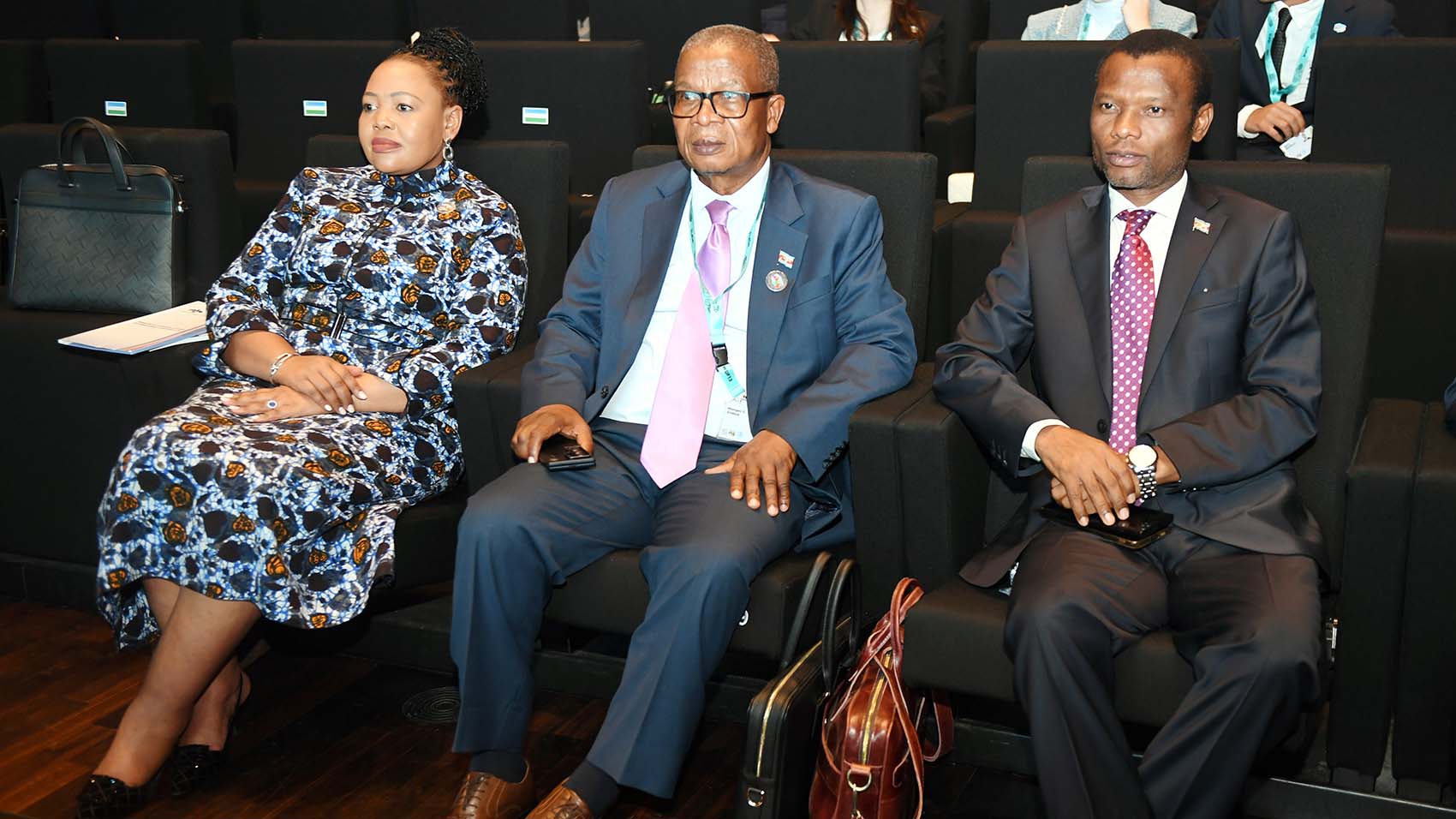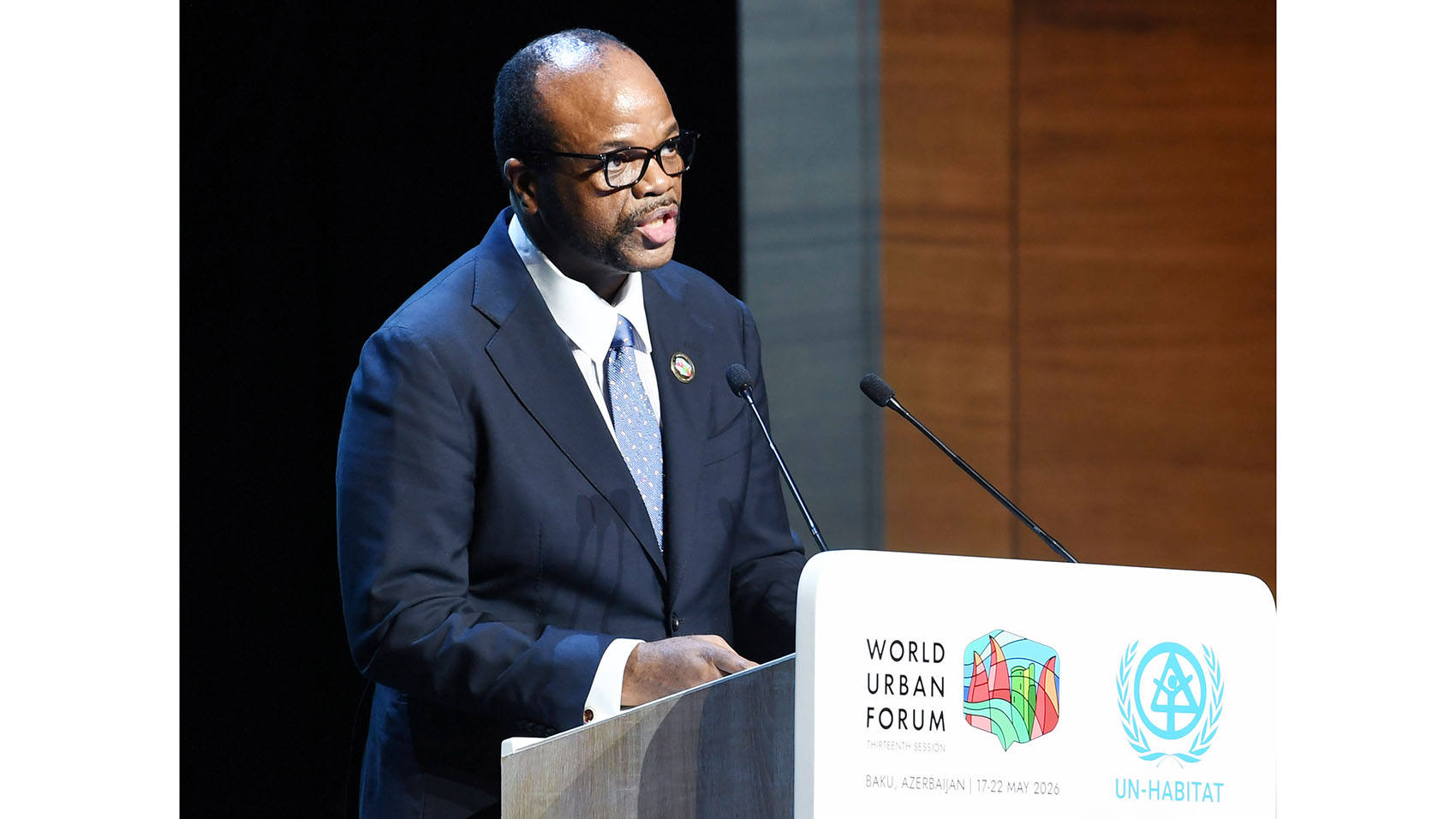
BAKU, AZERBAIJAN - His Majesty King Mswati III has challenged members of the United Nations to commit to solutions that put people at the centre of urban development.
Addressing the 13th World Urban Forum (WUF13) held under the theme ‘Housing the World: Safe and Resilient Cities and Communities’ held in the capital Baku, the King described adequate housing as one of the defining responsibilities of our time.
He warned that billions of people still face the harsh realities of inadequate housing, rapid urbanisation, climate disasters, poverty and strained infrastructure.
“These challenges transcend regions and levels of development. They affect both developed and developing nations. At the centre is the human being,” he said.
He emphasised that housing is more than concrete and steel, reminding delegates that it represents dignity, safety, stability and hope and that a home is the foundation for strong families and resilient communities.
“A truly resilient city is measured not by the height of its skyscrapers, but by its ability to protect and empower its people, especially the most vulnerable,” he said.
His Majesty’s central appeal to the forum was to have debates on the future of cities to be grounded in real, workable measures that can be implemented at scale.
“As we deliberate during this forum, let us commit to practical solutions and renewed determination to build inclusive, resilient, safe and sustainable cities and communities for all. Let us act not only for our generation, but for those who will inherit the decisions we make today,” he said.
He called for stronger cooperation and innovative partnerships across governments, the private sector, civil society and communities, insisting that no country can tackle urbanisation, climate change and housing insecurity in isolation.
“The scale of these challenges demands stronger cooperation and innovative partnerships,” he said, as he welcomed the outcomes of the Africa Urban Forum, particularly the declarations from Addis Ababa in 2024 and Nairobi in 2026, and reaffirming Eswatini’s full support for UN‑Habitat and its leadership in implementing the New Urban Agenda, in partnership with the African Union and UNECA.
*…
‘See people beyond roads and zones’
BAKU, AZERBAIJAN - “Do not only see the roads and zones, see the faces.”
This was an appeal made by the President of the UN‑Habitat Assembly, Nga Kor Ming, in his opening speech at the 13th World Urban Forum (WUF13) in Baku to press governments to put people, not just lines on planning maps, at the centre of urban policy formulation.
The forum, convened under the theme ‘Housing the World: Safe and Resilient Cities and Communities’, is seeking ways to tackle a global housing shortage that now affects nearly 2.9 billion people.
“According to UN‑Habitat, over two billion urban dwellers will be impacted by an increase of at least 0.5 degrees Celsius by 2040. For those communities with inadequate solutions, these are not just numbers; they represent a critical threat to survival,” Ming warned.
Drawing on his own country’s experience, Ming highlighted Malaysia’s efforts under the ‘Malaysia Madani’ vision, noting that the country has delivered over 1.1 million affordable homes, reached a 77 per cent homeownership rate, planted more than 150 million trees and enabled 60 per cent of local authorities to complete Voluntary Local Reviews to track progress on the Sustainable Development Goals (SDGs).
The message to countries like Eswatini was to the effect that progress is possible when three elements align; these being strong national leadership, empowered local authorities and active communities.
Ming also urged the global community to help bridge the estimated US$5.4 trillion financing gap for climate‑resilient infrastructure, including housing.
Ming said the informal ministerial meeting held in Baku, with more than 80 ministers present, was part of preparations for a high‑level mid‑term review of the New Urban Agenda in New York next year. He called on all countries to help craft a legacy document that is both ambitious and realistic.
Quoting an Azerbaijani saying – ‘every home is its owner’s centre of the world’ – Ming reminded delegates that the value of a home is not only monetary or structural; it is emotional, social and psychological.
This sentiment rings true in Eswatini, where homesteads are deeply connected to family identity, culture and lineage.
*…
Eswatini shares people-centred drive to improve housing for all
BAKU, AZERBAIJAN - Eswatini used the global stage of the World Urban Forum in Baku to share her people‑centred approach to housing and urban resilience.
His Majesty told leaders that this drive is anchored in national strategies and traditional governance systems that aim to ensure no women, youth, the elderly, persons with disabilities or marginalised groups are left behind.
“In the Kingdom of Eswatini, we place people at the centre of all development,” His Majesty King Mswati III told delegates. “We pursue sustainable urban growth that goes hand in hand with environmental stewardship, economic inclusion and social cohesion.”
He outlined a national agenda that links housing, infrastructure and resilience.
“Our national priorities focus on affordable housing, quality infrastructure, integrated spatial planning and environmental sustainability for both urban and rural communities,” he said.
Central to this agenda is Strategy 2030, launched in 2025, which the King described as a comprehensive framework aligned with the New Urban Agenda and the Sustainable Development Goals (SDGs).
“This strategy is expanding access to home ownership and significantly improving living conditions for all emaSwati,” he said.
On the ground, this translates into a combination of State‑led and partnership‑driven initiatives. “Our municipalities and housing institutions continue to deliver housing schemes for different segments of society, while partnerships with the private sector and development partners provide decent homes for vulnerable groups,” His Majesty explained. “These efforts reflect our commitment to inclusive and compassionate development.”
The King said this modern policy framework in Eswatini’s Tinkhundla System of Government, which he presented as a critical tool for making housing and urban policy responsive to real community needs.
“Guiding our efforts is the Tinkhundla System of Governance, which is our people‑centred approach that promotes grassroots consultation, broad participation and shared responsibility,” he said.
“This system ensures development priorities emerge from the communities themselves and that no women, youth, the elderly, persons with disabilities or marginalised groups, are left behind.”
*Full article available on Pressreader*
 copy.jpg)