

MBABANE – The mission undertaken by the African Commission on Human and Peoples’ Rights (ACHPR) to the Kingdom of Eswatini has exposed the seriousness of misinformation.
The commission is said to have been fed with inaccurate information suggesting that a member of one of the political parties was brutalised by the police on May 1, 2025, during the Workers’ Day celebrations.
However, it was later discovered that such an individual did not exist, as he had passed away the previous year and the police were not involved.
The information that the commission now has is that the individual in question died in a hospital in neighbouring South Africa in 2024, as per the records of the Royal Eswatini Police Service (REPS).
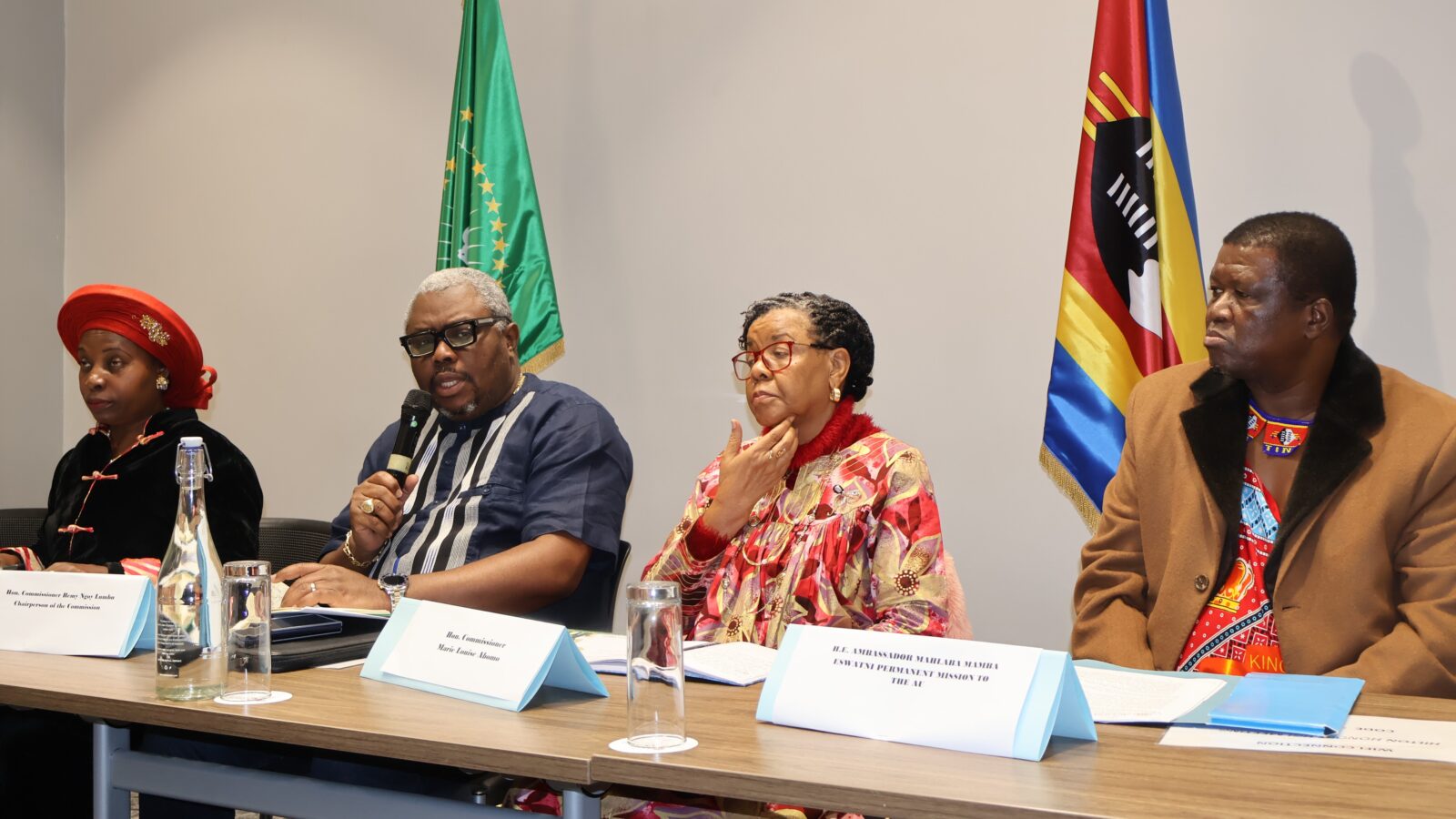
This revelation was made during a press conference held at the Hilton Garden Inn, where the commission presented its observations, preliminary findings and recommendations following its promotional mission to Eswatini.
It was revealed that prior to coming to Eswatini, the commission had received a complaint regarding the alleged brutalisation of the Economic Freedom Fighters (EFF) Swaziland member and others at the hands of the police. Also, the commission is said to have been informed that none of the trade unions were allowed to participate in the May Day celebrations.
It was gathered that the commission was told that the EFF member and others were on their way to joining a Workers Day celebration at King Sobhuza II Memorial Stadium in Nhlangano on the day in question but the police not only stopped them but also enforced brutality.
As a result, the case was included among others that the commission sought answers from the Eswatini Government and the REPS.
During a meeting with REPS, the commission was informed that the member who is said to have been brutalised was identified as, Bhembe but that according to the police record, he passed away the previous year.
Also, the commission is said to have been told of other members who were said to have been stopped dead in their tracks when they tried to attend the celebrations. However, the commission is said not to have been able to get answers, as it turned out the details of some of the individuals who were cited as victims were not clear.
Instead, certain codes were used and some names were found to be non-existent. In providing responses to the commission, the REPS are said to have stated that they did not, at any point, use force or prevent workers from partaking in the May Day celebrations.
More details on the issues are expected to be shared in the commission’s final report as per the communication at the press conference.
The name of the EFF member was not revealed at the press conference, but upon further digging by this publication, it was relayed that he was only referred to as ‘Bhembe’.
Notably, the Workers Day celebration for this year did take place at the Salesian Sports Ground under the theme: “Industrialisation, Trade, and Decent Work for Social Justice.
Another celebration was held in Simunye and graced by Prime Minister Russell Mmiso Dlamini and Cabinet ministers.
Efforts to obtain a comment from the EFF Swaziland executive did not yield much result as the Deputy President, Senate Dlamini, said he was not aware of any communication forwarded to the commission. The commission has spent the past few days in the country, during which its commissioners visited various entities and engaged a range of stakeholders.
Leading the delegation was Eswatini’s Permanent Representative to the African Union (AU), Mahlaba Mamba, who explained that the commission was invited by His Majesty King Mswati III in February this year, when he attended the AU Summit.
Mamba stated that the King is concerned about the negative publicity the country receives regarding human rights issues. This, he said, was the reason the King invited the commission to witness firsthand the situation in the Kingdom of Eswatini.
“The King commanded government to open all gates for the commission so that they could go wherever they wished. As a result, civil society organisations were invited and we did not participate in those meetings, as we wanted them to be free and uninfluenced. The King further ordered that everyone should cooperate with the commission,” said Mamba.
Expanding on the visit, the ambassador said the commission met with the pM, with whom they spent over an hour deliberating on various issues.
“The prime minister took time to educate them on our system of governance. Generally, political parties do not participate in our elections, so people tend to assume we are not democratic. When the process was explained to the commission, it was reiterated by the chairperson of the Elections and Boundaries Commission and we hope this will be reflected in the final comprehensive report,” said Mamba.
Prior to the commission’s visit, he said the Embassy in Ethiopia was invited in October last year to provide responses on several issues, one of which was the assassination of human rights lawyer Thulani Maseko.
“The minister for Justice and Constitutional Affairs assigned us technical staff so we could go before the commission and explain the situation. The explanation we gave aligned with that of the police, though I won’t delve into the details. Unfortunately, among other matters, false accusations and misinformation had been provided to the commission, which they aimed to verify upon arrival,” said the ambassador.
He reported that during their visit, the commission interviewed an array of individuals and stakeholders, including incarcerated former Member of Parliament Mthandeni Dube and imprisoned former Minister Ntuthuko Dlamini.
Meanwhile, during a question-and-answer session at the press conference, the commission was asked to elaborate on the consequences for AU member States that fail to implement the commission’s recommendations. They were also questioned on the progress made in identifying the killers of Maseko.
Notably, following his death, the commission issued a statement urging law enforcement agencies to conduct a swift investigation. However, as of 2025, no arrests have been made.
Responding to the question was the commission’s Chairperson, Remy Ngoy Lumbu, who acknowledged the gravity of the case, noting that Maseko was a human rights defender.
He stated: “This is one of the issues we have discussed with the Eswatini police. They have provided us with reasons as to why there has been no breakthrough. They attempted to pursue the case, but encountered a lack of cooperation from the other side. The police have assured us of their continued commitment to pursue the matter until the perpetrators are brought to justice.”
He emphasised that the Eswatini police had not ignored the case, but rather made efforts and would continue to investigate. “We must also emphasise that this is not just about Maseko, but also about other emaSwati who were killed by unknown assailants. These include a traditional chief. I am personally following that case closely because traditional chiefs are important to me — they too are human rights defenders,” said the chairperson.
He highlighted that the commission’s role is to make recommendations and to follow up on their implementation.
Meanwhile, when sharing the observations and recommendations, Commissioner Dr Litha Musyimi Ogana, who is the Country Rapporteur for the Human Rights Situation in the Kingdom of Eswatini said in the course of the Promotion Mission, the delegation met with top officials in His Majesty’s Government and representatives of various ministries and other departments, United Nations agencies, civil society organisations, correctional and police force officials.
She said these engagements enabled a comprehensive assessment of the human rights situation in the Kingdom of Eswatini.
“The commission commends the Kingdom of Eswatini for the strides made in the promotion and protection of human rights, which has been demonstrated through the adoption of new laws, policies and strategies to ensure full enjoyment of human rights by emaSwati, in conformity with Article 1 of the African Charter, which requires all the States Parties to recognise the rights, duties and freedoms enshrined in the Charter and undertake to adopt legislative or other measures to give effect to them,” she said.
She commended the Eswatini Government for demonstrating political commitment to promote and protect human rights in the country, particularly through its enhanced engagements and collaboration with the commission, and other regional and international human rights bodies.
As detailed during the press conference, the delegation will prepare a Report of the Mission, which will be tabled before the commission for consideration and adoption at one of its upcoming sessions, followed by onward transmission to the Government of the Kingdom of Eswatini.
Meanwhile, the mission’s objectives included promoting the African Charter on Human and Peoples’ Rights and its Protocols, engaging stakeholders on the general human rights situation in Eswatini, and holding dialogue with the Government regarding legislative and other measures taken to fulfil the Charter’s provisions.
Additional aims were to identify both the progress and obstacles related to the promotion and protection of human rights in the kingdom, with specific attention to issues such as freedom of expression, access to information, economic and social rights, prevention of torture and the rights of women, children, older persons, human rights defenders, persons with disabilities, people living with HIV/AIDS and other vulnerable populations.
The African Commission on Human and Peoples’ Rights, an organ of the African Union, was established under Article 30 of the African Charter with the mandate to promote and protect human rights on the continent. Eswatini ratified the African Charter on October 9, 1995.
…many positives noted by commission
MBABANE – The African Commission on Human and Peoples’ Rights has commended several positive measures taken by the Government of Eswatini.
Among them are legislative and institutional frameworks aimed at ensuring judicial independence and adequate resourcing. The commission also acknowledged Eswatini’s democratic governance through the Tinkhundla system and lauded the country for having one of the highest voter registration rates in Africa.
In addition, it praised the dual governance model that allows the coexistence of traditional African systems alongside Western structures. In its statement, the commission commended the free and fair elections held in 2023, observed by regional and international bodies including the African Union (AU), and deemed to have met international standards with strong voter turnout.
The commission also applauded progress by the Office of the Deputy Prime Minister in advancing the rights of women, children, the elderly and persons with disabilities.
It noted the positive impact of implementing the commission’s previous recommendations, particularly those related to correctional facilities. These have resulted in the construction of modern infrastructure at the Matsapha Correctional Centre, addressing overcrowding and introducing extensive rehabilitation programmes.
The commission noted that the new facilities are clean, well-ventilated, and conducive to rehabilitation, with nutritious meals and healthcare services provided. Convicted offenders are also trained in trades such as carpentry, welding and electrical work to support reintegration into society.
Other commendations included the establishment of the Prerogative of Mercies Committee, which recommends pardons to His Majesty the King, and the opening of the Mankayane Elderly and Persons with Disability Home, which provides comprehensive care.
Furthermore, government was praised for expanding access to legal aid for indigent persons and increasing women’s representation in leadership roles. Efforts to combat gender-based violence and violence against children were also acknowledged.















Leave a comment