


MBABANE – An inspection of pharmaceutical establishments operating in the country has uncovered that more than 70 per cent of them do not comply with the standards set by the Ministry of Health.
The exact percentage of the non-compliant pharmacies is 79.9.
This is reflected in the ministry’s Second Quarter Performance Report, which was debated by the Portfolio Committee in Parliament on Friday.
The report shows that between March and September 2025, a total of 216 retail pharmacies were inspected following the national registration call.
Only 45 were compliant, having submitted the required documents and met facility standards, while 171 were non-compliant due to a lack of registration, the absence of qualified pharmacists, unsuitable premises or failure to follow good pharmacy practices.
The ministry highlighted in the report that non-compliant pharmacies are required to address these gaps through Corrective and Preventive Actions (CAPAs).
The report also contains information on post-market and quality control, stating that during the review period, all cold chain products received at the Central Medical Stores (CMS) were of good quality, with no temperature excursions reported, reflecting progress in safeguarding product integrity.
However, the report notes that the substandard condition of CMS transport vehicles poses a serious risk to temperature-sensitive medicines, and this concern has been formally raised with management.
It is stated that post-market surveillance revealed even greater risks, with inspections uncovering pharmacies dispensing expired and recalled drugs and in some cases, deliberately altering expiry dates.
“These violations undermine safety protocols and expose the public to ineffective or harmful medicines, highlighting the urgent need for stronger regulatory enforcement and monitoring,” reads part of the report.
Also mentioned is that during the review period, no adverse drug reaction reports were received. The ministry said that to strengthen reporting practices, the Pharmacovigilance Unit is planning to conduct on-site sensitisation training sessions across health facilities. The aim is to equip healthcare workers with the necessary knowledge and skills to recognise, document and submit reports in a timely manner.
As part of this initiative, the ministry stated that one training session was successfully conducted at the Manzini Government Hospital.
The information on standards and quality control of medicines falls under the Medicines Regulatory Unit (MRU), which operates with the critical mandate of preparing for the establishment of the Medicines Regulatory Authority (MRA) in the Kingdom of Eswatini, as provided for by the Medicines & Related Substances Act No. 9 of 2016.
The report mentioned that activities implemented by the unit continue to strengthen the national medical products regulatory system in Eswatini. It was highlighted that as the Ministry of Health enhances medical product availability through the transformation of the Central Medical Stores into a semi-autonomous entity, the MRU’s stewardship role in ensuring product safety, efficacy and quality becomes increasingly vital.
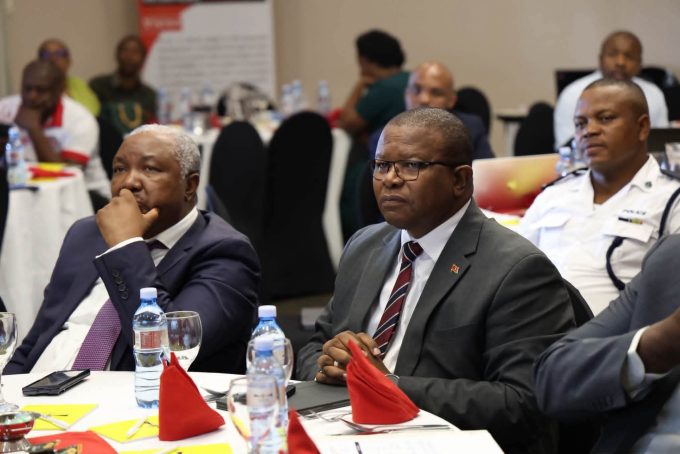
During the debate of the report by the portfolio committe, the Minister for Health, Mduduzi Matsebula, was represented by his counterpart from the Ministry of Housing and Urban Development, Minister Apollo Maphalala.
In his preamble presented to the portfolio committee, Matsebula said the ministry situates health as a driver of Eswatini’s development, closely linking Universal Health Coverage (UHC) with economic growth and productivity.
The Q2 2025/26 achievements, he said, demonstrate resilience despite global funding disruptions and external donor policy shocks.
He said internationally, many low- and middle-income countries (LMICs) are grappling with similar challenges—balancing donor dependency with domestic financing, scaling digital health and sustaining momentum on the Sustainable Development Goals (SDGs) amid fiscal pressures.
*…
Only 92 out of 480 targeted vacancies filled
MBABANE – Out of 480 vacancies targeted by the Ministry of Health for the second quarter of the financial year, only 92 have been filled.
This is reflected in the ministry’s second quarter performance report, which was debated on Friday.
The ministry said this reflects the severe workforce gap that places Eswatini below the WHO-recommended health worker density.
“These shortages mirror regional challenges of attrition and migration, but they also create opportunities to strengthen domestic financing, adopt task-shifting models and re-engage the diaspora for specialised support,” the ministry said in the report.
It highlighted that with its robust policy base and ongoing recruitment and training reforms, Eswatini can turn its challenges into a platform for innovation and sustainability toward achieving universal health coverage.
The information on the vacancies falls under the Human Resources for Health (HRH) Unit. The ministry said through the unit, it continues to steer the management of human resources for health under the HRH Strategy 2025–2030, driving recruitment, deployment and workforce development.
In the second quarter, the ministry said internal promotions achieved a 90.9 per cent implementation rate and external recruitment reached 71.6 per cent, while a proposal to fill 408 additional vacancies—mainly in nursing and support services—was submitted.
The report mentioned that pharmacy services were strengthened through the approval of 52 new and upgraded posts, expected to be filled by October 2025.
Attrition increased to 31 officers, largely among nurses and orderlies and 90 newly recruited nurses completed induction training.
Wellness interventions reached about 470 staff through psychological care, debriefings and health dialogues. However, the ministry said delayed recruitment approvals, unreported exits and the loss of partner-funded positions threaten service continuity.
*…
New partner for 260 officers after USAID pullout
MBABANE – As a response measure to deal with external shocks which saw some international partners reducing funding for the country, the Ministry of Health has secured a new partner to absorb the affected workforce.
In the Ministry of Health Second Quarter Performance Report, it is stated that some officers are employed by partners who indicated that they would not be renewing contracts after September 30, 2025, which was the lapse date.
According to the ministry, affected departments include the Laboratory, HIV/AIDS Programme, Strategic Information and Central Medical Stores. The ministry said in collaboration with a supporting partner, it is conducting an impact assessment regarding human resources for health (HRH) that were funded by partners, to be able to table a full report with recommendations.
The report states that to renew contracts for 260 officers who were previously supported by USAID, a new partner—RISE—has committed to provide support.
*Full article available in our publication.


















Leave a comment