

Madam,
Allow me to express my sincere appreciation to the Times of Eswatini for consistently providing citizens with an opportunity to share their views on issues of national importance. A vibrant democracy is strengthened when informed public debate is encouraged, and your publication continues to provide such a valuable platform.
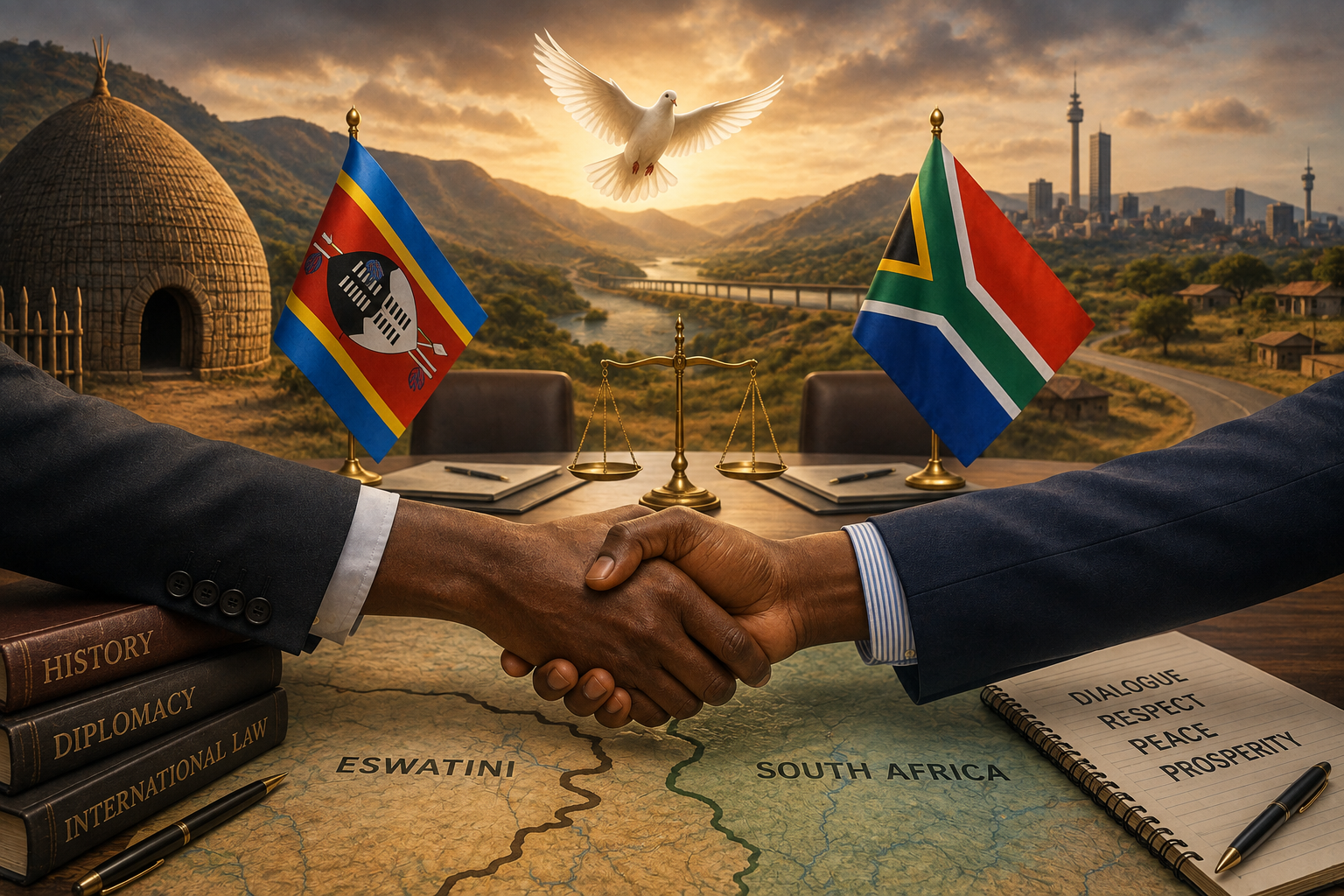
This article is prompted by the widely speculated issue of Eswatini seeking the return of territories that historically formed part of the Swazi Kingdom before colonial boundaries were established. While no official process has been publicly announced, the discussion has gained considerable public attention and has raised questions that deserve sober reflection. Rather than allowing speculation to be driven by emotion or social media commentary, it is worthwhile to consider what such a development could mean for Eswatini, South Africa and the people of both nations.
The first responsibility lies with the authorities. If there is any historical basis that warrants examination, the Government of Eswatini should communicate openly with the nation and ensure that any position is supported by credible historical research, constitutional analysis and international law. Such a sensitive matter cannot be approached through political rhetoric alone. It would require consultation with His Majesty’s Government, Parliament, legal experts, historians, traditional authorities, business leaders and ordinary citizens. National unity should guide any position adopted by the kingdom.
Likewise, the South African Government would have an equally important responsibility. As Africa’s largest economy and one of Eswatini’s closest neighbours, South Africa would be expected to respond through diplomacy, respect for international law and dialogue. Both governments have long enjoyed cordial relations and preserving those ties should remain a priority regardless of differing views on history.
Perhaps the most important consideration is the welfare of ordinary citizens. Any discussion involving historical boundaries inevitably affects people before it affects maps. Families living within any affected areas would understandably ask difficult questions. Would they retain their citizenship? What would happen to their homes, businesses and property rights? Which country’s laws would apply? How would pensions, healthcare, education, policing and taxation be managed? These questions remind us that behind every political discussion are real people whose lives must never become an afterthought.
Economically, the issue presents both promise and caution. Should Eswatini ever regain access to historically significant territories through peaceful agreement, there could be opportunities for expanding agriculture, tourism, conservation, mining and regional trade. A larger economic base could increase employment, strengthen government revenue and attract new investment. However, every opportunity comes with responsibility. Expanding national territory would require substantial investment in roads, schools, hospitals, policing, public administration and social services. Success would, therefore, depend not merely on acquiring land, but on having the financial and institutional capacity to govern it effectively.
One question that deserves honest discussion is compensation. If negotiations ever reached a stage where financial or economic compensation became necessary, both governments would need to protect their citizens from unnecessary hardship. Compensation should never become a punitive exercise. Instead, innovative solutions could include phased financial arrangements, joint economic development zones, infrastructure partnerships or shared investment projects that benefit both countries. Such an approach would transform a potentially divisive issue into an opportunity for regional development rather than economic strain.
Equally important is the need to preserve peace. Southern Africa has earned international respect for resolving differences through dialogue rather than conflict. The prospect of armed confrontation between Eswatini and South Africa would be unthinkable and disastrous for both nations. Beyond the tragic human cost, conflict would disrupt trade, discourage investment, weaken regional integration and damage decades of diplomatic cooperation. Should negotiations fail to produce agreement, both governments must continue respecting internationally recognised borders while leaving room for future dialogue, mediation or lawful international dispute-resolution mechanisms. Peace must always prevail over pride.
If formal negotiations were ever to take place, they should be transparent, structured and inclusive. A bilateral commission comprising historians, constitutional lawyers, diplomats, economists, surveyors and representatives of affected communities could be established to examine historical evidence objectively. The commission’s findings should be made public to promote transparency and national understanding.
Where disagreements persist, regional bodies such as the Southern African Development Community (SADC) or the African Union could facilitate dialogue, ensuring that discussions remain constructive and respectful.
Ultimately, this issue should never be viewed as one nation attempting to take from another. Instead, it should be seen as an opportunity to confront history honestly while strengthening the friendship that has long existed between Eswatini and South Africa.
The strength of any nation is measured not only by its history, but by the wisdom with which it addresses difficult questions. Whether the current speculation eventually develops into formal diplomatic engagement or fades with time, it has already served one important purpose: It has encouraged citizens to reflect on our history, our identity and our place within the Southern African region.
Those conversations are healthy when conducted responsibly.
History should inspire understanding, not resentment. Diplomacy should replace confrontation. Dialogue should triumph over division. If there is a lesson to be drawn from this debate, it is that lasting solutions are built not by force, but by wisdom, mutual respect and an unwavering commitment to peace.
Lindokuhle Mahlalela















Leave a comment