

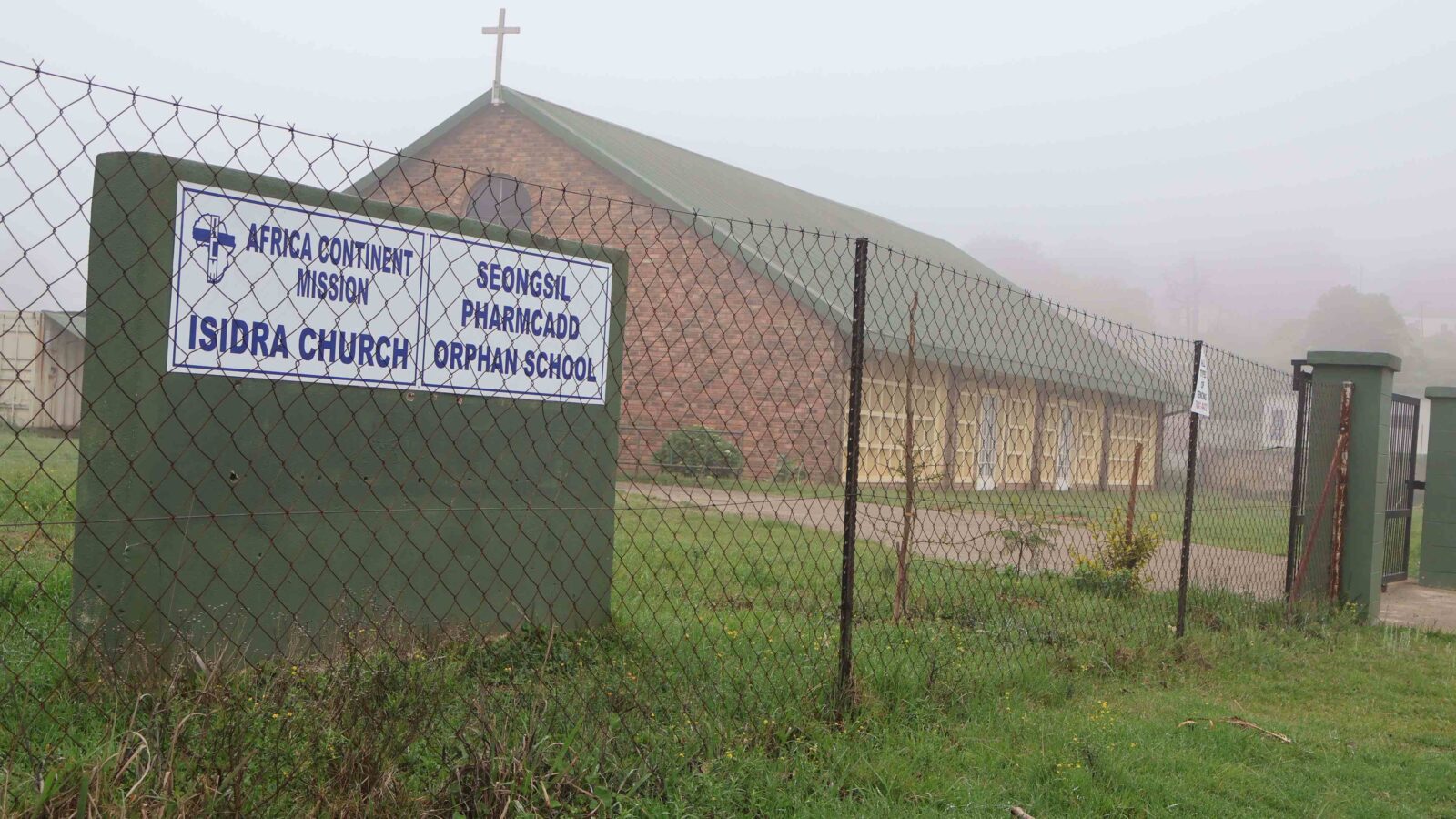
MBABANE – Contrary to popular belief, the Eswatini Medical Christian University (EMCU) is wholly owned by the Government of Eswatini.
It is not owned by the Africa Continent Mission (ACM). This is despite its Christian name and the church’s visible role during its establishment.
Over the years, questions have persisted about who truly owns EMCU. The university’s Christian branding and early association with the ACM have led many to assume that the academic institution is owned by the church.
That assumption has resurfaced periodically in academic and administrative discussions, largely because of the church’s early involvement in its founding. However, it has been revealed that the legal position about ownership is explicitly confirmed in the Government Gazette issued on May 31, 2013.
The gazette classifies the then Swaziland (now Eswatini) Medical Christian University as a Category A public enterprise under the Public Enterprises Act. It must be said that this classification places EMCU alongside major State-owned entities such as the University of Eswatini (UNESWA), the Eswatini Electricity Company and the Eswatini Water Services Corporation.
Official records and founding documents clearly show that EMCU is a government-owned institution, founded through a partnership with the church but fully governed, financed and managed by the State.
Principal Secretary for the Ministry of Education and Training, Nanikie Mnisi, said this misunderstanding likely stems from the collaborative nature of the early partnership between government and the African Continent Mission.
“The university was established through cooperation between the State and the African Continent Mission,” Mnisi explained. “But that partnership never translated into ownership. The church was a partner, not the proprietor.”
Mnisi said EMCU’s legal status as a public enterprise was formalised through a memorandum of agreement (MoA), a binding document signed by the Government of Eswatini, the ACM and the university’s Founder, Pastor Kim.
“The agreement clearly outlines the roles, responsibilities and ownership structure,” Mnisi said. “It gives full ownership and oversight to the Government of Eswatini, while defining the church’s role as supportive and collaborative.”
She emphasised that despite the institution’s Christian ethos and its ongoing cooperation with ACM, EMCU is not a church-owned institution. “The ACM holds no legal claim to the university,” she said.
According to both the MOA and the Government Gazette, EMCU is a fully-fledged public enterprise. Government is solely responsible for the university’s governance, financing and policy direction.
“The MoA stipulates that ownership, control and oversight of the institution are vested in the Government of Eswatini,” Mnisi said. “The church’s role was to assist during the establishment phase, not to manage the university.” Under the founding agreement, the ACM’s main role was to mobilise funds for EMCU’s infrastructure development. To that end, the mission committed to raise E200 million for capital projects, a commitment that continues today.
“The agreement is progressive,” Mnisi added. “The church continues to assist in resource mobilisation, but it does not interfere in management or administration,” she said. She stressed that while the ACM’s contribution is valuable, it was never tied to ownership.
“The government carries both the legal and financial responsibility,” she said. “Therefore, the institution belongs fully to the State.”
Full article available in our publication.

















Leave a comment