


EZULWINI – Eswatini continues to take significant steps to strengthen its Anti-Money Laundering and Countering the Financing of Terrorism (AML/CFT) framework, in line with global expectations and regional best practices.
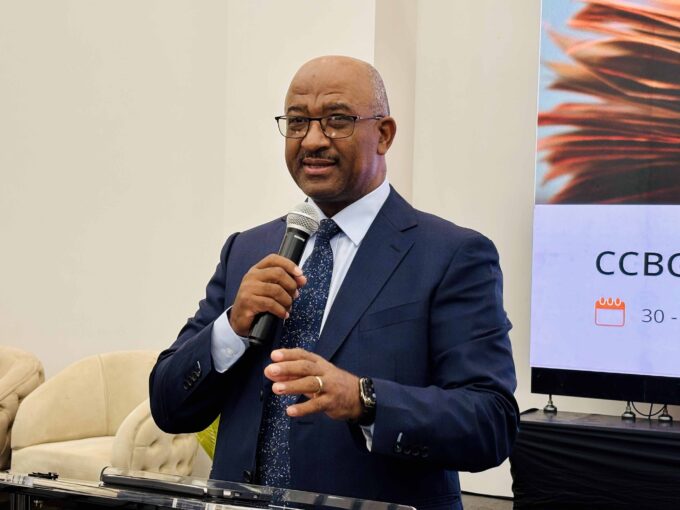
Speaking during the opening of the 4th SADC AML/CFT Committee Meeting held in Ezulwini yesterday, the Minister for Finance, Neal Rijkenberg, emphasised that the country’s progress is the result of deliberate reforms, strengthened institutions and deepening collaboration across the financial system.
Rijkenberg said government had spent the past few years strengthening both legislation and institutions, following gaps identified during mutual evaluation exercises.
“We have enhanced the legislative framework through the amendment of the Money Laundering and Financing of Terrorism (Prevention) Act, strengthening its alignment with international standards and addressing deficiencies identified in our evaluation,” he said.
He added that the Financial Intelligence Centre (FIC) had improved its operational capacity, particularly in data analysis, reporting and inter-agency collaboration. This has enhanced Eswatini’s ability to detect and interrupt illicit financial flows.
At the same time, coordination has improved among key authorities, including the Central Bank, law enforcement agencies and the Ministry of Finance, creating a more robust compliance and enforcement ecosystem.
Rijkenberg further applauded the private sector – especially banks and other financial institution – for actively participating in awareness programmes, staff training and the adoption of risk-based supervision frameworks.
“The strides that the country has made would not have been possible without the collaboration and coordinated efforts of the financial sector, especially through the AML/CFT National Task Force,” he noted.
Minister Rijkenberg further reaffirmed Eswatini’s commitment to institutional reforms, enhanced inter-agency coordination and continuous private sector engagement.
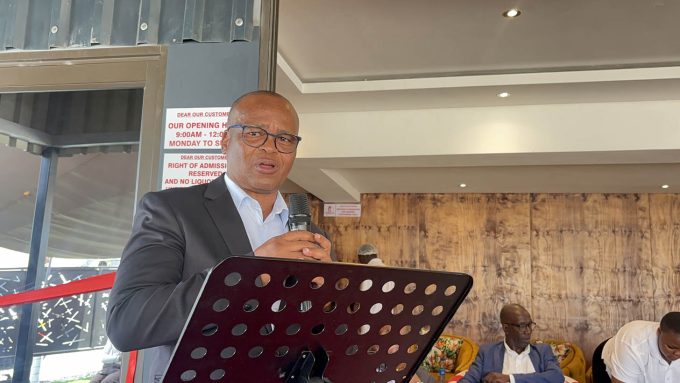
Chairperson of the SADC AML/CFT Committee, Clement Kapalu, commended Eswatini for hosting the meeting and reaffirmed the region’s shared commitment to strengthening financial integrity.
Kapalu warned that as the global financial landscape evolves, criminal networks continue to exploit technological gaps, border weaknesses and regulatory inconsistencies.
“These threats undermine our economies, erode public trust and weaken our institutions. The need for collective vigilance and regional coordination has never been more important,” he said.
A major highlight of the meeting was the announcement that the review of Annex 12 of the SADC Protocol on Finance and Investment had been completed and formally adopted by the SADC Summit of Heads of State and Government in Madagascar in August 2025.
Kapalu also revealed that the committee had applauded South Africa and Mozambique for the significant reforms and intensive efforts that enabled both countries to exit the FATF grey list, marking a major regional achievement.
“The successful removal of South Africa and Mozambique from the grey list demonstrates the effectiveness of strong political commitment, sustained institutional reforms and cooperation with international partners,” he said.
*Full article available in our publication


















Leave a comment