

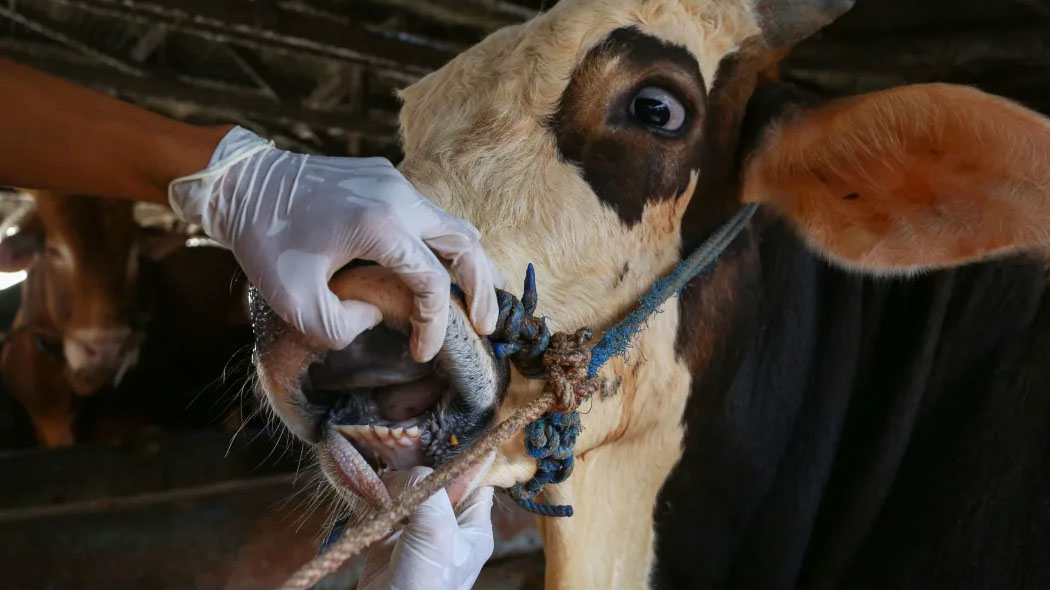
MBABANE – Anxiety is mounting among Mkhiweni farmers over the foot-and-mouth disease (FMD) outbreak, as they question why government neglects quarantining infected cattle.
Residents expressed growing frustration that weeks have passed without official communication, despite veterinary officials collecting blood samples and inspecting herds in the area.
“The vets came and took samples from our cattle, but since then, we have not heard anything. We were told to wait for results, yet our animals continue to mingle freely because no quarantine has been enforced,” said one farmer, who confirmed that eight cattle at his homestead alone were suspected of infection.
He added that over 20 cattle were initially found with signs of the disease following veterinary surveillance around local dams where the outbreak was first detected. However, no visible containment measures have been implemented in affected areas.
Livestock owners fear that the delay in isolating suspected herds could allow the disease to spread further. “If these cattle are truly infected, then the entire community is at risk. They should have been isolated immediately,” said one resident.
Reports indicate that more than 50 cattle may have been affected across Mkhiweni, including 10 belonging to the Minister for Agriculture, Mandla Tshawuka.
The Ministry of Agriculture calmed fears as Principal Secretary (PS) Sydney Simelane addressed the concerns.
Simelane said farmers should not be worried if task teams have not returned after sampling, explaining that it generally indicates the animals are healthy. “Whenever we detect infection, we return to vaccinate the affected animals,” Simelane said. He acknowledged that government resources do not allow for quarantining all affected areas, urging farmers to try isolating their cattle until symptoms disappear. Simelane also advised that those needing to slaughter animals should use abattoirs to prevent the spread of the disease through blood and waste. He emphasised that proper disposal, such as burning intestines and other remains, is critical in preventing infection among remaining livestock.
Following reports that people are consuming the carcasses of infected cattle, Simelane reassured the nation that FMD cannot infect humans, as it only targets cloven-hoofed animals. He added that the ministry is working on permitting the movement of animals in areas where FMD has lapsed.
FMD affects cattle, pigs and goats, and poses a major threat to Eswatini’s livestock industry through movement restrictions and trade bans.
In efforts to contain the outbreak, the Lubombo Region has set up disinfection points along the Mbandlane Highway. All passengers travelling from Lubombo to the Manzini Region are now required to pass through a footbath before boarding transport to their destinations. Those carrying raw meat, which can transmit the virus, are instructed to cook it for a few minutes before travelling with it.
Animal Health Inspector Mfanzile Ginindza, stationed at the site, said the initiative aims to keep the FMD outbreak within the Lubombo boundary. “Most affected dip tanks are on the Lubombo side, while most in the Manzini Region have already been vaccinated,” he said.


















Leave a comment