

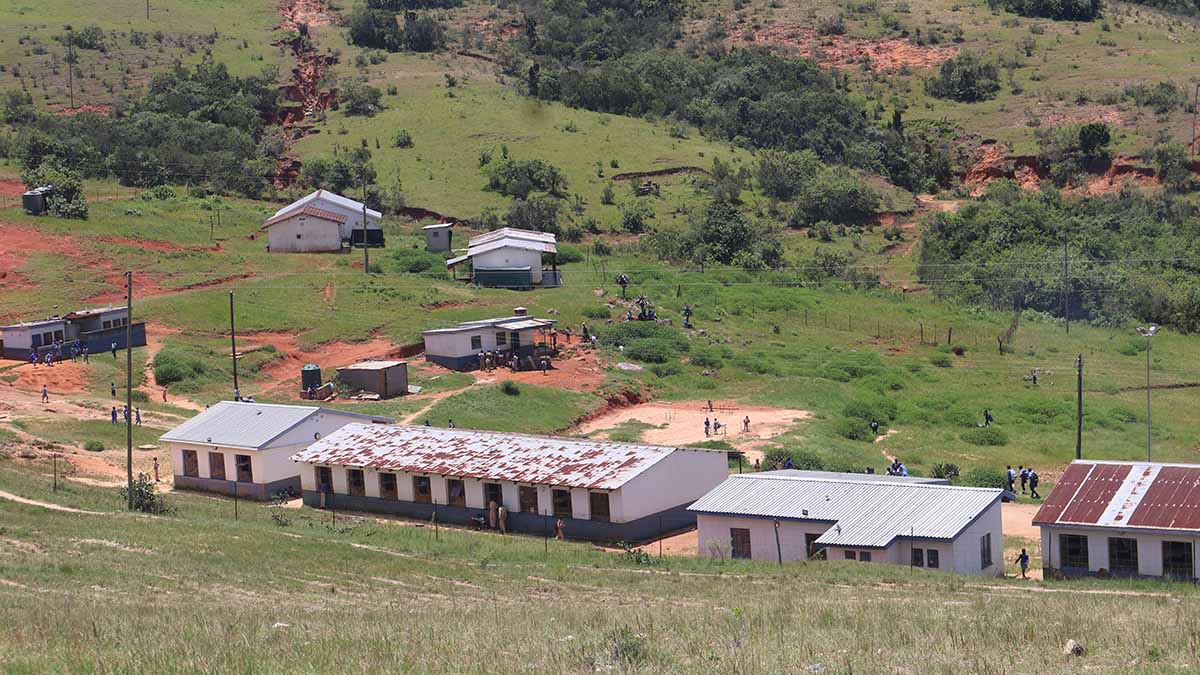
NKWENE – The school with the highest number of repeaters in Grade VII is struggling with many challenges, one of which is high absenteeism attributed to dagga farming.
Tholulwazi Primary School is perched within the protruding hills of Nkwene Inkhundla, in the Shiselweni Region, overlooking the gigantic Mkhondvo River.
The community says it is this positioning of the school, coupled with the abundance of water resources, that makes it a favourable spot for dagga farming. Tholulwazi recorded 65 pupils who scored Insufficient marks (failures) and only 26 passes in last year’s external examination, something that has compounded the school’s problems. Its pass rate was 28 per cent, making it one of the lowest in the country. None scored neither Excellent nor Very Good marks, while four scored Good marks.
Community members could not shy away from the reality that dagga is cultivated in the area.
They said it is not uncommon for a home to have a dagga field.
“Some parents who do not prioritise learning make children to start at the garden, weeding dagga crops before they go to school. This makes the pupils tired by the time they have to start learning,” said a resident who asked not to be identified.
He explained how children working in dagga fields are also usually motivated by money, which diverts their attention from schoolwork.
Another parent said the issue of dagga growing was also addressed during a meeting between the school administration and officials from the Ministry of Education and Training last year.
“Even then, we did not dispute that most parents have dagga fields, but it would be wrong to blame this to the failure rate. We may assign pupils to help during weeding, but that does not mean this is done during learning hours. They just work on weekends,” he said.
The school Head teacher Joseph Shabangu said he could not rule out the possibility of dagga farming as a contributing factor to the poor performance of pupils.
“I may not point at any home growing dagga, but it is no secret that the area in which the school is situated is popular for dagga farming. Some pupils come to school tired, and we strongly suspect they are devoted to family chores such as dagga farming,” Shabangu said.
He said the issue of high absenteeism was also discussed with parents in a recent meeting, where the school administration asked for cooperation in compelling the pupils to come to school.
He said judging from the high absenteeism at the school, it is possible that they are preoccupied with other business other than their books.
However, Shabangu said this is not the only challenge that the failure rate can be attributed to.
He said one of the main causes is a policy by which government did not encourage the practice of making pupils repeat a class in the mid-grades such as Grade I,II and others.
*Full article available on Pressreader*

















Leave a comment