

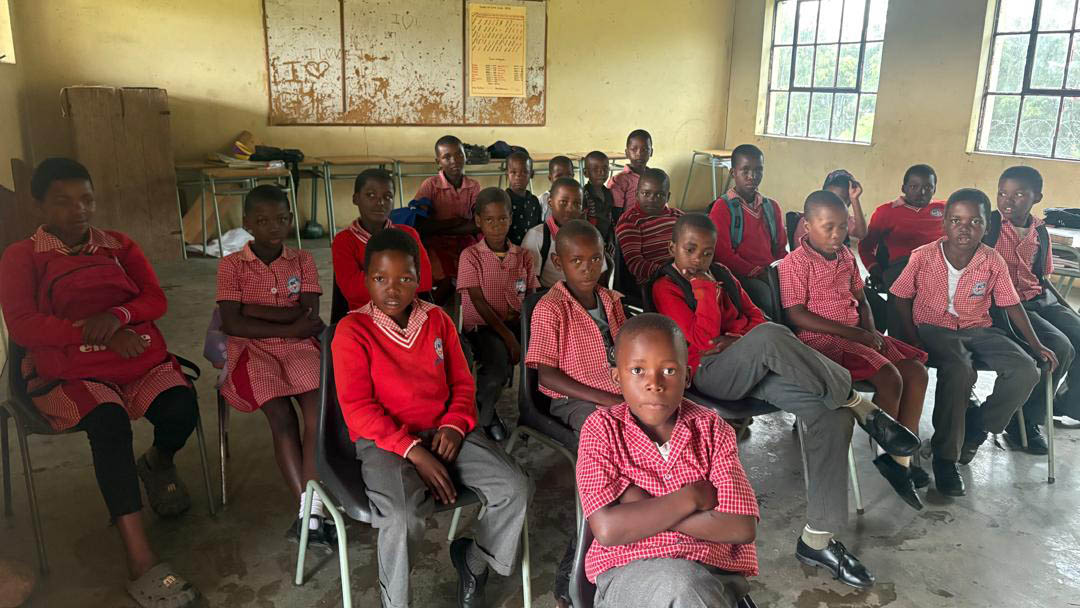
BETHLEHEM – In an era where most public schools in Eswatini are buckling under the pressure of overcrowded classrooms and overstretched resources, Bethlehem Primary School stands as a haunting anomaly.
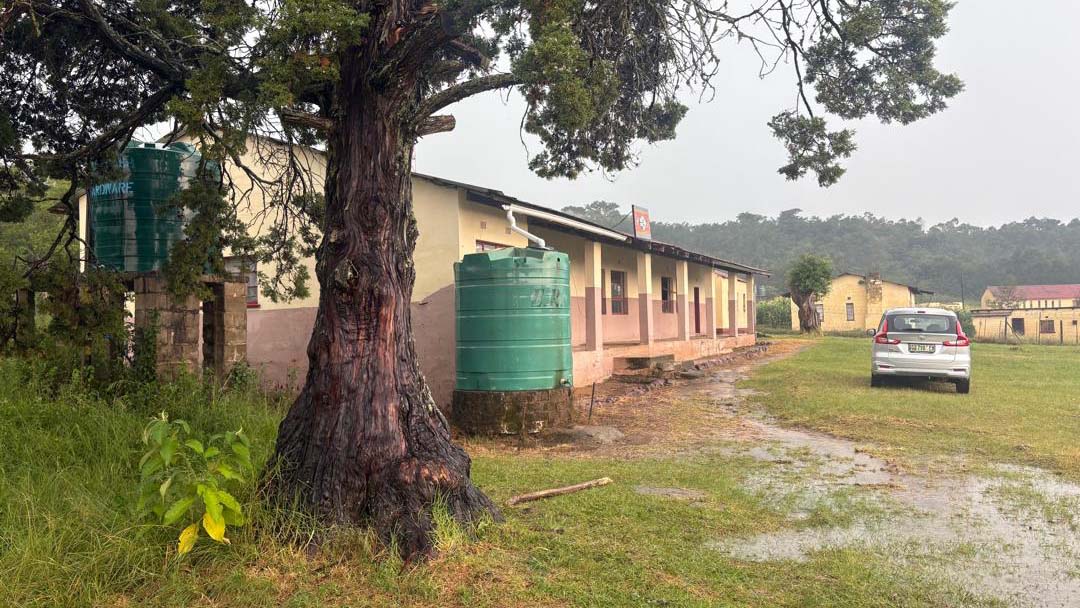
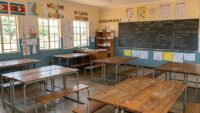
Deep within a thicket of wattle trees sits a facility built for greatness. Its standard-built classrooms are designed in such a way that the school can accommodate over 300 pupils, yet today, the corridors echo with the footsteps of just 25 pupils in total. Four of these pupils are in Grade Zero (preschool).
Established by the Alliance Church in the early 1990s, the school was once a beehive of activity. It served as a spiritual and educational hub, hosting massive church camp meetings and crusades before the mission expanded elsewhere. Now, as the surrounding population has shrunk, the school feels lost and forlorn, a silent monument to a busier past. It is situated three kilometres away from the Sicunusa Border Post.
The school currently boasts a full staff complement of eight teachers and a head teacher—nearly one educator for every two children. The distribution across grades is even more startling: Grades II and IV consist of just one pupil each, while the largest class, Grade VII, has only five learners.
For Head teacher Dumsani Matsebula, these numbers are not a luxury; they are a financial stranglehold.
“This cripples the school,” Matsebula explains. “We have the same operating costs as other schools, yet our revenue is negligible.”
The school’s primary lifeline is the Free Primary Education (FPE) grant. Government provides FPE by funding tuition, with 2025/26 budget allocations for the total education sector reaching E5.41 billion, or 16.6 per cent of the national budget.
Government provides grants for primary pupils ranging from E672 to E805 per child, depending on the grade, as of 2025. For Bethlehem Primary, the math simply doesn’t add up. “The first tranche paid when schools opened in January does not even amount to E10 000,” says Matsebula. “Yet we have to pay the school’s operating costs every month. Where can we get money to afford non-academic staff?”
Due to the small revenue, the school has no security guards, groundsmen, or cleaners. In an extraordinary display of dedication, the teachers themselves pick up the brooms and tools to maintain the premises.
Living as the only pupil in a classroom presents a unique psychological landscape. Matsebula notes that while the one-on-one attention is unparalleled, it can be a disadvantage in the long run. “The pupil gets the attention he deserves from the teacher,” he says. “However, when that pupil eventually moves to other grades or schools where there are more children, he may struggle to adapt because he is no longer the sole focus of the educator.”Despite the crumbling finances and the isolation, the academic integrity of the institution remains unshakeable. Bethlehem Primary consistently achieves a 100 per cent pass rate in the Grade Seven external examinations.
For Matsebula, the small numbers leave no room for failure. “With this level of attention,” he concludes, “we would have no excuse for failing to attain a 100 per cent pass rate.”
For now, Bethlehem remains a school of untapped potential-waiting for a community that moved away to one day return to its empty desks.
It has impressive facilities that include boreholes for potable water and adequate teachers’ quarters.
The mission also has hostels and or boarding facilities, as well as a church structure. However, the classrooms were not electrified when they were built decades ago. The school’s situation can be traced to the small community it is built in.
*Full article available on Pressreader*













Leave a comment