

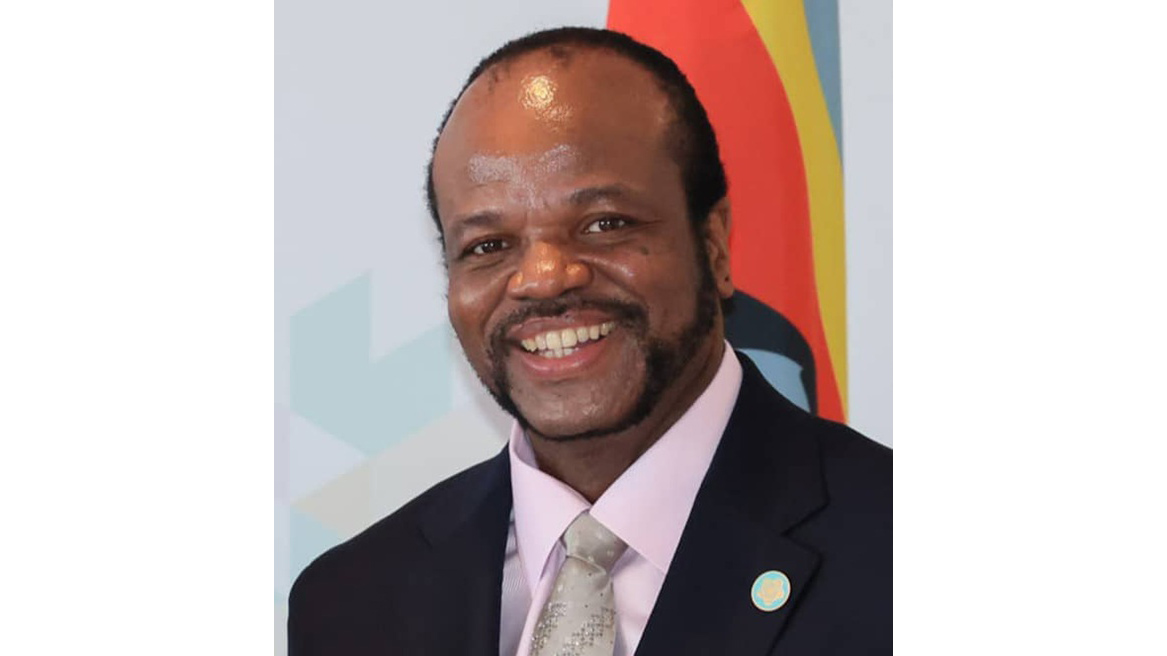
MBABANE – His Majesty King Mswati III is on the verge of breaking Africa’s leadership record.
In terms of leadership duration, His Majesty now ranks fourth on the continent. He is preceded only by the President of Cameroon, Paul Biya (93), the President of Equatorial Guinea, Teodoro Obiang Nguema Mbasogo (83) and the President of Uganda, Yoweri Museveni, who is ahead of Ingwenyama by just three months.
President Museveni is 81 years old, while His Majesty is 57, placing him in a favourable position to eventually become the African Union’s most senior leader by age and tenure.
Starting with President Nguema of Equatorial Guinea, he has been in power since August 3, 1979, a remarkable 47 years. Nguema holds the record as not only Africa’s longest-serving president but also one of the world’s longest-serving Heads of State.
Historical records and publications indicate that he has overseen the transformation of Equatorial Guinea from a little-known nation into a significant oil producer. Despite controversies surrounding governance and human rights, his tenure remains unparalleled in duration.
Another long-serving Head of State is President Paul Biya of Cameroon. The 93-year-old leader has been in power since November 6, 1982, marking 43 years of leadership.
President Biya succeeded Ahmadou Ahidjo and has since presided over one of Central Africa’s most enduring political systems. Supporters describe him as a master of political control and constitutional adaptation, known for his balance of soft power and firm authority. His longevity places him just behind President Obiang.
The third longest-serving Head of State is President Yoweri Museveni of Uganda, who has led his country since 29 January 29, 1986, which is a period of 40 years. When His Majesty King Mswati III ascended the Throne, President Museveni had already been in office for three months.
As the Kingdom of Eswatini prepares to celebrate the 40th anniversary of His Majesty King Mswati III’s enthronement on April 25, 1986, it is worth noting that few leaders in the modern world can claim to have provided four decades of uninterrupted service with such dedication.
The King stands not only as Africa’s longest-reigning monarch but also among the world’s most senior Heads of State.
His Majesty ascended the Throne at a time when the Cold War was shaping global politics. Indeed, Ingwenyama took the Throne when Ronald Reagan was President of the United States, Margaret Thatcher led the United Kingdom, François Mitterrand governed France and Mikhail Gorbachev had just become leader of the Soviet Union.
The year 1986 was one of profound global change, yet Ingwenyama remained steadfast and resolute on the international stage, attending global conferences and assemblies and offering insights and solutions even at a young age.
Below are a few examples that come to mind –
- The Chernobyl disaster occurred in the Soviet Union.
- Spain joined the European Economic Community.
- The Space Shuttle Challenger tragedy shocked the world.
- The Iran-Contra affair embroiled the Reagan administration.
At global stage, the major event in soccer in 1986 was the
FIFA World Cup, which was hosted by Mexico from May 31 to June 29. Argentina won the tournament, securing their second World Cup title by defeating West Germany 3–2 in the final at the Estadio Azteca.
However, the most notable incident of 1986 is the hand of God.”
Diego Maradona scored the famous ‘hand of God’ goal against England on June 22, 1986, during the FIFA World Cup quarter final.
Maradona punched the ball into the net to give Argentina a 1–0 lead in the match. England has not forgotten the incident and refused to forgive him.
The football icon died on November 25, 2020.
In Africa, apartheid was still entrenched in South Africa during His Majesty’s ascension to the Throne and the African Union (then the OAU) was dominated by founding fathers such as Julius Nyerere, Kenneth Kaunda and Robert Mugabe. Among all those figures, only His Majesty King Mswati III continues to serve in office, obviously and apparently the last direct political bridge between postcolonial Africa and the digital age.
Within the United Nations, His Majesty’s presence is synonymous with continuity. His participation in UN General Assemblies has spanned the transitions of eight secretaries-general, from Javier Pérez de Cuéllar to António Guterres.
The Times of Eswatini SUNDAY can mention that most of Africa’s Heads of State were liberation-era figures, many of whom have since passed into history. This includes the late first black South African President, Nelson Mandela, who was close to the King during his presidency and afterwards.
Muammar Gaddafi was in power for 42 years, ruling Libya from September 1, 1969, until his overthrow and death in October 2011.
Hosni Mubarak was in power in Egypt for almost
30 years, ruling from October 14, 1981, until his resignation on February 11, 2011.
Robert Mugabe was in power for 37 years and José Eduardo dos Santos was in power in Angola for 38 years when he stepped aside as president in September 2017.
Four decades later, His Majesty continues to rule a peaceful nation at a time when regime change has become routine elsewhere.
Notably, Eswatini remains one of Africa’s few monarchies, and its political system, blending traditional structures with modern governance principles, continues to fascinate scholars and diplomats alike for its resilience.
Regarding Eswatini’s Ingwenyama, his reign witnessed the birth of the African Union, the fall of apartheid and the digital revolution. Observers say Eswatini’s monarchy remains distinct, deeply rooted in tradition but open to gradual modernisation.
Let us look at other monarchies.
The Head of State of the Kingdom of Morocco, His Majesty King Mohammed VI ascended to the Throne on July 23, 1999, meaning he has been in power for 27 years.
While younger in tenure, King Mohammed VI of Morocco has carved his own legacy with progressive economic development and religious moderation. However, His Majesty King Mswati III’s reign predates Mohammed VI by 13 years, demonstrating remarkable endurance in Africa’s monarchical timeline.
Taking the global view, the His Majesty King Mswati III’s longevity places him among a very small circle of enduring world leaders. Across Asia, the Middle East, Europe and the Americas, only a few remain who began their rule or leadership before or around 1986.
The Sultan of Brunei, Hassanal Bolkiah, remains the world’s longest-reigning monarch, having served nearly six decades. He became the King on October 5, 1967. Together with His Majesty King Mswati III, he forms part of a rare generation of monarchs who have maintained cultural continuity in an age of globalism.
King Maha Vajiralongkorn (Rama X) of Thailand has been in power for 10 years. King Maha is aged 73.
Although the Thai monarchy is ancient, its current monarch has ruled for a comparatively short period. However, King Bhumibol Adulyadej (Rama IX), his predecessor, reigned from 1946 to 2016, one of the longest in recorded modern history.
It is important to look at the famous and great leaders of our time like Mainland China’s President Xi Jinping. Xi has been in power since 2013. His Majesty King Mswati III had been in power for 27 years when President Xi became the Head of State of China.
On the other hand, it is worth mentioning that King Carl XVI Gustaf of Sweden ascended to the Throne on September 15, 1973, meaning he has been in power for 53 years. King Carl is 79 years old.
Queen Margrethe II of Denmark ascended to the Throne on January 14, 1972. The 85-year-old queen has been on the Throne for 54 years.
Though she abdicated in early 2024, Queen Margrethe II remains a historical touchstone of longevity in Europe. Her reign, which spanned more than five decades, aligns with the kind of endurance His Majesty King Mswati III is now marking in Africa.
King Harald V of Norway became the Head of State on January 17, 1991, and has been in power for 35 years.
In Cuba, the Castro lineage presents the closest regional equivalent. Fidel Castro governed from 1959 to 2008, followed by Raúl Castro. It has been learnt that no American Head of State currently serving assumed office before His Majesty King Mswati III began his reign.
His Majesty is most senior within the regional blocs, including the Southern African Development Community (SADC) and the Commonwealth of Nations.
Percy Simelane, the Director of Communications at the King’s Office, said His Majesty’s political experience combined with his character and magnetic personality shall ever remain enviable footprints on the sands of time.
Simelane said the number of leadership responsibilities he has been trusted with in the region pointed not to a weakling but a political giant deserving of respect and support from every normal thinking person.
In our previous edition, Macford Sibandze, both former minister and MP, acknowledged that Ingwenyama’s long tenure has given Eswatini consistent diplomatic engagement in global discussions on sustainable development, climate resilience and peacebuilding.
He said the King’s longevity in the seat of power makes him a reference point and fountain of knowledge. He said he has been with the African Union (AU), formerly Organisation of African Unity (OAU), for 40 years.
“Though young age wise, he is now an elder in the region, SADC and Africa,” stated Sibandze.
He said His Majesty’s Troika experience on conflict management and his current position in SADC comes to play in grievance handling.
Over his 40 years on the Throne, Sibandze said King Mswati III has developed a leadership philosophy anchored in dialogue, unity and respect for traditional values.
He added that the King’s experience in the SADC Troika and his understanding of conflict resolution enhance his role in regional governance.
He described Eswatini as a gatekeeper of peace and a cessation of hostilities and conflict management, saying His Majesty King Mswati III stands as a fountain of wisdom. Sibandze said the country knows how to walk the tight rope of diplomacy.










Leave a comment