

MBABANE – Is half a loaf better than nothing?
Based on the previous electricity average hike of 13.61 per cent, emaSwati would have purchased 34 units for E100.
However, government, as announced by Prime Minister Russell Dlamini, cushioned households with a E200 million offer that was staggered in two financial years – 2026/2027 and 2027/228, meaning a sum of E100 million apiece.
That was meant to ensure the Eswatini Energy Regulatory Authority (ESERA) would reduce the energy percentage increase, allowing domestic customers to purchase more units. In a public statement by Skhumbuzo Tsabedze, the Chief Executive Officer (CEO) of the Eswatini Energy Regulatory Authority (ESERA), announced that the entity has come to the decision to adjust the tariffs based on certain factors considered after consultation with stakeholders.
Tsabedze said the cushion resulted in the revised average tariff from 13.61 per cent to 11.74 per cent for the financial year 2026/2027.
He said 60 per cent of the E100 million allocated for the 2026/2027 financial year will be applied to reduce the impact of the approved 13.61 per cent tariff adjustment on customers. The adjustment is for the financial year 2026/27 period.
Tsabedze said: “this partial utilisation ensures immediate relief to consumers.”
He said the remaining 40 per cent of the 2026 allocation together with the allocation of E100 million for the 2027/2028 financial year, will be used to cushion future tariff shocks, thereby supporting tariff smoothing and reducing the risk of acute tariff increases in subsequent years.
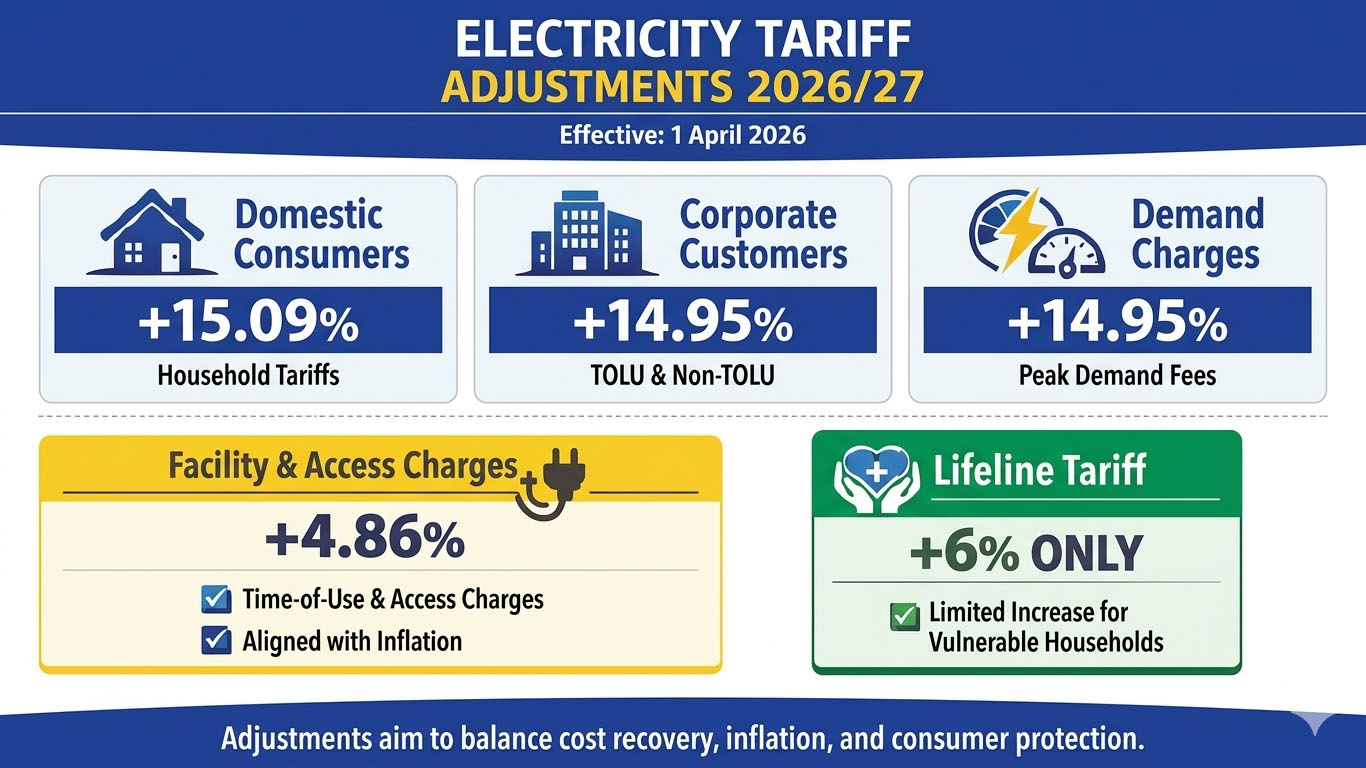
The CEO stated that the revised average tariff adjustment of 11.74 per cent translates to the following increases per customer category:
Domestic tariff will increase by 15.09 per cent, while energy charges for corporate time-of-use customers and corporate non-time-of-use customers will increase by 14.95 per cent. Demand charges will increase by 14.95 per cent while time-of-use and non-time-of-use facility charges and access charges will increase by the approved inflation of 4.86 per cent.
Lifeline tariff increase has been limited to six per cent in consideration of the vulnerability of this tariff category to adverse socio-economic conditions.
The tariff adjustment for 2026/27 will become effective on April 1, 2026.
These adjustments exclude any taxes and levies enacted and/or substantially enacted as at the date of approval.
The CEO stated that ESERA remains committed to ensuring a balance between consumer affordability, the financial sustainability of the electricity suppliers and reliability of supply to ultimately safeguard economic development and the subsistence of an inclusive and sustainable energy sector for all emaSwati.
The latest decision has been taken following the tariff adjustment application by the Eswatini Electricity Company (EEC), reportedly driven by material increases in the cost of imported electricity that resulted from renegotiated Power Purchase Agreements (PPAs) and an under‑recovery recorded in the 2024/25 financial year.
Due to this development, Tsabedze said ESERA reviewed the application in line with the Energy Regulatory Act, 2007, the Electricity Act, 2007, the Tariff Methodology, 2011 and all other applicable regulatory instruments.
*Full article available on Pressreader*
















Leave a comment