

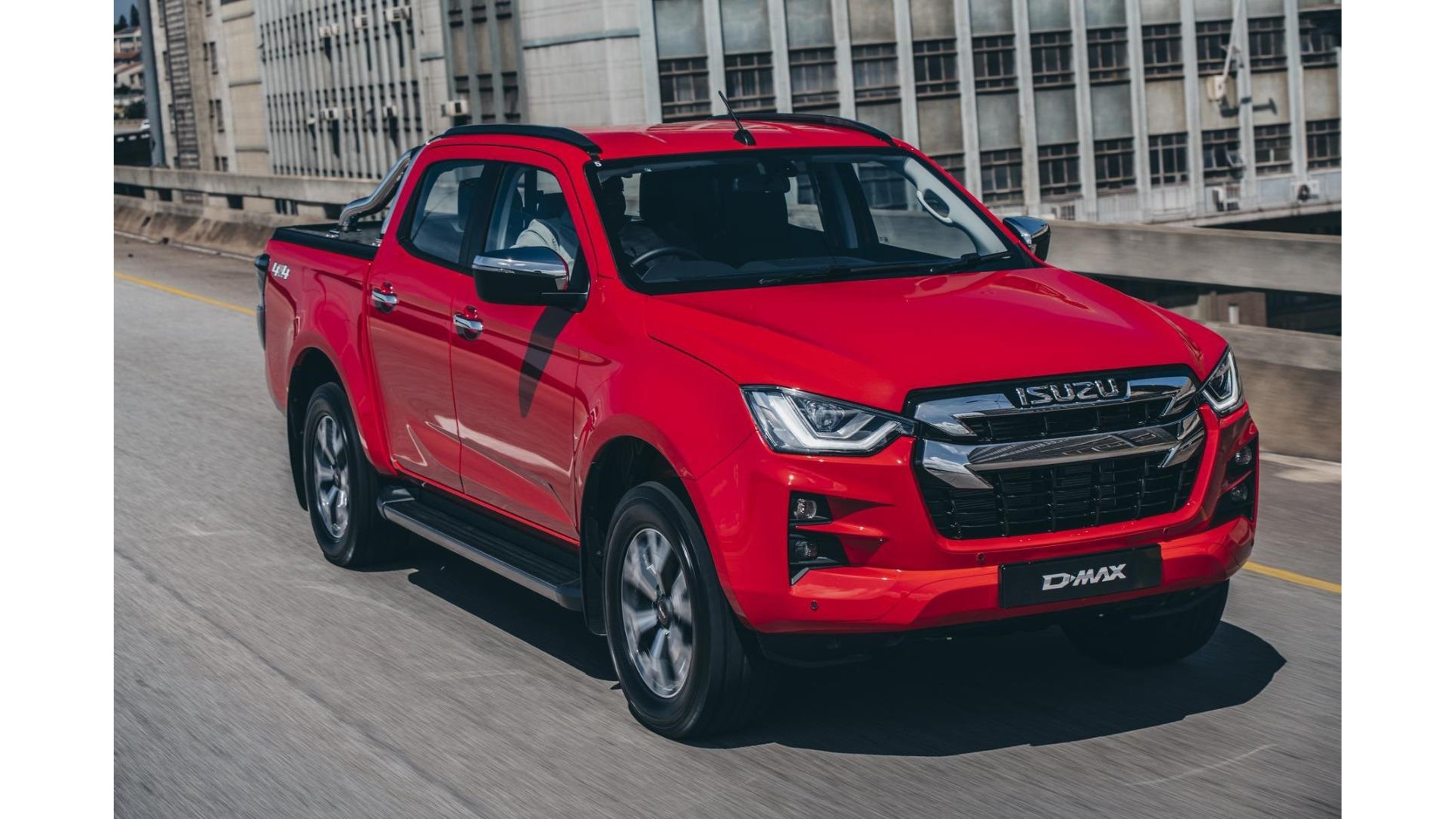
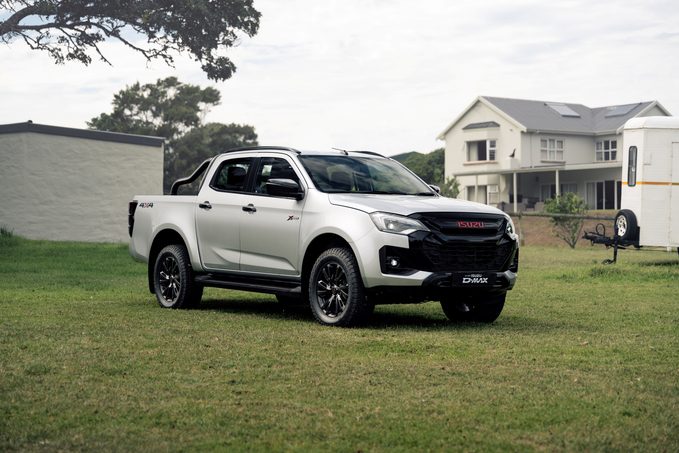
FOR good reason, your D-Max is one of the most popular bakkies: These Japanese workhorses and leisure bakkies are built to last and sip diesel sensibly. If, however, fuel gauge drops faster than your faith in politicians, you might be doing some¬thing wrong. Here are a few reasons why there may be an issue with high diesel consumption and AutoTrader shows you how to fix it, too.
Isuzu D-Max diesel engines
First things first – know your engine and what it should be consuming. Isu¬zu offers two main diesel powerplants in the local D-Max range:
1.9TD diesel engine:
• Power: 110kW
• Torque: 350Nm
• Isuzu claims: 7.6 L/100km
Real-world fuel consumption: Up to 9.4 L/100km (mixed driving)
Found in: X-Rider models, various single and double cab variants
3.0TD diesel engine:
• Power: 140kW
• Torque: 450Nm
• Isuzu claims: 8.1 L/100km
Real-world fuel consumption: 9.0 L/100km (mixed driving)
Found in: Higher-spec double cab models, V-Cross variants
Notice the gap between claimed and actual fuel consumption? That’s not unusual; most manufacturers’ figures are overambitious.
The real-world numbers from the AutoTrader team’s Isuzu re¬views show what you should ex¬pect when driving like a normal human.
Important note: 4×4 models will always consume more fuel than their 2WD counterparts due to the ad¬ditional weight of the low-range transfer case, front differential and drivetrain components. Expect an extra 0.5-1.0 L/100km compared to 2WD models, even when driving in 2WD mode.
How to tell if your D-Max is wast¬ing diesel
Based on AutoTrader’s reviews and personal experience, here’s when you should start worrying about poor fuel efficiency:
1.9TD models: If you are con¬sistently seeing more than 11-12 L/100km in mixed driving
3.0TD models: If you are regularly using more than 10.8-12 L/100km without heavy loads
If fuel consumption creeps into these danger zones, your driving style or bakkie (or both!) needs attention.
Common fuel-wasting mistakes D-Max owners make
Warming up your car: Stop letting your D-Max idle like a pensioner at a traffic light! Modern diesels don’t need those marathon warm-up sessions your father insisted on. A minute or two is plenty, even on those crisp Highveld mornings.
Extended idling just burns fuel without moving you anywhere: The ‘I paid for all the horses’ syndrome: Yes, that torque feels satisfying when you plant your right foot, but diesel engines are happiest when treated with respect. Think of it like a good braai; low and slow wins the race, not aggressive heat that burns everything. (Unless it’s a steak fire.)
The forgetful four-wheel-driver: Here’s a big one; driving in 4WD when you don’t need to. Many D-Max owners forget to switch back to 2WD after tackling that farm road. Leaving it in 4WD on tar roads can add 1-2 L/100km to your consumption – that’s real money over a month of driving.
Find and stick to the efficiency sweet spot
Based on actual testing, both D-Max engines have a sweet spot where they sip fuel rather than gulp it:
For the 1.9TD: Keep revs between 1 800 and 2 200 r/min during cruising. Push it beyond 2 500 rpm regularly and watch the fuel gauge reach empty quickly.
For the 3.0TD: This bigger engine is happiest between 1 600 and 2 000 r/min. Use that generous torque to maintain momentum rather than for traffic light drag races.
Modern diesel doesn’t need those marathon warm-up sessions your father insisted on.
… How to save diesel on the highway
MOST D-Max owners accidentally discov¬er this: Both engines hit their fuel efficiency peak around 110km/h. Push be¬yond 120km/h and watch your consumption climb. On highways, cruise control set to 110km/h can make quite a difference.
Load with care
Your D-Max can carry a tonne, but that doesn’t mean it should always look like a mobile hardware store. Every 100kg of extra weight adds roughly 0.3-0.5 L/100km to your consumption. That col¬lection of tools, spare parts, and ‘just in case’ items in your load bay could cost you an extra litre per 100km.
2WD vs 4WD: When to employ what
This is crucial for 4×4 D-Max owners; always drive in 2WD unless you actually need 4WD. The system is designed to be switched on-the-fly, so use it:
• 2WD for: Tar roads, good gravel roads, city driving, highway cruising
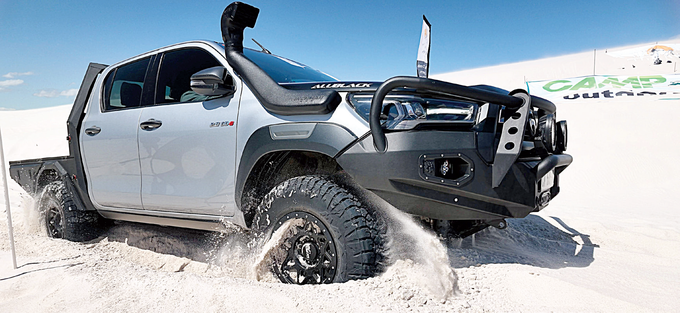
• 4WD for: Loose sand/gravel roads, muddy farm roads, steep rocky inclines, launching a boat
Forgetting to switch back to 2WD after that weekend camping trip can cost you an extra tank of fuel per month.
D-Max maintenance tips for better fuel efficiency
Air filter: Save diesel with simple maintenance
A clogged air filter can con¬siderably increase your con¬sumption in dusty conditions. Check it regularly and replace it when it looks like it’s been through a dust storm.
Tyre pressure tips for fuel efficiency
Under-inflated tyres are silent fuel thieves. Just 0.3 bar lower than it should be can raise your 1.9TD from 9.4 L/100km to over 10 L/100km. Check pressures monthly when tyres are cold, not after driving 50 km to the garage.
Follow these tips for many happy kilometres that won’t cost you too dearly.
















Leave a comment