

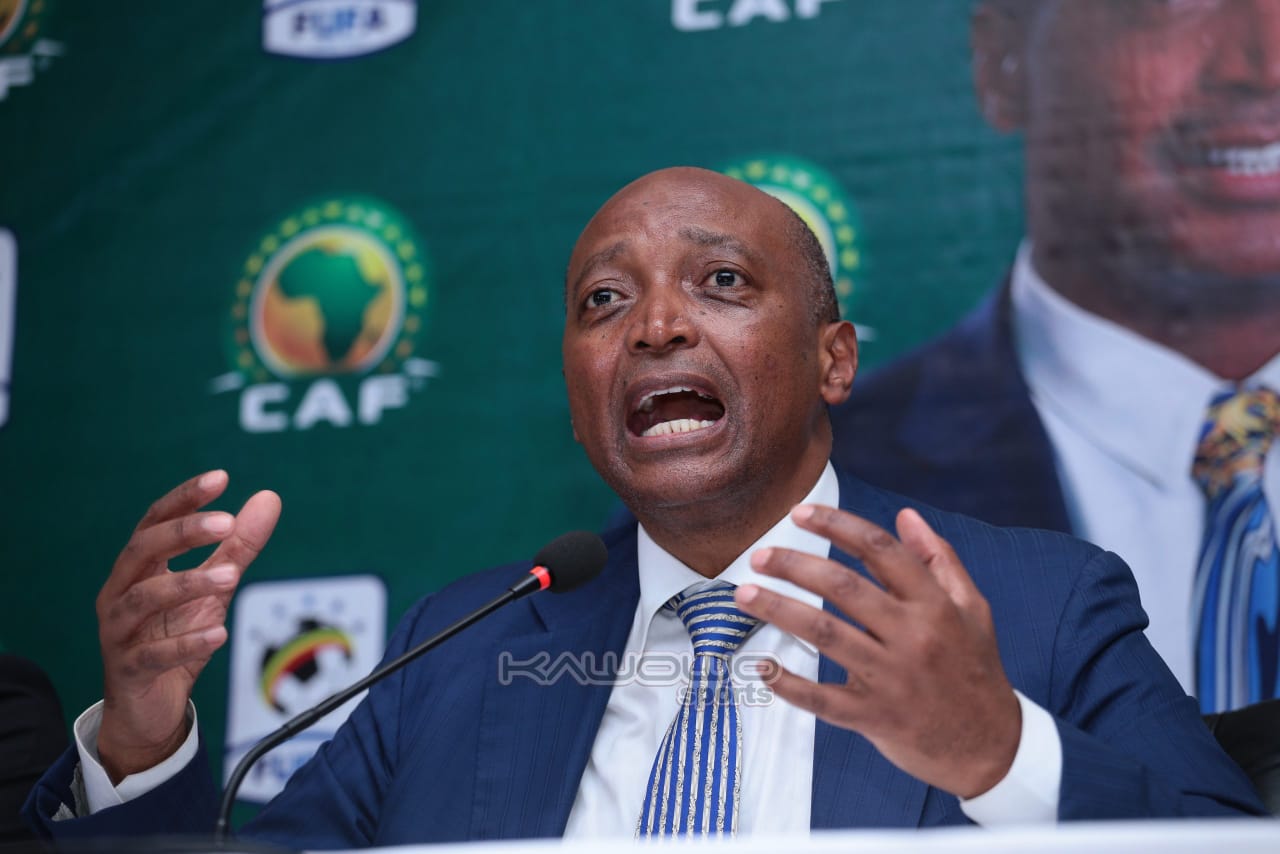
MBABANE-Confederation of African Football (CAF) President Patrice Motsepe laid out an ambitious roadmap for African football.
Speaking during a press briefing on Wednesday, July 22, Motsepe reaffirmed CAF’s commitment to raising standards across all 54 member associations by investing in youth, empowering local leagues, strengthening government partnerships, and expanding coaching education across the continent’s six zones that include Council of Southern Africa Football Associations (COSAFA).
Among his most resounding declarations was a non-negotiable principle: “Every National Team and Football Club must play its matches in their country and in front of their local supporters and fans.”
For Eswatini sports enthusiasts, however, Motsepe’s vision brings both hope and a stark reminder of the nation’s current struggle with sports infrastructure and technical capacity.
While CAF insists that every nation host its international fixtures at home, Eswatini remains strictly constrained. The country currently lacks a single CAF or FIFA-approved stadium suitable for Category ‘A’ international matches. National teams and local clubs qualified for continental competitions have been forced to host home games on foreign soil, depriving local fans of the chance to cheer on their teams in person.
Government has, however, made strides toward addressing this deficit. His Majesty King Mswati III recently sanctioned the construction of a world-class 40 000-seater national stadium, a project valued at approximately E6 billion. Government is actively pursuing public-private partnerships, having recently engaged global infrastructure developers to design, finance and construct an Olympic-standard venue expected to meet full CAF and FIFA specifications by 2029.
Motsepe, who celebrated African teams’ gallant showing at the 2026 FIFA World Cup, also emphasised CAF’s push to scale up local coaching courses across all six CAF zones. Yet, in Eswatini, local technical development faces immediate hurdles.
The Eswatini Football Association (EFA) has grappled with a vacant Technical Education Officer position, leaving local coaching development temporarily stalled. As a result, ambitious local coaches seeking mandatory continental credentials such as the CAF A and B Licences have been forced to self-fund trips across international borders to countries like Namibia and Zimbabwe just to earn their qualifications.
While the road ahead requires urgent local action, Motsepe’s emphasis on expanding CAF-funded training courses and bolstering public-private partnerships aligns with Eswatini’s current trajectory.











Leave a comment