

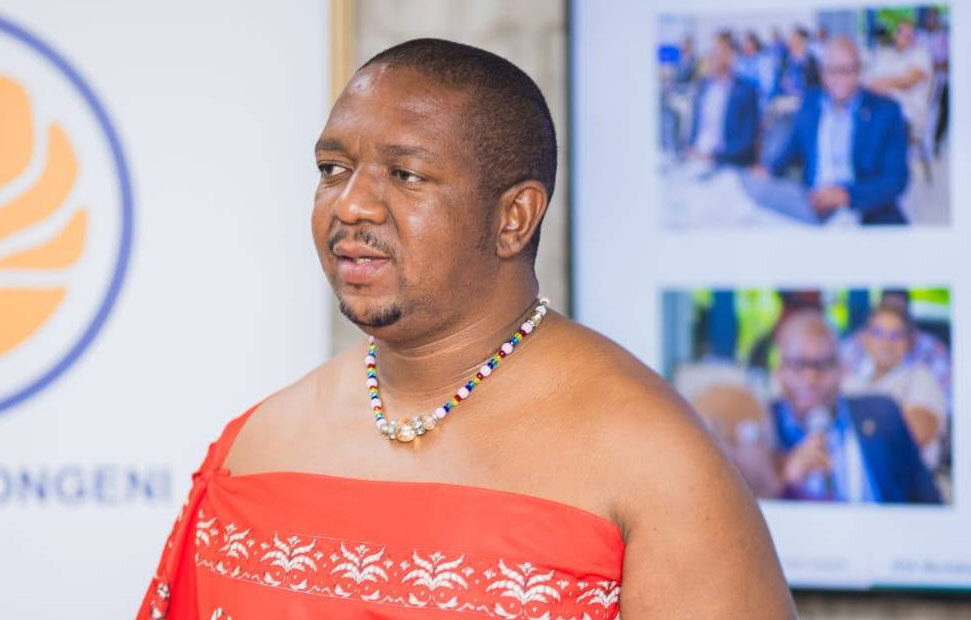
LOBAMBA – The Minister for Labour and Social Security, Phila Buthelezi, has given an assurance that the Eswatini National Provident Fund (ENPF) will be fully constituted by the end of the current quarter of the year.
Buthelezi gave the assurance yesterday during the ministry’s Senate portfolio committee debate for the first quarter of the financial year, following concerns from senators regarding the recent dissolution of the ENPF Board and the process of appointing a new one.
The issue was first raised by Senator Chief Prince Ngangabani, who noted that he had previously served as a member of the ENPF Board.
He sought clarity on the developments at the fund following reports that the recently appointed Board had been dissolved.
Deputy Senate President Ndumiso Mdluli also raised concerns about the Board, emphasising its importance as a key stakeholder in the running and oversight of the fund.
Mdluli said, just as Parliament exercised an oversight role, the Board also had an important oversight responsibility over the entity. He, therefore, wanted to know when and where the new Board would be appointed, particularly given the importance of having a properly constituted Board at the fund.
Responding to the concerns, Minister Buthelezi explained that the dissolution followed a prolonged standoff involving the Board and some federations, who had raised concerns about the suitability of the chairperson. Among the issues raised was the allegation that the chairperson had not undergone a ‘fit and proper’ assessment.
Buthelezi said the matter had been monitored for approximately eight months, but most of the concerns raised against the chairperson had not been supported by anything tangible.
The minister said the ‘fit and proper’ assessment had never previously been conducted on ENPF Board members and was not a requirement under the law governing the appointment of the Board.
He explained that, despite this, he believed that all members should undergo the assessment to ensure that the concerns raised were properly addressed and to allow the process to move forward without lingering disputes.
Buthelezi stressed that the decision to dissolve the Board should not be interpreted as an admission that the chairperson had been improperly appointed.
He maintained that the chairperson had been the rightful person to occupy the position, but said the ministry had decided that all members should undergo the assessment so that the issue could be dealt with comprehensively.
The minister further stated that the process would not be influenced by pressure from any particular group, as the government’s primary concern was to ensure that the ENPF was properly governed and able to fulfil its mandate.
He said the fund had recently been given an ambitious mandate to grow its assets to E100 billion, making it necessary to have a Board capable of working towards this target.
Buthelezi said stakeholders had already submitted names for consideration and that letters requesting the necessary vetting were being sent out.
“The Board will be appointed, before the end of September we will have a Board in place, it will be made up of individuals who want to work for the country and not fight personal battles,” he said.
He added that only those who successfully passed the vetting process would be considered for appointment, while those who did not meet the requirements would not be appointed.
The minister also indicated that the new process would allow the ministry to address concerns raised about the suitability of individuals nominated to serve on the Board, while ensuring that the final appointments were made in the best interests of the fund and the country.
Meanwhile, Senator Tony Sibandze sought further clarification on the ‘fit and proper’ assessment, particularly because the minister had acknowledged that it was not previously conducted when the dissolved Board was appointed.
Sibandze questioned whether the appointment process followed at ENPF was different from that used for other parastatals.
He explained that, in other public entities, the curriculum vitae of proposed Board members were vetted in line with the Public Enterprises Unit (PEU) Act, with the police also involved in conducting checks before individuals were confirmed as eligible to serve.
In response, Buthelezi said the senator’s question was important because it helped clarify the processes followed in appointing Boards to public entities.
He explained that the ministry followed the same general process used by other ministries when appointing the ENPF Board and insisted that the same process had been followed when the recently dissolved Board was appointed.
According to the minister, the only additional issue that had emerged in the ENPF case was the ‘fit and proper’ assessment conducted under the Financial Services Regulatory Authority (FSRA).
“The ENPF Board appointment, we follow the process used by all ministries. Even the dissolved Board, all was followed. Except one, it is called fit and proper by FSRA,” he said.
He said the ministry had, however, decided to address the matter after it was raised by stakeholders, particularly because FSRA also had a mandate to provide advice on the suitability of individuals serving in entities under its regulatory ambit.
Buthelezi said the decision to restart the appointment process was intended to ensure that all concerns were addressed before the new Board was constituted.
During the same sitting, Senator Siphelele Mkhonta sought clarity on the ministry’s decision to place paramedics on the scholarship priority list.
Mkhonta questioned what had informed the decision, particularly in light of reports that around 16 000 qualified paramedics were unemployed.
He also questioned the decision to prioritise the Bachelor of Laws (LLB) programme, arguing that there were already many graduates who were unemployed.
Mkhonta wanted to know why, if additional funding was available, government had not directed more resources towards areas where there was a greater need, including scholarships and addressing the country’s skills gap.
In response, Minister Buthelezi thanked the senators for their interventions and commended his ministry’s officials for their work.
Buthelezi said the ministry’s achievements were a result of teamwork and that officials continued working even in his absence.
On the reintroduction of the LLB programme to the scholarship priority list, the minister said government had last funded the programme in 2012.
He explained that government had decided to bring it back after it became apparent that students had been unfairly excluded from benefitting from the scholarship facility for a long period.
Buthelezi said the ministry had consulted students and the Law Society of Eswatini, with both groups supporting the return of the programme.
He said there were also concerns that the pool of lawyers in the country was declining and that government needed to ensure a continued supply of legal professionals.
The minister said government would monitor the programme, noting that the country already had graduates from various programmes who were struggling to find employment despite having acquired qualifications.
On the prioritisation of paramedics, Buthelezi said the programme had always been included among the government’s priority areas.
He explained that the intention was not for all qualified paramedics to depend on government employment, as private companies also had a responsibility to ensure workplace safety.
Buthelezi said companies were expected to have safety officers and individuals with first-aid skills available at their workplaces.












Leave a comment