MBABANE – The IMF has warned that EEC’s financial deterioration could force government support, potentially leaving taxpayers to shoulder rising costs through subsidies, transfers, guarantees or recapitalisation as losses deepen further.
The warning is contained in the International Monetary Fund’s (IMF) latest Selected Issues report on Eswatini, which examines the financial position of the Eswatini Electricity Company (EEC) and the potential cost of its deterioration to government.
In simple terms, the concern is that if EEC cannot generate enough money from selling electricity to cover its costs, government may eventually have to step in with public money to keep the company operating.
That support could take different forms, including direct subsidies, transfers, government guarantees on borrowing or injecting money into EEC if its financial position becomes too weak.
For ordinary emaSwati, the concern is that money used to support EEC would ultimately have to come from government resources, competing with other demands on the public purse.
The IMF says the risk is becoming more significant because EEC’s financial position has weakened at a time when government itself has limited room to absorb additional financial shocks.
Public debt had reached close to 45 per cent of gross domestic product (GDP) by the end of the 2025/26 financial year and is projected to increase under current policies.
At the same time, government is facing spending pressures from wages, interest payments and capital projects, while revenue from the Southern African Customs Union (SACU) remains volatile. This means that should EEC require substantial assistance, government would have to find the resources while already facing competing demands.
EEC is central to Eswatini’s electricity system, being responsible for generation, transmission, procurement and distribution.
The company imports close to 80 per cent of its electricity from South Africa’s Eskom and Mozambique’s Electricidade de Moçambique, with the remainder generated domestically, about half of which comes from hydropower.
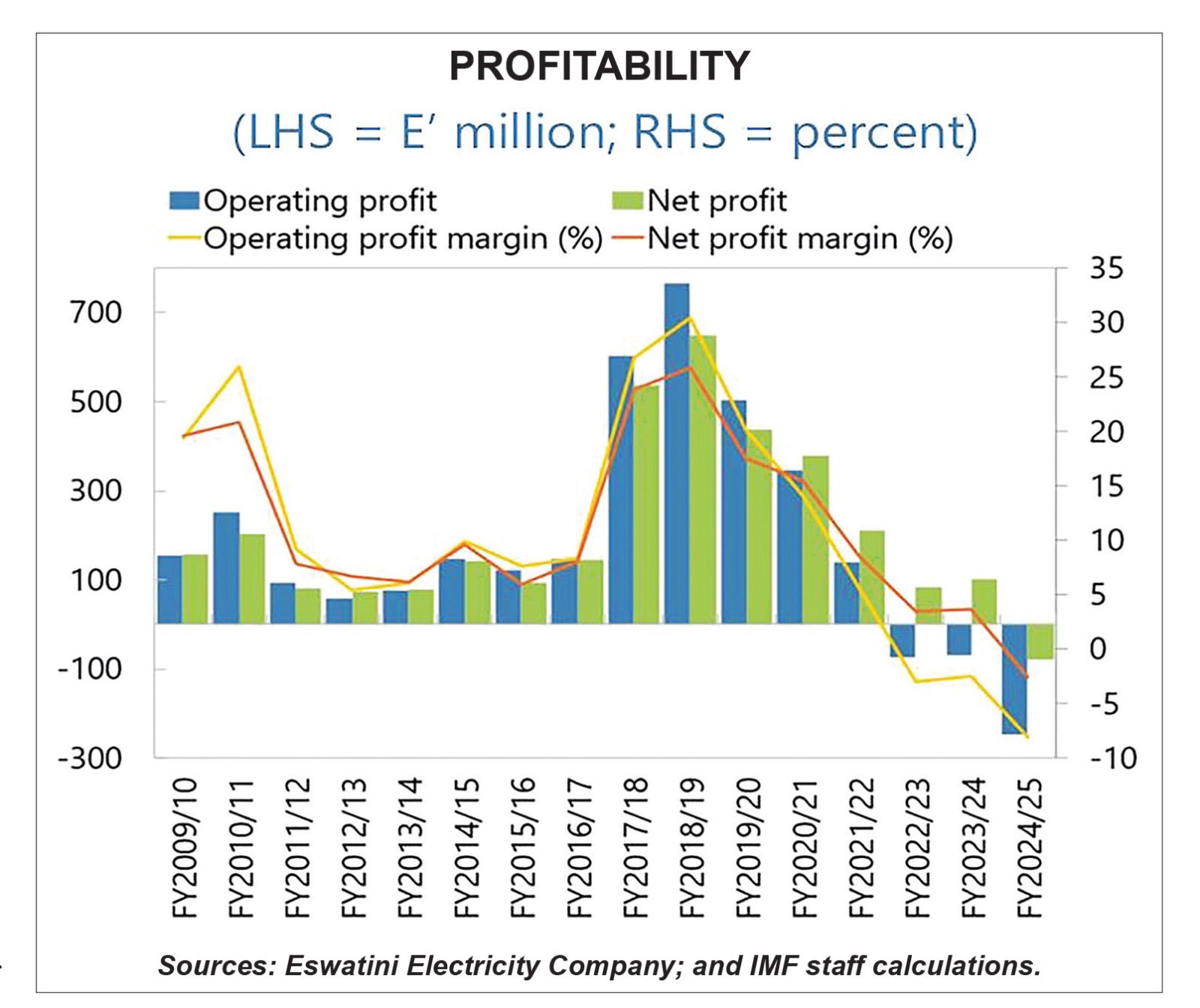
The IMF says EEC’s financial deterioration followed a decade in which the company had been profitable.
Operating profits turned negative in the 2023/24 financial year before deteriorating sharply in 2024/25, when EEC recorded an operating loss of about E250 million. Several factors contributed to the deterioration.
Drought reduced hydropower generation, while weaker electricity sales and the migration of some large electricity users to self-generation reduced EEC’s revenue base.
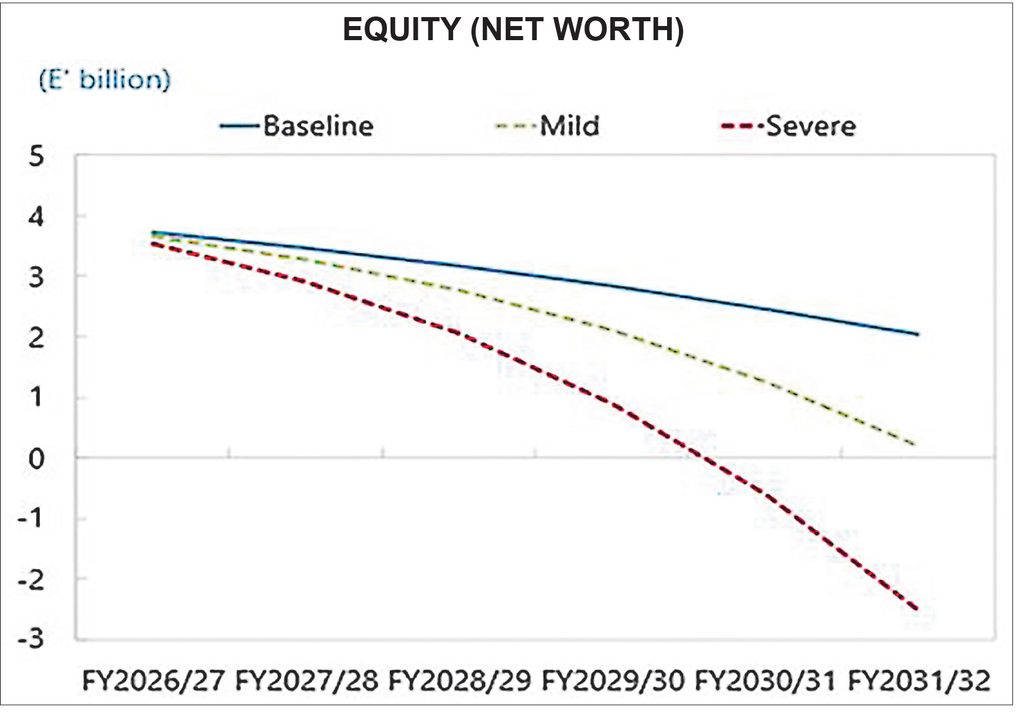
The situation became more difficult in 2025/26 after a previous long-term electricity supply contract with Eskom expired and was replaced by a new contract at higher prices.
This increased the cost of electricity that EEC had to import. The central problem, according to the IMF, is that electricity tariffs did not increase sufficiently to keep pace with the rising cost of supplying electricity.
Following the new Eskom contract, EEC requested a tariff increase of about 25 per cent for 2025/26. ESERA approved a two-step increase of about 14–15 per cent in 2025/26 and about 11 per cent in 2026/27.
However, government subsequently delayed the first increase by a year in an effort to cushion households and businesses from the impact on living costs.
A single tariff increase of 11.7 per cent was eventually approved for 2026/27. The result was that EEC continued carrying part of the gap between what electricity cost the company and what it was allowed to charge customers. This gap is important because a state-owned company cannot indefinitely spend more on providing a service than it receives from customers without somebody eventually absorbing the difference.
The IMF describes some of these arrangements as ‘quasi-fiscal activities’ – essentially situations where a State-owned company carries out a policy objective without receiving full compensation from government.
For example, keeping electricity tariffs below the level required to recover costs can help protect households and businesses from sharp price increases.
However, if EEC is left to absorb that cost, its financial position weakens.
The IMF says this has already begun to happen.
Financial pressures have resulted in delays to capital projects, deferred maintenance and borrowing to meet wage obligations because of cash constraints.
Some suppliers have also moved from offering EEC credit terms to requiring payment on delivery, a sign of growing concern about the company’s ability to meet its obligations. The IMF warns that, without corrective action, the financing gap could eventually require public support and create a spillover onto government’s finances.