
When multiple challenges emerge, it is always easier to point fingers and start apportioning blame in one direction or the other. The obvious outcome of that habit is that we end up with more problems than solutions.
At this juncture, when virtually every sector of our society is crying out for assistance, such a finger-pointing approach will yield no positive result.
To expect Cabinet alone to steer the nation through to calmer waters is expecting far too much from a team that has continually struggled to avert the current issues. Today, local businesses, farmers, the youth, university students, the ship Board and urgent infrastructure projects are all clamouring for a share of the nation’s meagre resources.
While more loans are on the way, borrowing is merely a short-term fix that inflates our debt burden. It is high time key stakeholders gathered around a table for a comprehensive dialogue to avert greater strain on our overburdened economy.
Solutions are well within reach, but they require a coordinated approach to implementation. Only then will citizens feel the positive impact in their pockets rather than simply reading about abstract economic growth in the media. The sooner we sit down to address these pressing matters, the better, starting with the imminent threat of drought.
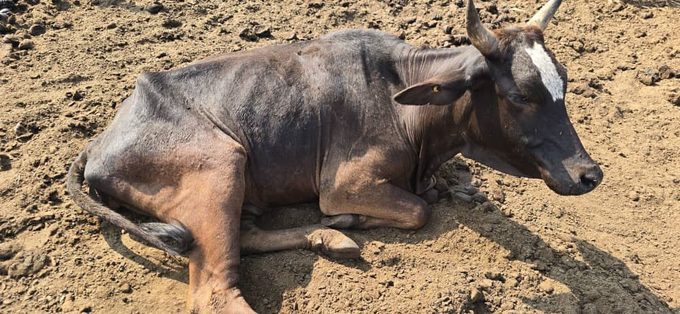
More than 50 cattle have already died in the Shiselweni Region due to the El Niño-induced drought. Urgent calls have been made to tackle severe pasture depletion, damaged water sources, long-distance livestock movement, increased disease susceptibility and reduced reproductive performance among livestock.
Immediate emergency relief is required in the form of feed support such as hay bales, feed concentrates, mineral licks, community feed banks, water and the rehabilitation of existing water points.
At the same time, crop failures and emerging agricultural risks are spreading across the region. Farmers who planted early in October in hopes of capturing early spring rains suffered major losses after seeds failed to emerge under extreme heat and dry soil conditions. A national support effort is imperative to reduce the impact of this impending tragedy.
Accompanying this crisis is the question of long-term water availability. Do we have enough water reserves to withstand this dry season?
Many urban dwellers will recall the harsh days of water rationing when Hawane Dam ran dry. A project was initiated to resolve future water shortages, but it failed to materialise due to high costs. Expanding Hawane Dam required diverting the Motshane–Pigg’s Peak road, an undertaking far beyond the financial reach of Eswatini Water Services Corporation (EWSC). Neither did government have the money for it, given pressing national needs.
Consequently, we are back to square one, even as water demand from Hawane Dam extends beyond Ezulwini all the way to new developments in Malkerns.
Competition for financial resources in the country is growing by the day and rapidly outstripping revenue generation.
This intense pressure on the Ministry of Finance has forced government to seek endless loans from international financial institutions. Alarmingly, interest payments on these loans now exceed the budgetary allocations meant for vital social services.
The minister for Finance undeniably needs support in navigating this fiscal conundrum. A sit-down with local financial leaders and economists to chart a lasting solution is urgent, before external bodies like the International Monetary Fund (IMF) step in to impose harsh measures.
Eswatini must also innovate aggressively around job creation, which is one area that also needs a coordinated approach. Addressing the 44th graduation ceremony of the University of Eswatini (UNESWA), His Majesty King Mswati III acknowledged the country’s youth unemployment challenge and urged government to formally structure skills export.
His Majesty noted that this model is not unique to Eswatini; it has been tried and tested with positive results in countries such as Taiwan.
We must put our bilateral relations to good use on this front to build a diaspora that drives positive economic change back home. We are not referring to general labour, but specialised, high-value technical skills that bring high returns to our economy.
As we tackle these hurdles to improve the ease of doing business, government must also evaluate the sheer number of regulatory bodies operating across various sectors to determine where they can be streamlined or consolidated.
Furthermore, plans to reduce the number of public enterprises must be prioritised. Research has repeatedly demonstrated that downsizing redundant parastatals eases the tax burden on citizens, improves operational efficiency and enhances our business environment. Let us discuss this issue that has been hampered for years.
We should also move swiftly to fully operationalise the one-stop-shop under the Eswatini Investment Promotion Authority (EIPA). It should form a top priority item for the coming quarter.
Summarily, today’s challenges will not be resolved by apportioning blame as doing so will not plant crops, fill our dams, clear public debt or create jobs for our graduates. Eswatini has faced difficult times before and our strength has always rested in collective wisdom and unity.
By bringing together public leaders, private sector experts, civil society and local communities, we can translate sound policies into meaningful relief for every liSwati.