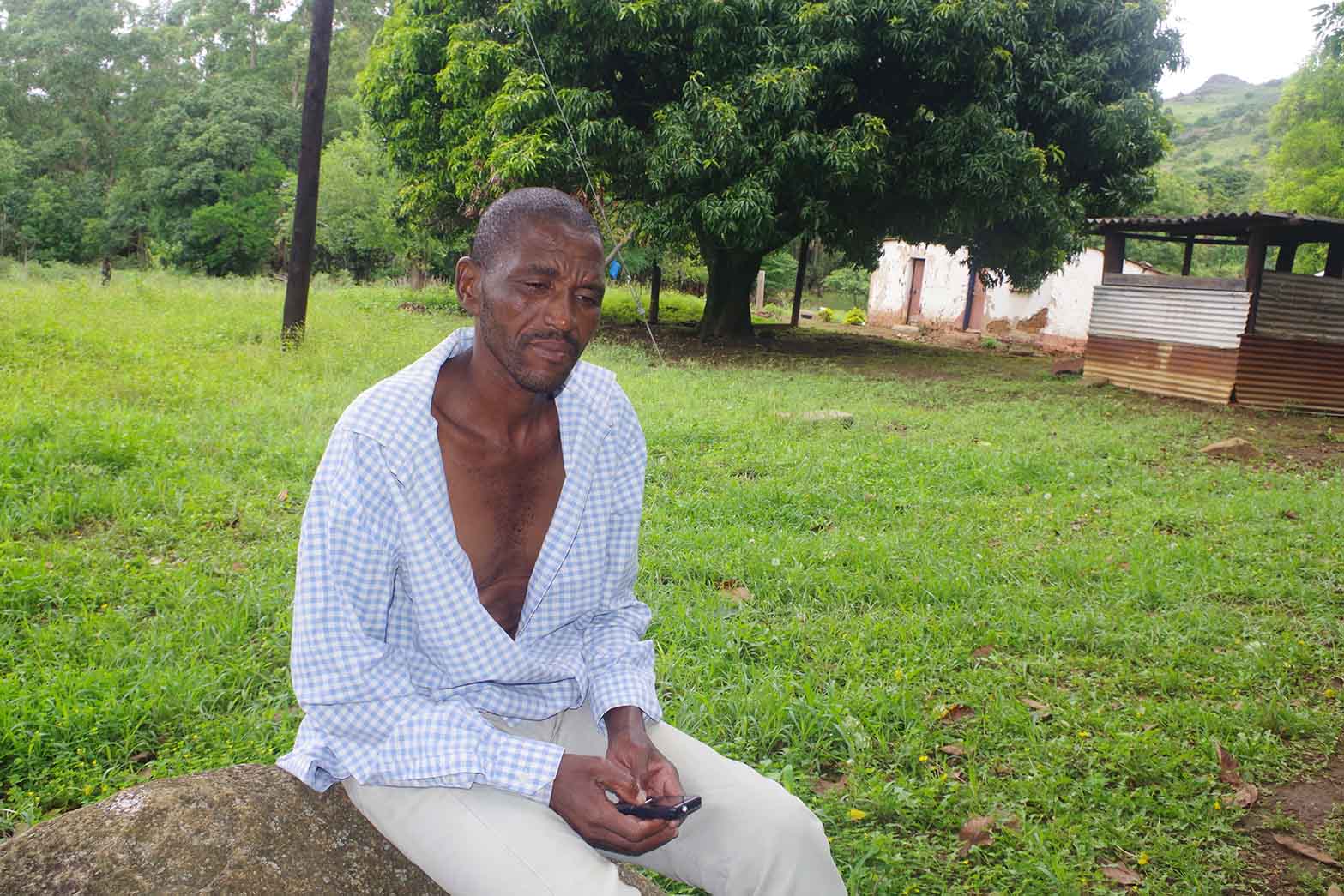
MBABANE – A former inmate has levelled damning allegations against correctional officers at the Bhalekane branch of His Majesty’s Correctional Services (HMCS).
It all started when one inmate, desperate to leave prison, asked the officers to help him sell a Jojo tank valued at E6 600.
Now, this inmate is accusing the officers of pocketing some of the money and only handing over a portion of what they are said to have agreed on.
Wandile Shongwe, who was released earlier this month after serving part of a custodial sentence, claims that his desperation to regain his freedom led him into an unauthorised transaction with warders, an arrangement strictly prohibited under the Prisons Act of 1964.
In the end, this left him shortchanged and trapped behind bars for months longer than anticipated. Shongwe alleges that not only did the officers fail to hand over the full amount agreed upon for the sale of his property, but they also deducted transport money from the reduced sum and silenced his initial attempts to seek redress by threatening him with solitary confinement in a punishment cell known within the facility as the ‘Speed Dial’.
HMCS has confirmed that an internal investigation is currently underway into the conduct of the implicated officer, noting that conflicting accounts have emerged surrounding the incident.
Meanwhile, the Eswatini Association for Crime Prevention and Rehabilitation of Offenders (ESACRO) has condemned the manner in which the matter transpired, warning that such backdoor dealings between officers and inmates bypass established welfare protocols and expose prisoners to exploitation.
Tracing the sequence of events, Shongwe explained that he was arrested in November 2024 and subsequently convicted, receiving two sentences of 26 months each, with the option of a fine.
By early 2026, around February, while serving his time at the Bhalekane correctional facility, the weight of incarceration began to take a heavy toll on him.
According to Shongwe, his desire to leave prison was so overwhelming that he began exploring ways to liquidate his personal assets on the outside to settle his fine. While working in the prison fields at Bhalekane, he struck up a conversation with a warder guarding the work party and floated the idea of selling his JoJo water tank.
“I wanted to get out so badly that I decided to negotiate with one of the warders to assist me in selling my JoJo tank so I could raise the money for my fine,” Shongwe recounted in an interview.
Rather than advising the inmate against the irregular arrangement or directing him to the appropriate administrative channels, the warder allegedly welcomed the proposal. Shongwe claims the officer actively encouraged him to proceed with the plan and took steps to facilitate it.
To execute the transaction outside the prison walls, the first warder allegedly roped in a colleague. A warder whom Shongwe said serves as a social worker at the facility. Shongwe gave the pair detailed directions to the homestead where the JoJo tank was being kept.
He revealed that he had originally purchased the tank for approximately E6 600, but because he needed cash urgently to secure his release, he instructed the officers to sell it for a bargain price of E2 500. Shongwe said the warder initially wanted to get it for less stating that they said it appeared damaged. He said they told him it had been damaged in a hailstorm.
“I refused to believe this,” he said.
Following his instructions, the warder and his social worker colleague travelled to the location outside the prison and met with the man who had been left in charge of safeguarding the tank. According to information Shongwe later gathered, the tank was successfully sold. However, when the warders returned to Bhalekane to report back to him, the financial math did not add up. Instead of producing the E2 500 he had expected, the officers are said to have claimed that they only had E1 500. This meant that there was about E1 000 missing.
Before Shongwe could even process the missing E1 000, the situation took another turn. He alleged that one of the warders asked him if he could take E230 from the E1 500 to cover their transport costs for travelling to facilitate the sale.
Left with little leverage as a serving prisoner, Shongwe said the deduction reduced his remaining funds to a mere E1 270, roughly half of what he had anticipated and far short of what he needed to settle his fine and walk free.
Worth noting, informal financial arrangements between inmates and custodial staff, often termed ‘boundary violations’, are a persistent challenge across Correctional systems in Southern Africa and globally. In neighbouring South Africa (SA), where the Correctional Services Act similarly forbids officers from private dealings with prisoners, the Department of Correctional Services disciplined 2 388 officials in the 2025/26 period over corruption, smuggling and illicit collusion with inmates.
Oversight bodies in SA, including Parliament’s Portfolio Committee on Correctional Services, have repeatedly flagged cases where warders act as paid middlemen for prisoners or exploit their vulnerability through threats of punitive isolation. Under the United Nations’ Nelson Mandela Rules, any handling of a prisoner’s property or funds must be formally recorded through official administrative channels precisely to prevent inmates from being shortchanged without a paper trail.