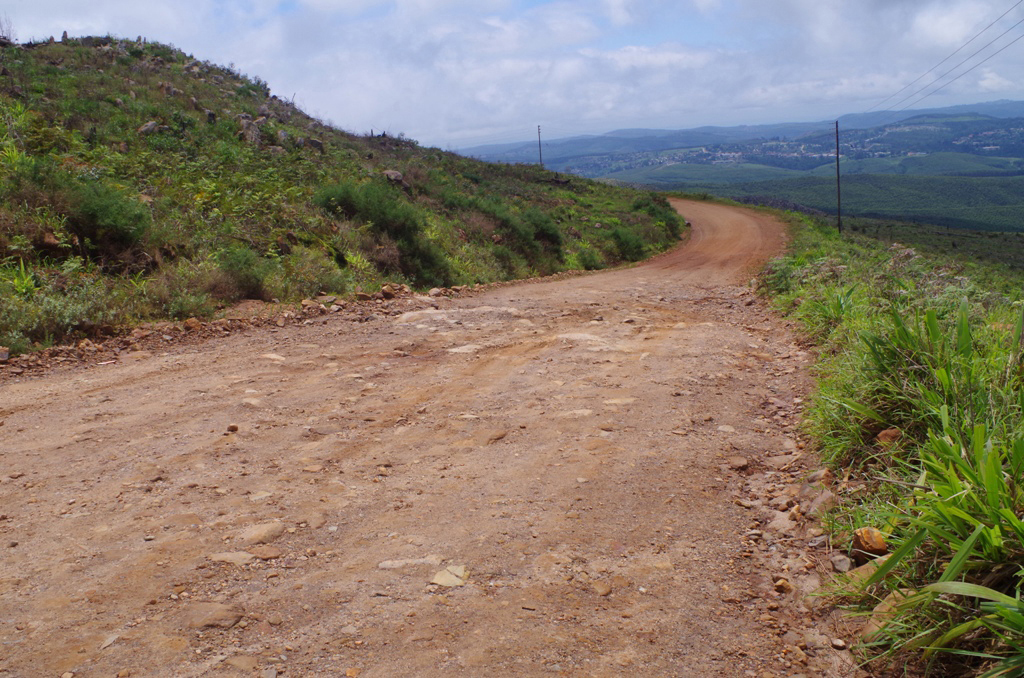
PIGG’S PEAK – Sudden searches, alleged harassment and frequent gunfire are among the issues that members of the public face along the Pigg’s Peak-Bulembu Road.
The road also passes through the Bulembu Border Post into South Africa (SA).
Residents say it has now become a dangerous route, as people are stopped, searched and sometimes punished for merely looking like illegal miners.
Residents allege that security personnel look for signs such as a torch and dusty clothes or stop people who struggle to explain where they are heading.
They said that one now needs to have a prepared explanation before leaving home, as people are randomly stopped and accused of being illegal miners.
In one such case, a 39-year-old man is recovering from a gunshot wound to his right thigh after allegedly being shot by a member of the Umbutfo Eswatini Defence Force (UEDF) along the same road, which residents say has become dangerous not because of criminals, but because of law enforcement operations.
The road passes through a stretch of forest that is also home to abandoned mine pits and shafts, which have lain dormant for decades.
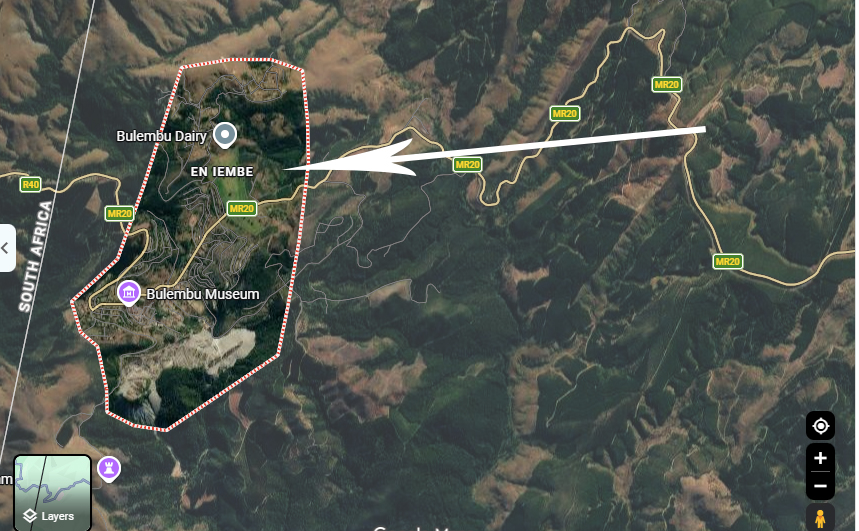
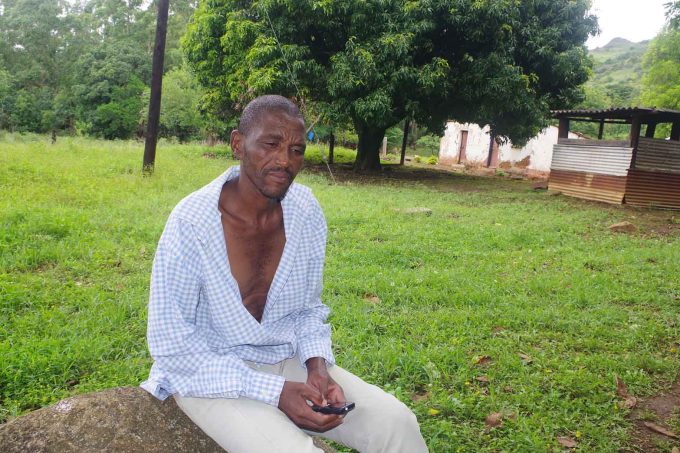
The victim, identified only as *Jama, recounted the events of November 20, 2026, when he and a friend were intercepted by soldiers travelling in what he described as a Toyota Land Cruiser. According to Jama, the encounter happened near a checkpoint in Bulembu, roughly 19 kilometres from Pigg’s Peak, not far from his home area, known as Malandalahle. This is not to be confused with Malandalahle in Pigg’s Peak town.
Jama said the soldiers questioned what they were doing in the area, a query that surprised him, since he does not live far from where they were stopped. “They spoke in a tone suggesting that they were not happy with our presence in the area,” he said. According to Jama, the soldiers accused the pair of being illegal miners.
What drew the soldiers’ attention, Jama said, was that he was carrying a torch at around 3pm. He said that in rural areas it is not uncommon to carry a torch, because it gets dark early and there are no streetlights. He said it is not unusual for one to carry a torch during the day, as one might return home when it is dark and then make use of the torch along the way.
Instead, the soldiers are said to have persistently questioned why he had a torch and insisted that he was an illegal miner, referring to him as a zama zama, an informal term for an illegal miner.
Jama said he explained that they were returning from searching for cattle that had strayed into the nearby forests, but the soldiers were not willing to listen to their side of the story.
Realising that the soldiers intended to punish them, Jama said, they tried to run away. It was as he attempted to flee, he said, that one of the soldiers fired a shot from his rifle, hitting him in the right thigh. “I suddenly began to feel weak and realised I had been shot”, he said.
Fearing he could be shot again, Jama said he hid in a nearby structure about 500 metres from the soldiers. While hiding, he heard a voice shouting out his location and giving instructions to the soldiers, who then searched for him and found him bleeding from the gunshot wound.
As he lay injured, Jama said, the soldiers continued with the interrogation. He said they ordered him to stand up and walk with them back to their vehicle, about half a kilometre away near a checkpoint. Although he was already in pain, he said he was forced to walk.
During the journey, the soldiers kept asking him why he was engaged in illegal mining.
Jama maintained that he was not an illegal miner, but the soldiers continued accusing him and allegedly told him that there were many illegal miners in the area.
He said he kept begging the soldiers to take him to hospital, but they told him his injury was not severe. Eventually, he was taken to a clinic, which was found to be closed. One of the soldiers then gave him E40 and told him, ‘Bona ndoda kutsi wentani’, meaning, ‘See what you can do’. Jama later received attention from police officers at Bulembu, who took a written statement about the incident.
Jama said he was shocked that the soldiers had left him despite his injuries, and that, although he was given E40, he should have been taken to hospital. He said there is no public transport in Bulembu and that people rely on hitchhiking in private vehicles.
Since he was still bleeding and in pain, a resident called a doctor who was off duty at the time. According to Jama, the medic arrived quickly, gave him some medication and briefly attended to him to stop further bleeding.
Jama said he was also advised to go to Pigg’s Peak Government Hospital and the Pigg’s Peak Police Station, which he later did, and he was attended to by officers from both. He was discharged on the same day.
The following day, police officers are said to have arrived in Bulembu to investigate the incident, taking photos of the area and interviewing the injured man further. Jama said he was then taken to police headquarters in Mbabane, where he met senior police officers as well as soldiers. He said the senior security officials engaged him on the shooting to understand the circumstances that led to his injury, after which he was returned to Pigg’s Peak.
As of yesterday, when the Eswatini News reached out to Jama, he was still attending to his injuries and said he was living in fear, like the rest of the residents, especially men, who are regularly accused of being illegal miners.