

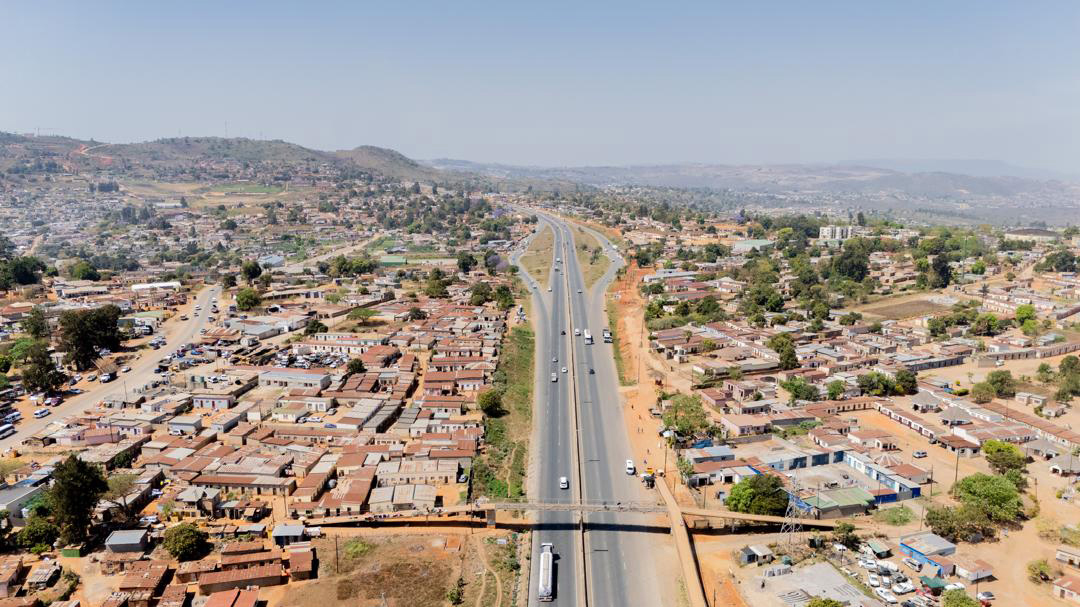
MBABANE – As the morning mist slowly lifts over the blue mountains of the valley of heaven, new homes can be seen clinging to the slopes like determined climbers at Buka Chiefdom.
The on-going sound of hammers echoes across every mountainous place, for example at Mpholi, Ndzevane and Nhlambeni in the Manzini Region. Hillside construction is rampant even in Mbabane, especially at Mangwaneni, Buka, KaNcesi near Maphalaleni and in most parts of Hhohho, which is a mountainous area.
As the same pattern spreads across every region like cancer, government authorities in Mbabane are worried as they see layers of homes upon the country’s mountainsides.
Planning a home upon a mountain has turned into a culture meant to define the country’s homestead posture in the 21st century, it must be said.
While some see it as a sign of progress, experts are issuing silent yet serious warnings for the country – danger on the hills.
Head of Environmental Impact Assessment and Monitoring Coordination at Eswatini Environment Authority (EEA) Belusile Mhlanga, has issued a strong warning against constructing homes on the country’s mountains.
Mhlanga said while mountainous areas may appear scenic; they, however, pose great environmental and safety risks.
“First, mountains help reduce the impact of strong winds and serve as natural barriers. Destroying them threatens both lives and the environment,” she noted.
Mhlanga said desperation is pushing people to occupy places that are neither safe nor stable, stating that on Eswatini Nation Land (ENL),people often wake up to find that new structures have been erected overnight on steep slopes. She mentioned that this interferes with the natural slope stability.
The environmental expert further explained that building on mountainous areas tampers with the natural balance, exposing residents to landslides.
“Trees play a crucial role in holding the soil together, thus cutting them down to create space for houses weakens the ground. When it rains, water easily washes away the soil, in turn damaging roads, hence people need to reconsider building homes on such places,” she added.
The official further revealed that the Forestry Department under the Ministry of Tourism and Environmental Affairs, recently held a stakeholder engagement with traditional leaders to discuss the importance of conserving nature.
She also shared that they are working on strengthening the Flora Conservation Bill, which will enhance the protection of natural ecosystems.
*…
Land Management Board working on land policy
MBABANE – Petros Mavimbela, Chairman of the Land Management Board (LMB), says the absence of a formal land policy and an updated Act of Parliament has made it difficult to fully regulate land allocation.
Yet, unplanned settlement continues to pose serious risks for the country’s future.
Mavimbela noted a worrying tendency among some chiefs to allocate land in unsuitable areas, including mountainous terrain, under rocks and other high-risk zones, increasing the likelihood of disasters and complicating service delivery.
The chairman shared that the Board has been observing these trends closely and has convened several meetings to address the issue.
He also emphasised that while the LMB seeks to work within the current legislative framework, the lack of a comprehensive land policy limits its ability to enforce strict regulations, making collaboration with traditional authorities and communities all the more critical.
He said settlements on challenging terrains require careful planning, proper infrastructure and financial investment to ensure safety. Without proper guidance, water and sanitation services are difficult to provide and roads often remain poorly constructed or non-existent.
The LMB, according to its chairman, is actively pushing for clear protocols on land-use categorisation, slope assessments and building permits, while encouraging communities to consider the long-term implications of developing high-risk areas.
The chairman said that since the matter is still under discussion, he could not delve into details about how the Board plans to deal with those who have already constructed homes in such places.
The LMB is a statutory body responsible for overseeing land allocation and use on Eswatini Nation Land (ENL). Its mandate includes regulating settlements, ensuring proper land-use planning, advising traditional authorities and government departments and promoting sustainable development.
Meanwhile, according to the country’s 2005 Constitution, environmental conservation and sustainable resource management are not merely policy preferences; however, they are constitutional and legal obligations binding every citizen and institution.
*…
Other nations’ tragedies warn Eswatini’s mountain builders
MBABANE – Researched evidence from credible news and scientific sources show that building homes on hills and mountains has repeatedly led to the destruction of property and tragic loss of life due to landslides—all around the world.
Below are notable landslide disasters affecting mountain homes:
United States (Rancho Palos Verdes, California): Multimillion-Dollar homes in the affluent coastal city of Rancho Palos Verdes have been destroyed due to deep landslides. The area sits atop slow-moving landslides, but after heavy rains, the ground moved dramatically. Roads buckled, electricity was lost and hundreds of residents were displaced as luxurious homes were literally torn apart. Experts say this disaster demonstrated how even well-constructed homes face serious risks when built on unstable slopes, especially as unusual weather events become more frequent with climate change. CNN reported on this disaster.
Kenya and Uganda (Great Rift Valley and Mount Elgon areas): In both 2010 (Bududa, Uganda, 300 deaths) and as recently as 2025 (Elgeyo Marakwet County, Kenya), heavy rains triggered massive landslides in mountainous regions, destroying hundreds of homes and killing dozens. Experts have consistently warned against building on these steep, unstable slopes, but high population density and land pressure often leave people with no alternatives. This incident was sourced from BBC and New York Post.
Norway (Alta, Norwegian Arctic): In Alta, a coastal Norwegian town, a dramatic landslide in June 2020 swept eight houses directly into the sea. The dramatic video footage shocked the world and illustrated how even in highly developed countries, housing developments on cliffs and slopes can face catastrophic landslide risks – especially when the ground is destabilised by rain or melting permafrost.
India, Kerala: In July 2019, heavy monsoon rains, thought to have been intensified by climate change, triggered a deadly landslide in the hilly Idukki District of Kerala, India, which buried homes and killed at least 150 people. Like in Africa, warnings had been issued about the dangers of building on steep, deforested slopes, but the demand for housing continued.
*Full article available in our publication




















Leave a comment