

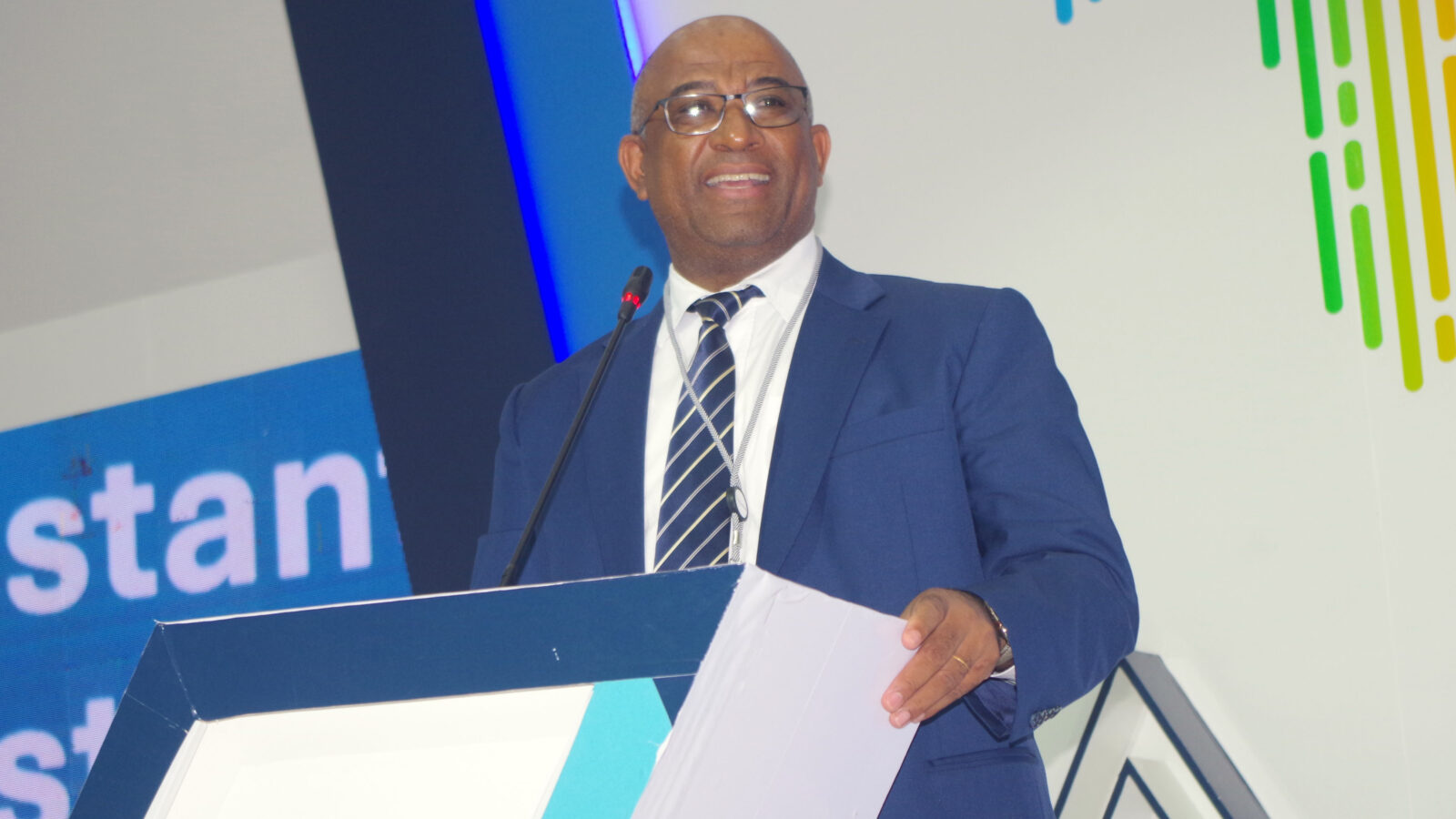
EZULWINI – The Central Bank of Eswatini (CBE) has revealed that in the past two years, emaSwati have channelled E31.8 million (US$1.8 million) to cryptocurrency exchanges – mainly in South Africa.
Meanwhile, the country recorded a modest E991 000 (US$56 500) in inflows.
This significant outflow of funds, according to CBE Governor Dr Phil Mnisi, underscores both the growing interest in digital assets and the risks of unregulated financial activity.
Speaking during the launch of the 2025 State of Inclusive Instant Payment Systems (SIIPS) Report held at the CBE Complex at Ezulwini yesterday, Dr Mnisi said this imbalance highlights an urgent need for a cautious and well-regulated approach to virtual assets.
“Our immediate priorities are clear,” the governor said.
“We must raise public awareness about the risks of unregulated cryptocurrency, particularly when using foreign platforms that lack regulatory protection.
We must strengthen our monitoring capacity to track emerging trends, identify risks and guide policy development.
Finally, we must create a regulatory framework for virtual assets that balances consumer protection, curbs illicit activity, ensures proper taxation and allows legitimate innovation.”
Dr Mnisi said the bank supports innovation in digital finance, but warned that the absence of regulation leaves consumers exposed to fraud, scams and data breaches.
*…
AfricaNenda CEO calls for Pan-African digital revolution
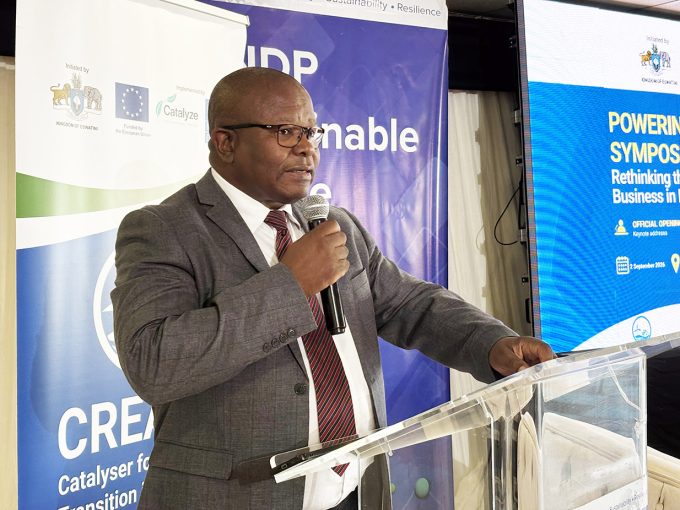
EZULWINI – Dr Robert Ochola, CEO of AfricaNenda, called for a continental shift towards inclusive instant payment systems (IIPS) as a tool for self-determination and prosperity.
Delivering the keynote speech at the same SIIPS launch, Dr Ochola described the 2024 edition of the report as “both a mirror and a map” of Africa’s progress.
“The SIIPS Report is more than data and charts,” he said. “It is a mirror held up to our continent’s progress – and our potential.”
Dr Ochola began with a moving reflection on what he termed ‘the African paradox’ – a continent rich in promise yet still defined by uneven opportunity.
“Across Africa, luck still decides destiny,” he lamented. “Our young people’s futures are too often written not by their effort, but by the accident of their birth – the village they were born in, the school that never existed near their home, the opportunity that never reached them.”
He quoted Julius Nyerere’s 1967 Arusha Declaration to drive his message home: “You cannot develop people. You must allow people to develop themselves.”
Ochola said inclusive instant payment systems were the ‘modern tools’ Nyerere envisioned – the rails enabling Africans to build their own futures.
“IIPS are not just about technology,” he added. “They are about dignity, innovation and sovereignty – building an economy where value moves as freely as ideas.”
Drawing lessons from other countries, Dr Ochola highlighted Sweden’s Swish and Brazil’s Pix as examples of how digital payment systems can transform national economies. In Sweden, he said, Swish has reached 8 million users out of a population of 10.6 million, increased GDP growth by 0.5 per cent, and boosted the velocity of money by 10 per cent.
In Brazil, Pix has enabled 75 per cent of citizens and 15 million companies to transact digitally, with 71.5 million people making their first electronic payment through the system. “These are not just innovations,” he said, “they are transformations.”
*…
Digital transformation anchored in inclusion
EZULWINI – The SIIPS 2025 launch also provided a platform for Dr Phil Mnisi to highlight Eswatini’s progress in building a robust digital payment ecosystem.
He said the kingdom has made remarkable strides in financial inclusion, with 87 per cent of adults now having access to formal financial services – thanks largely to mobile money platforms and digital banking.
“According to the Eswatini Communications Commission’s 2024 ICT Market Indicators Report, cellular penetration stands at 133 per cent, while internet and smartphone usage has reached 81 per cent of the population,” Dr Mnisi stated.
“This digital readiness provides the foundation for inclusive, interoperable and instant payment systems that reach even our most remote communities.”
He noted that these advancements are guided by the National Payment System Vision 2021–2025, which identifies four key strategic priorities: payment digitalisation, regulatory frameworks, coordination and innovation.
Under this strategy, Eswatini launched the Eswatini Payment Switch (EPS) – a milestone project aimed at enabling instant, interoperable payments between banks and mobile service providers. The EPS has already transformed how citizens transact.
“The Fast Payments module of the EPS, launched in December 2024, began with just three participants and a modest E50 000 per-transaction limit,” said Dr Mnisi. “Today, seven participants are fully integrated, with the eighth going live this November, completing the initial phase of our ecosystem.”
*Full article available in our publication


















Leave a comment