

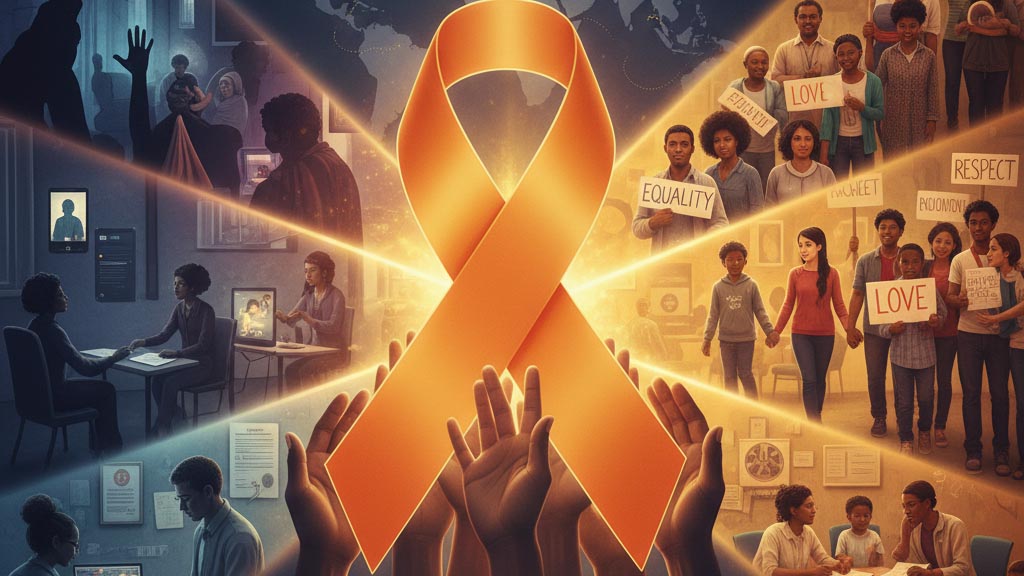
Every year, the world comes together for the 16 Days of Activism Against Gender-Based Violence (GBV), a powerful global campaign that shines a spotlight on the violence, discrimination and injustice faced by women, girls and people of diverse gender identities. Yet, beyond the slogans, events and orange ribbons lies a deeper message that societies must confront and that is: “Violence is not strength’. The use of force intimidation or control over another human being has too often been accepted as a sign of power. However, in truth, violence reveals not strength, but fear, insecurity and a failure of humanity.
GBV remains one of the most pervasive forms of inequality worldwide. It happens in homes, workplaces, schools, public institutions and online spaces. It affects women, children, LGBTQIA+ persons, people with disabilities and anyone whose identity or expression is perceived as ‘lesser’ or ‘non-conforming.’ The roots of this violence are deep, often buried in harmful cultural norms, patriarchal systems, rigid gender roles and legal structures that enable abuse, rather than prevent it.
Nevertheless, at the heart of it is a belief, sometimes unspoken, sometimes boldly asserted, that dominance equals strength and that controlling another person is a demonstration of power. This destructive idea not only fuels violence, but also prevents survivors from speaking out, communities from intervening, and institutions from responding appropriately. The 16 Days of Activism challenges this narrative and calls for a global shift towards compassion, accountability and equality.
True strength lies in mutual respect. When individuals value each other’s autonomy, dignity and humanity, they build relationships rooted in mutual trust, not fear. A society that understands this does not excuse violence behind closed doors, does not blame victims and does not hide abuses in shame. Instead, it promotes healthy communication, consent and emotional intelligence. Respect dismantles the false notion that masculinity must be expressed through control or aggression. It allows people of all genders to thrive, without the pressure of oppressive expectations.
There is strength in vulnerability. For many survivors, speaking out is not a sign of weakness, it is an act of extraordinary courage. It takes strength to leave an abusive relationship, to report a violation, to demand justice from a system that may already have failed you.
By uplifting survivors and ensuring their safety and support, communities reaffirm that lives matter more than reputations or traditions.
When institutions turn a blind eye to harassment, assault or discrimination, they send a message that violence is normal or inevitable. Silence protects perpetrators and isolates survivors. Breaking that silence is one of the most powerful ways to create change. Governments must strengthen legal protections, improve policing and ensure that survivors have access to shelters, mental health services and justice. Schools must teach children about consent, empathy and equality. Faith leaders, employers and traditional leaders must use their influence to condemn violence, not reinforce harmful norms.
Communities must challenge harmful behaviours and hold perpetrators responsible, not through violence, but through justice and rehabilitation. Accountability also means addressing the systems that allow violence to persist, discriminatory laws, economic inequalities and the lack of protection for marginalised groups. For LGBTQIA+ individuals, gender-based violence is often compounded by stigma, criminalisation and exclusion. Recognising their rights and humanity is essential to building a society free of violence.The 16 Days remind us that ending GBV is not the responsibility of survivors, it is the responsibility of all of us. Allies who speak up, communities that support survivors and organisations that fight for human rights contribute to a shared movement of resistance.
When we stand together, we dismantle the fear that fuels violence and replace it with collective courage and love. Not the romanticised love that excuses control or jealousy, but the true love that nurtures, heals and protects.
Love is the opposite of violence. It is the foundation of peaceful homes, healthy communities and inclusive societies. When we celebrate love in its many forms, we weaken the hold of hatred and fear.
Finally, let this campaign be a reminder that strength is not measured by the ability to dominate, but by the courage to uplift, protect, and stand with others. Ending GBV violence begins with redefining strength within ourselves, our homes and our societies. As we observe the 16 Days of Activism Against GBV, let us commit to rejecting the false idea that violence is power.















Leave a comment